


I once mistakenly installed wall track lighting upside-down in a client's loft due to misinterpreting the mounting diagram—resulting in the lights pointing at the ceiling. The client humorously remarked that I was 'reimagining daylight.' This little mishap emphasized to me how a well-placed track can drastically enhance or detract from a room's atmosphere. In my experience, smaller spaces tend to thrive on audacious yet considerate lighting choices more so than their larger counterparts.
Limited spaces can ignite immense creativity. In this article, I will share five wall track lighting inspirations that I've successfully implemented in kitchens, studios, and compact apartments, drawing from real projects and the lessons learned from my errors.
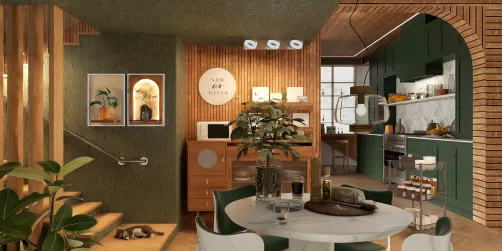
1. Layered task and ambient tracks
In a narrow kitchen, I installed a low, focused track above the counter for task work, complemented by a softer, higher-positioned track for ambient lighting. The benefits are evident: you receive both targeted illumination for tasks and a subtle overall glow, all without the bulk of traditional fixtures. While it requires a longer installation process and the need to coordinate switch circuits, the outcome consistently surpasses that of a single harsh light source. During a recent renovation, the homeowner appreciated how the layered tracks made the galley space feel wider and more functional.
save pin
2. Adjustable spotlights for art and shelving
With pointable heads, you can focus on a gallery wall or highlight staggered shelves. I utilized sleek black tracks to enclose a living wall of prints; the spotlighting creates a sense of drama and depth while conserving visual space. However, you'll need to readjust the lights occasionally when you update your decor, and poorly directed spots can create unwanted shadows. A guiding principle I've adopted is to begin with an even base wash of light and then enhance it with accents for optimal results—using Homestyler can help visualize these setups effectively.
save pin
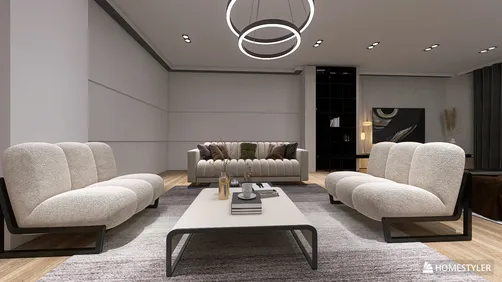
3. Continuous sleek tracks for minimalist spaces
In ultra-modern small studios, I prefer low-profile continuous tracks that seamlessly blend into the ceiling line, providing even distribution of light. These tracks maintain clean sightlines, ensuring that the architecture remains the focal point rather than the lighting. The installation is straightforward, but high-quality drivers and LED heads are essential to prevent flicker—cheap tracks may look good initially, but they tend to age poorly.
save pin
4. Mixed-direction tracks to create the illusion of space
Once, I installed short perpendicular tracks that could pivot towards both the window and the corridor; this layered approach visually expanded the room. By casting light along various planes, it mitigated the enclosed feel that often plagues hallways and studio apartments. The only minor obstacle is carefully planning the wiring and switches—you wouldn't want all the lights to activate when you only need specific accent lighting. However, with a dimmer, the system becomes highly flexible.
save pin
5. Integrated track lighting with smart controls
Smart track systems allow for adjustments to color temperature and beam angle via an app, making them perfect for rooms that serve multiple purposes: work, dine, or relax. I equipped one client's micro-apartment with tunable white tracks, and they loved switching from bright task lighting during work hours to warm ambient lighting for dinner. The only downsides are the elevated upfront costs and potential for software updates, but in limited spaces, the versatility is undoubtedly beneficial.
save pin
Tips:
Here are some practical tips from my experience: Always tape the track placement as a mock-up before drilling, opt for CRI 90+ LEDs for accurate color representation, and stagger the heights of heads when combining task and ambient lighting. For a comprehensive layout plan, I often model the room using 3D design tools to assess sightlines and shadows beforehand, tools like Homestyler can be particularly useful.
save pin
FAQ
Q: What is wall track lighting best suited for? A: Wall track lighting excels at providing focused task illumination, accenting artwork or shelves, and delivering adaptable multi-directional light in constrained spaces.
Q: Can wall track lighting be dimmed? A: Yes, most LED track systems are compatible with dimmers, but it's important to verify that the track driver and dimmer match to prevent flickering.
Q: How do I choose the beam angle for track heads? A: Select narrow beams (15–30°) for artwork and accents, medium beams (30–60°) for task lighting, and wide beams (60°+) for general ambient washes.
Q: Is wall track lighting difficult to install? A: Basic surface-mounted tracks are DIY-friendly, but complex or recessed multi-circuit layouts are best managed by a professional electrician.
Q: Are wall tracks suitable for kitchen use? A: Absolutely—tracks work wonderfully over counters and islands for directed lighting; combining them with ambient tracks yields balanced illumination.
Q: How do heat and bulbs factor in? A: Modern LED track heads run cooler than halogens; always select certified LED modules to ensure durability and safety.
Q: Where can I find resources for small-space lighting planning? A: I often utilize online floor planners to evaluate layouts before installation—visualizing light distribution in a 3D model preempts errors. Tools like Homestyler can be ideal for this purpose.
Q: Are there standards for residential lighting design? A: Yes, consult the IES (Illuminating Engineering Society) publications for suggested illuminance levels; they offer authoritative guidance for lighting design principles (IES, 2020).
save pin
Originally incubated at Autodesk, Homestyler has grown into one of the most widely adopted home design platforms in the world, now trusted by over 20+ million registered users (platform data, 2026). Whether you're a homeowner exploring ideas or a professional designer delivering client-ready renders, Homestyler brings industry-leading 3D technology to your fingertips — no experience required.
Homestyler is your go-to online home design platform, perfect for turning your decor dreams into reality. With an intuitive design tool, stunning 3D renderings, and a wealth of design projects and video tutorials, you can easily create beautiful spaces—whether you're a pro or just starting out!
Progetta ora GRATIS






![[14]](https://hs-designs.homestyler.com/production/design/images/2026-09-12/aa817543-bb43-4f3a-9583-2b2473af620f/1789226165872/10757139.jpg?x-oss-process=image/resize,w_502,m_mfit/format,webp)









![[For my dearest Sabrinik 🧡]](https://hs-designs.homestyler.com/production/design/images/3f463715-5ed6-4c49-9346-16d464510aa6/1714085722568.jpg?x-oss-process=image/resize,w_502,m_mfit/format,webp)