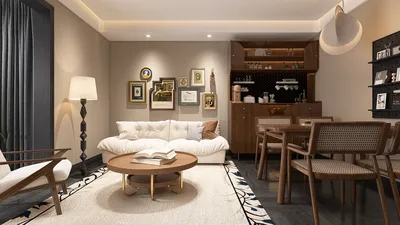


With over ten years in the field of interior transformations, I have observed a remarkable rise in innovative ceiling treatments across various living spaces, from compact apartments to expansive homes. In 2024, vaulted ceilings are shifting from mere structural heights to vibrant expressions of personal style. Interestingly, smaller living rooms equipped with high ceilings can embody both comfort and creativity rather than feeling vacant. This article will explore ten captivating paint ideas for vaulted ceilings in living rooms, drawing from my own experiences, expert insights, and real renovation examples. Get ready to let your inspiration flow with Homestyler!
1. Airy Crisp White
From my experience: A small loft I renovated had a surprisingly high vaulted ceiling which we painted in a bright white to match the walls—this immediately enhanced the perception of space.
Advantages: White paint reflects natural light, creating an open and tranquil atmosphere. Architectural Digest acknowledges this as a classic choice for achieving spaciousness.
Drawback: Without adding textures or warm details, it might come off as too sterile.
Suggestion: Integrate natural wooden beams or a woven pendant light to introduce warmth and coziness.
Discover how a streamlined vaulted living room design can effortlessly incorporate this ceiling treatment.
2. Gentle Greige for Warmth
Personally, I once used greige in a mid-century remodel for the ceiling, which perfectly unified the fresh walls and walnut flooring, achieving immediate aesthetic harmony.
Pros: Greige offers more warmth than white yet remains cooler than beige, making it adaptable for both contemporary and traditional interiors while providing depth without overwhelming the space.
Cons: If the undertone is off, it may appear muddy under dim lighting.
Cost Insight: Opting for higher-quality paints can ensure better coverage and reduce patchiness.
3. Striking Charcoal for Dramatic Impact
In my work, I advise caution with dark tones in smaller spaces; however, a charcoal vaulted ceiling paired with light walls can significantly enhance drama and depth.
Pros: Charcoal can serve as a central feature, emphasizing unique architectural lines. It blends well with either industrial chic or modern farmhouse aesthetics.
Cons: Excessive dark elements in furniture could create a heavier atmosphere.
Tip: Utilize track lighting to bring attention to textures and prevent the space from feeling cave-like.
4. Sky Blue for Natural Inspiration
I painted a ceiling a soft light blue reminiscent of the morning sky in one project, transforming the living area into a serene retreat.
Pros: Blue hues bring a fresh, outdoorsy feel indoors and are known to alleviate stress according to studies by the University of Sussex.
Cons: This color might clash with furnishings that lean towards warm hues.
Example: Coastal residences often thrive on this ceiling style.
5. Creamy Ivory for Timeless Appeal
In a 1920s bungalow restoration, I found that ivory on the vaulted ceiling harmonized beautifully with decorative crown molding.
Pros: This shade softens light and complements traditional decor, which is less likely to show dust than bright white.
Cons: In rooms with all-neutral color schemes, it might result in a lack of contrast and appear flat.
6. Two-Tone with Beams
I’ve discovered that using contrasting colors on ceiling panels and beams can truly make architectural features stand out—as seen in some of my modern cabin designs.
Pros: This technique highlights structural details, providing a tailored look suited for rustic or industrial themes.
Cons: It requires more extensive preparation and is labor-intensive when painting.
Explore how an L-shaped living room can further enhance this design by guiding the gaze upward naturally.
7. Glamorous Metallic Accents
In a Paris-inspired loft, I applied a subtle champagne metallic wash to the ceiling, which added a delicate shimmer at sunset.
Advantages: Metallics can enhance light reflections, creating an inviting evening ambiance.
Cons: Excessive use may lean towards theatricality instead of sophistication.
8. Matte Black for Sophisticated Drama
In a spacious open-plan design, the matte black vault not only grounded the area but also made pendant lighting pop.
Pros: A great choice for adding depth, it conveniently conceals imperfections in older ceilings.
Cons: It may create an illusion of reduced height—works best in well-lit environments.
9. Soft Sage for a Relaxing Atmosphere
Sage complements oak floors and linen drapes beautifully. This color is frequently recommended for those drawn to biophilic design.
Advantages: This hue pairs wonderfully with greenery, and research from the International Journal of Architectural Research indicates green can alleviate stress.
Cons: It may conflict with vivid red or purple furniture pieces.
Tip: Trying a sample on poster board beforehand can help discern how it shifts under varying light conditions.
10. Ombre Fade for Artistic Expression
In a loft renovation, I collaborated with a muralist to create a stunning white-to-deep-blue ombre ceiling. It consistently amazed guests who looked up first.
Pros: This distinctive approach is adaptable and sparks conversations, fitting well with a variety of color palettes.
Cons: It demands a higher skill level to execute, often requiring professional assistance.
Investigate how wooden accents can perfectly balance ombre ceilings in open-concept living spaces.
Conclusion
Designing a vaulted ceiling in your living room requires intentionality—height alone does not guarantee comfort. Even smaller areas can shine with vaulted ceilings, projecting both mood and visual proportions when the appropriate paint choice is made. As noted in Elle Decor, the ceiling is often referred to as the 'fifth wall,' deserving as much consideration as other surfaces. Which of these ten innovative paint ideas would you be interested in trying for your home with the help of Homestyler?
Frequently Asked Questions
1. What color best suits a small living room with a vaulted ceiling?
Opting for light shades like white or soft greige maximizes brightness and openness.
2. Can dark colors work for a vaulted ceiling?
Yes—charcoal, navy, or black can create drama if balanced with lighter walls and sufficient lighting.
3. Is it costly to paint a vaulted ceiling?
Costs can vary; higher ceilings may necessitate extra preparation and ladders, potentially increasing labor fees.
4. Can I undertake a DIY vaulted ceiling painting project?
Absolutely, if you’re comfortable with ladders and equipped with the right tools, but remember safety is crucial.
5. Does painting a ceiling blue really influence mood?
Studies suggest that blue shades can indeed provide calming effects (University of Sussex, 2018).
6. Should beams match the ceiling color?
Not necessarily; contrasting beams can enhance architectural focus.
7. How do I select a ceiling color that complements my current decor?
Draw tones from existing furniture or flooring; testing samples in natural and artificial lighting is advised.
8. Are ombre ceilings suitable for traditional homes?
Yes, as long as the gradients are subtle and the colors blend well with classic elements; check our collection of vaulted ceiling designs for inspiration.
Looking to transform your space? Homestyler is your go-to online home design platform! With its user-friendly design tool, stunning 3D renderings, and extensive video tutorials, you can effortlessly create and visualize your dream interiors. Start your design journey today!
Progetta ora GRATIS
































