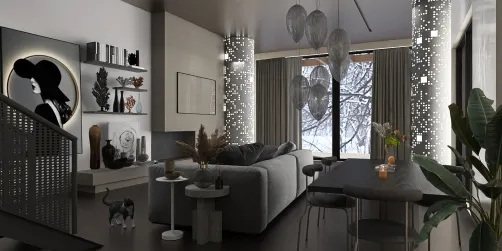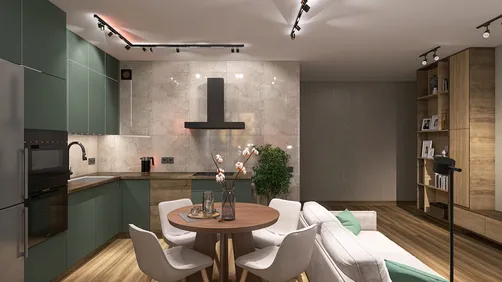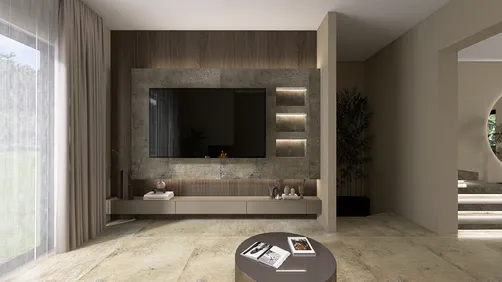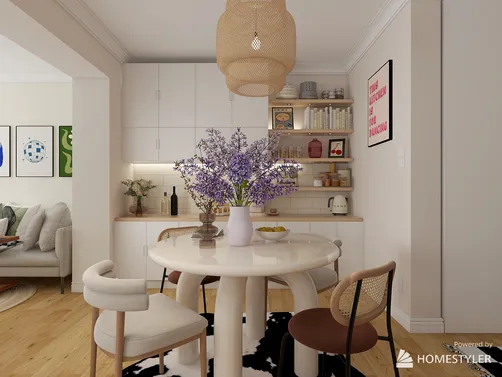
I once embarked on a journey to design a compact open-concept living room kitchen for a couple who were adamant about incorporating a spacious island and a dining table that matched the width of their sofa. It was a challenging moment that nearly brought me to tears, but it ultimately taught me the art of compromise. This project evolved into a creative playground for innovative solutions, demonstrating that even small spaces can inspire grand ideas. If you're facing a tight open-plan area, consider exploring this room planning case to discover how limited footprints can be transformed into cozy homes with the help of tools like Homestyler.
1. Versatile island: dining space, preparation area, and storage solution
I have a fondness for islands as they serve multiple purposes in small open layouts. A slender island with overhang seating can effectively provide a dining area without requiring additional floor space, while incorporating drawers or open shelving ensures that essential items are easily accessible. However, careful measurement is crucial — if it's too deep, it disrupts flow, whereas if it's too shallow, it may feel ineffective. The benefits of social cooking and informal dining are significant when done right.
save pin
2. Open shelving and shallow cabinets to enhance sightlines
Oversized upper cabinets can obstruct light and create a cramped atmosphere. I frequently replace heavy cabinets with a combination of shallow cupboards and open shelves, which helps maintain a lighter visual presence while still providing ample storage. This approach does require some discipline (you'll need to curate your displayed items), but it leads to a more breathable and harmonious living space.
save pin
3. Sliding partitions and glass screens to define areas
Creating distinct zones is vital in an open layout. I often utilize sliding glass screens or pocket doors to temporarily separate the kitchen when guests are over, all while preserving a sense of openness. For clients concerned about fixtures being permanent, I provide a conceptual floor plan early in the design phase, allowing them to visualize flow and test different partition configurations before making any final decisions.
save pin
4. Vertical solutions: tall storage options and built-in appliances
When space is constrained, it's wise to build upward. Floor-to-ceiling cabinetry and tall pantries can open up counter space and conceal clutter, while integrated appliances help maintain clean sightlines. Just bear in mind that this arrangement may affect accessibility—higher shelves may require a step stool to reach, making them better suited for storing seasonal items rather than everyday essentials.
save pin
5. Color, light, and layered lighting to widen perception
Using paint, reflective surfaces, and smart lighting can significantly enhance the feeling of spaciousness in a small open living room kitchen. I often recommend implementing a light color scheme along with versatile task, ambient, and accent lighting; it’s a cost-effective trick that can dramatically alter the room's perception in no time. To visualize how a specific layout interacts with various lighting and finishes, I can direct you to a kitchen layout example that has helped my clients foresee the final ambiance prior to construction.
save pin
FAQ
Q1: What’s the ideal island width for a small open living room kitchen? For a narrow island, I recommend a usable counter depth of 24 to 36 inches, allowing for preparation and seating while ensuring unobstructed circulation. It's best to maintain circulation pathways of at least 36 to 42 inches whenever possible for optimal flow.
Q2: How can I define a shared living and kitchen area without walls? Rugs, lighting, and the orientation of furniture can subtly delineate different functions; for example, the back of a sofa can serve as a soft barrier between kitchen activities and the lounge area. This method is cost-effective and reversible if your needs change.
Q3: Is open shelving hygienic in a kitchen environment? Open shelving can be completely acceptable if you maintain a disciplined approach to cleaning and storage decisions — limit open shelves to dishes and items you frequently use and stow less-utilized items behind closed doors. The gain is visual openness, while the downside is the necessity for more regular dusting.
Q4: What clearances should I allow for a kitchen serving two cooks? For simultaneous cooking, aim for 48 inches between parallel countertop surfaces to prevent collisions. This guideline is derived from recommendations by the National Kitchen & Bath Association (NKBA), which are widely acknowledged in the industry.
Q5: What are some ways to conceal clutter in a small open-plan area? Adopt concealed storage solutions such as toe-kick drawers, appliance garages, and furniture with integrated storage; these will help maintain clean surfaces. A weekly reset routine—about 10 to 15 minutes dedicated to tidying up counters—can lead to surprisingly significant improvements.
Q6: Will light paint colors inevitably make my space feel larger? Light hues reflect more light, contributing to an expansion of visual space; however, contrast and texture play important roles as well. A single accent wall or warm wood tones can add depth without constricting the area. It's wise to test paint samples on-site under real lighting before finalizing decisions.
Q7: Are compact appliances worth the extra cost? Compact, integrated appliances save space and promote a cleaner aesthetic but may come at a higher price and with limited features. I suggest a hybrid approach, mixing compact and full-size units strategically to achieve a balance between budget and functionality.
Q8: How can I budget for planning a small open living room kitchen? Focus on enhancements that will have the most immediate impact on daily usage: smart storage solutions, effective lighting, and fresh paint can revitalize an area without necessitating a complete remodel. If you require layout assistance, start by sketching out a simple design and testing various scenarios to avoid potential costly errors later on.
save pin
Homestyler is your go-to online home design platform, perfect for turning your interior design dreams into reality. With its user-friendly design tool, stunning 3D renderings, diverse design projects, and helpful video tutorials, you can create beautiful spaces effortlessly. Start designing today!