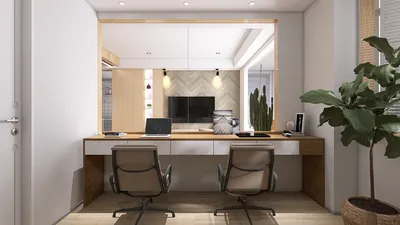


Throughout the years, a recurring trend I've observed in living rooms is the ingenious placement of large mirrors. In the contemporary design landscape, particularly with the increasing admiration for open and airy environments, mirrors do more than just reflect—they elevate the ambiance. Even in a cozy space, the strategic placement of a grand mirror can entirely alter the way the room is perceived. In this article, I will unveil ten large mirror ideas for living rooms that I've personally experimented with and adored, integrating my design insights with industry findings while considering tools like Homestyler.
1. Full-Height Statement Mirrors
Personal Experience: I once installed a floor-to-ceiling mirror along a slender wall in a living room. The change was immediate—visitors believed the area had doubled in size.
Advantages: It adds a striking sense of verticality and reflects light deeper into the space. Research from Architectural Digest suggests that full-height mirrors can enhance the perceived area by up to 30% in compact spaces.
Disadvantages: These mirrors can be heavy and tricky to install, and they may overpower the look if the room is already filled with substantial furniture.
Recommendation: If you're working with a tighter budget, consider mirrored panels instead of one large surface—they’re simpler to set up and can be adjusted later.
2. Leaning Oversized Mirrors
Personal Experience: The relaxed, art-gallery feel of an oversized mirror resting against the wall is something I cherish. I implemented this in a client’s minimalist home, adding instant charm.
Advantages: They are versatile and easy to reposition; creating a stylish focal point effortlessly.
Disadvantages: They demand stable floor space, which may not be ideal for households with active pets or young children.
Example: In my minimalist project, we chose a bronze-framed leaning mirror that softened the stark white walls beautifully.
3. Antique-Framed Mirror Walls
Personal Experience: In a Victorian-style lounge, I created a wall composed of antique-framed mirrors in various shapes. It resembled a curated art installation with practical advantages.
Advantages: These mirrors have a distinctive character and serve as both art and light enhancers.
Disadvantages: Sourcing authentic frames can be both expensive and time-consuming.
Recommendation: Be selective when mixing styles—too much variety may lead to a chaotic appearance.
4. Large Round Statement Mirrors
Personal Experience: Large circular mirrors work wonders suspended above fireplaces. I appreciate how they break the rectangular standard and soften the environment.
Advantages: They provide a gentle, organic outline, improving balance in modern spaces.
Disadvantages: The transportation and installation of large circular mirrors can be a bit challenging.
Cost: Prices vary significantly, but recent projects typically fell between $400 and $800 for quality options.
5. Mirrors with Integrated Shelving
Personal Experience: For a compact urban apartment, I designed a custom mirror featuring slim shelves. It served as both art and storage.
Advantages: It conserves space while providing functional storage to amplify light.
Disadvantages: They can appear cluttered if too many items are placed on the shelves.
6. Windowpane-Style Mirrors
Personal Experience: I adore the use of these mirrors in industrial lofts—they replicate large factory windows and inject character into contemporary living spaces.
Advantages: They create architectural interest and frame reflections like pieces of art.
Disadvantages: The grid lines might visually disrupt if you're after a clean, open reflection.
Example: In one industrial loft project, we paired this style with exposed brick and steel for a cohesive aesthetic. Check out how the windowpane mirror coordinated with the overall loft design.
7. Dramatic Backlit Mirrors
Personal Experience: Backlit mirrors introduce a subtle, filmic glow. I installed one above a console table for a moody yet luxurious effect.
Advantages: They enhance ambiance and are perfect for evening gatherings while adjusting lighting schemes.
Disadvantages: They need an electrical supply, limiting placement options on walls.
8. Slim Tall Mirrors in Pairs
Personal Experience: In a room with high ceilings, positioning two tall mirrors side-by-side beautifully drew the eye upward.
Advantages: They emphasize vertical space and work wonderfully for symmetrical arrangements.
Disadvantages: They might appear awkward in areas with low ceilings.
Recommendation: Keep frames understated to avoid overwhelming the overall composition.
9. Mirrored Accent Furniture
Personal Experience: I've developed spaces where mirrored coffee tables served as light reflectors, brightening otherwise dense color schemes.
Advantages: They provide a subtle sheen without dominating the decor, beautifully mirroring the surrounding elements.
Disadvantages: They require regular cleaning due to fingerprints and smudges.
Example: In one modern glam project, we positioned a mirrored console against a rich navy wall to enhance depth.
10. Artistic Etched Mirrors
Personal Experience: Custom-etched designs on large mirrors transform them into works of art.
Advantages: They offer a unique aesthetic; adding texture and intrigue while preserving reflective properties.
Disadvantages: Commissioning custom etching can be costly and labor-intensive.
Recommendation: Develop etching patterns towards the edges to maintain a strong central reflective area.
Conclusion
Large mirrors in living rooms serve more than just functionality; they reshape light, enhance space, and redefine style. Limited areas inspire bolder decisions, yet even in expansive lounges, mirrors challenge design norms. Reflective elements, as noted by Elle Decor, combine aesthetic appeal with spatial advantages. Which of these large mirror ideas could you envision incorporating into your space using Homestyler?
FAQ
1. What is the method for selecting the appropriate size of a large mirror for my living area?
Measure the dimensions of your wall and furniture arrangements. Typically, aim for a mirror that is about two-thirds the width of the furniture it is above.
2. Are large wall mirrors safe for homes with children?
Yes, provided they are securely mounted. Use safety-backed glass and avoid leaning mirrors in heavily trafficked regions.
3. Do mirrors genuinely make a room appear larger?
Certainly. As Architectural Digest states, strategically placed mirrors improve depth perception and light, creating an illusion of a more spacious environment.
4. Which frame style suits most interiors?
Simple, slim frames made of wood or metal typically harmonize with various styles. An understated frame will not overshadow your overall design.
5. At what height should I hang a large mirror?
Position the mirror at eye level, roughly 57 to 65 inches off the ground, depending on the ceiling height.
6. Is it feasible to use multiple small mirrors instead of a single large mirror?
Absolutely. Arrange them in a gallery style for visual interest while still allowing for light reflection.
7. What is the optimal placement for maximizing natural light?
Position mirrors across from windows to reflect outdoor views and increase sunlight.
8. Where can I check examples of various mirror arrangements?
Explore diverse room styles on design platforms, such as Homestyler, for inspiration and ideas.
Discover your creativity with Homestyler! This user-friendly online home design platform offers an intuitive design tool, stunning 3D renderings, and a wealth of design projects and DIY video tutorials. Transform your space effortlessly and bring your vision to life today!
Design Now for FREE
































