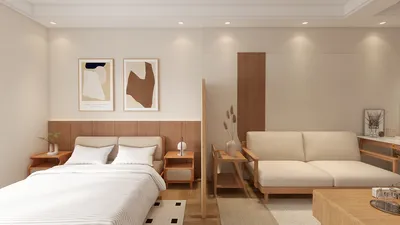


In the past few years, the trend of small space living has been redefining the principles of interior design, often in a remarkably positive way. As a designer, I have come to appreciate that even a modest living room can be a canvas for immense creativity, especially when integrating adaptable elements such as a futon. In this article, I will present 10 innovative futon living room ideas that I've witnessed personally, which have the power to transform compact spaces while maintaining a balance between style and comfort.
1. Minimalist Futon with Concealed Storage
My Experience: I once designed a studio for a young professional where we selected a sleek white futon with hidden drawers beneath. This piece served as both her seating area and linen storage, exemplifying the beauty of practical minimalism.
Advantages: This design merges seating with storage, making it perfect for small living room arrangements that require multifunctionality. The clean lines also enhance an open and airy feel, as highlighted by trends reported in Architectural Digest.
Drawbacks: The integrated storage can add to the futon's weight, necessitating two people to move it.
Advice: Choose a futon with soft-close drawers to minimize noise in compact areas. One of my most successful projects featured a Scandinavian-style apartment with a minimalist futon that cleverly concealed storage, which visually decluttered the entire environment.
2. Japanese-Style Low Futon
My Experience: A client enamored with Zen design opted for a low-profile futon placed on tatami mats. This choice created an immediate sense of calm and grounding within the space, aiding her relaxation after long days.
Advantages: This style enhances visual openness by lowering sightlines, making it ideal for small living rooms with low ceilings while also reflecting a timeless cultural aesthetic.
Drawbacks: Low seating can pose challenges for older guests seeking comfort.
3. Futon with Striking Accent Fabric
My Experience: In a bland rental, I injected life by selecting a futon adorned with a striking botanical print, transforming it into the room’s focal point of color.
Advantages: This design instantly captures attention and can easily be refreshed with interchangeable slipcovers for seasonal variations.
Drawbacks: Bold patterns might restrict other decor choices, and an excess of patterns can overwhelm a small living area.
4. Convertible Futon Sectional
My Experience: I designed a modular futon sectional for a family with young children, allowing them to rearrange it based on their daily needs. It transformed into a bed for movie nights or split for guest accommodations.
Advantages: This type of futon offers remarkable flexibility, adapting well to the varying configurations of small living room designs. According to research from Houzz, modular furniture significantly enhances functionality in compact spaces.
Drawbacks: The cost may be higher compared to a standard futon; it also requires frequent rearrangement.
Advice: Prioritize robust connectors between sections. My favorite outcome was pairing a sectional with an L-shaped design to free up additional floor space.
5. Futon with Wooden Armrests
My Experience: In a client's urban loft, I introduced a futon featuring warm walnut armrests, adding a cozy, organic touch to an otherwise industrial setting.
Advantages: The wooden accents bring natural texture and harmonize well with various color schemes, providing a visual distinction amidst fabric-heavy designs.
Drawbacks: Armrests can add bulk, giving the futon an appearance of being larger than it actually is.
6. Wall-Mounted Backrest Futon
My Experience: In a diminutive living space, we opted to replace the backrest of the futon with a padded wall panel. This approach saved depth and transformed the area into a stunning statement feature.
Advantages: This design not only optimizes space but also introduces a modern, sleek aesthetic that can double as a piece of art.
Drawbacks: Installation requires wall preparation and hardware, and it lacks the versatility of a traditional freestanding futon.
7. Leather Futon for a Sophisticated Touch
My Experience: In a bachelor’s apartment, a black leather futon instantly enhanced the atmosphere without making the space feel cluttered.
Advantages: This material is easy to clean, durable, and contributes a refined appearance to small living areas.
Drawbacks: Leather can be chilly in colder weather and may not fit casual home decor styles.
8. Futon with Integrated Pull-Out Coffee Table
My Experience: In one design project, the futon's frame featured a built-in pull-out table that my client utilized as both a workspace and dining surface.
Advantages: This feature is ideal for compact living rooms, adding extra functionality without requiring additional furniture.
Drawbacks: The stowed table can limit legroom; moving components necessitate regular maintenance.
9. Bright White Futon in an All-White Environment
My Experience: For a client seeking tranquility, we coordinated the futon's color with soft white walls and flooring. The effect was a beautifully luminous space throughout the day.
Advantages: This design expands the perception of space, working beautifully in modern small living room concepts.
Drawbacks: White fabrics require more upkeep and are not well-suited for homes with pets unless covered with slipcovers.
Advice: Look into performance fabrics for enhanced stain resistance. In one project, I combined it with glass accents that brightened and lengthened the room’s appearance.
10. Vintage-Style Futon with Tufted Detailing
My Experience: I found a mid-century inspired tufted futon for a retro-themed apartment, merging nostalgic design with modern functionality flawlessly.
Advantages: This design adds character and works effectively as a statement piece, blending vintage and contemporary styles.
Drawbacks: The tufting may trap crumbs or dust and may not be as comfortable as softer pillow-back alternatives.
Conclusion
Designing a cozy living area with a futon doesn't equate to compromising on aesthetics—it’s about making thoughtful, creative selections that amplify the character and efficiency of your space. As small-space expert Sarah Susanka highlights in "The Not So Big House", skillfully designed compact spaces can often feel warmer and more welcoming than larger, less personalized environments. Which of these inspiring futon living room ideas will you consider implementing into your home?
FAQ
1. What size futon is best for a small living room?
Typically, a twin or full-size futon strikes the right balance, providing adequate seating without overwhelming the space.
2. Can futons be comfortable for daily use?
Yes, particularly if you select a high-density foam mattress paired with a solid frame. Consumer Reports supports this with comfort ratings for quality futons.
3. How can I make a futon resemble a conventional sofa?
Incorporate structured cushions, a fitted slipcover, and a side table to achieve a sofa-like illusion.
4. Are futons durable?
With a quality hardwood or metal frame and consistent care, futons can provide longevity for many years.
5. What styles pair best with futons?
They adapt seamlessly to various aesthetics, including minimalist, bohemian, industrial, or formal themes, depending on fabric and structure.
6. How should I arrange a living room with a futon?
Start by positioning the futon against the longest wall, ensuring at least three feet of free space in front for comfort.
7. Can a futon serve as a guest bed?
Definitely! Many modern futons come with thick mattresses that are suitable for occasional overnight visits.
8. What is the budget range for a quality futon?
Quality futons generally range from $300 to $800, depending on the materials and features, with custom options available at higher prices.
Discover your dream space with Homestyler! This user-friendly online home design platform offers an intuitive design tool, stunning 3D renderings, and a wealth of inspiring design projects. Plus, with DIY video tutorials, you'll have everything you need to bring your creative vision to life!
Design Now for FREE
































