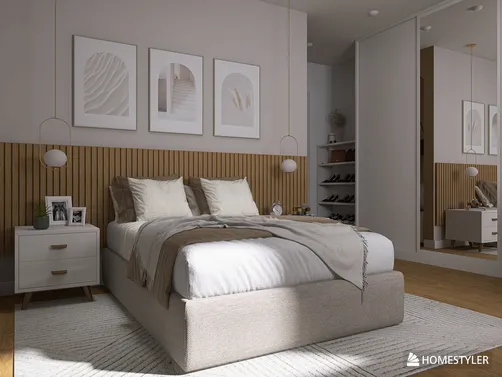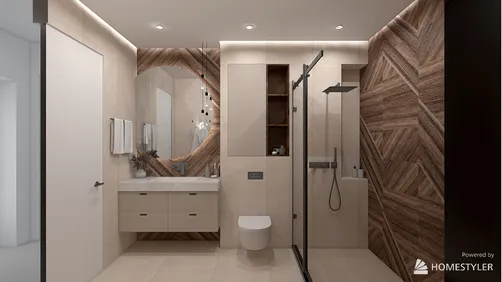
In an experience with a client who insisted that their cramped bathroom should feature a wall reminiscent of a movie poster—complete with a glossy finish and a frame—it reinforced a principle I've come to value: small bathroom design often thrives on creativity rather than hefty budgets. In this article, I will explore five inventive wall decorating ideas that I've successfully utilized in past projects to enhance the style and perceived spaciousness of compact bathrooms.
1. Vertical Tile Banding — Elevate Ceiling Perception
Employing slender, vertically arranged tiles or a slim band of contrasting color from the floor to the ceiling creates an illusion of height. This technique works particularly well alongside tall mirrors which further enhance the perception of space.
Benefits: It's budget-friendly if leftover tiles are repurposed, and installation is straightforward. Challenge: Maintaining clean grout lines in moist environments—select glazed tiles and mid-tone grout to mitigate this issue.
save pin
2. Wainscoting with Half-Wall Paint
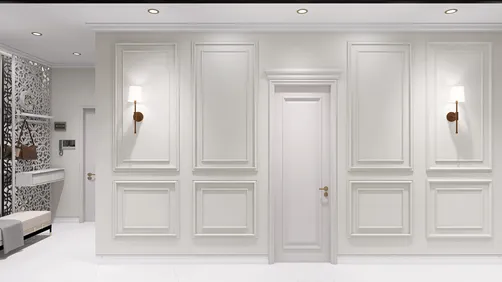
Consider painting the upper portion in a soft hue while installing a simple beadboard or moisture-resistant wainscoting on the lower half. This not only shields the walls from splashes but also adds texture without overwhelming the area.
I've implemented this idea in rental properties where budget constraints were a concern—tenants appreciate the semi-custom appearance, and landlords value its durability.
save pin
3. Large-Scale Art or Waterproof Decals
Opt for a single oversized, waterproof piece of art or a set of cohesive decals rather than cluttering the space with multiple small frames. A singular bold piece can serve as an eye-catching focal point and maintain the narrow walls uncluttered.
Positioning artwork above the toilet or opposite the shower gives the room a curated feel. If you wish to experiment with layout beforehand, sketch it out to scale on paper or utilize digital tools to assess proportions.
For those exploring layouts and proportions, utilizing planning tools such as Homestyler can streamline the process of creating wall and floor compositions.
save pin
4. Mirrors as Wall Coverings — Maximize Light, Minimize Clutter
Installing a continuous mirror panel or a collection of mirrors expands sightlines and redirects light throughout even the smallest bathrooms. In the past, I replaced three smaller mirrors with one tall sheet, which instantly made the space feel more expansive.
Advantage: Mirrors provide significant visual impact at a low cost. However, ensure careful installation to prevent moisture-related issues by properly sealing and securing their backing.
save pin
5. Textured Paint or Micro-Tiles for Accent Areas
Choose textured plaster finishes or tiny mosaic tiles for a narrow accent strip either behind the sink or along a short wall. This tactile feature adds depth while occupying minimal space.
Though it requires more skill, even a small application yields significant results. If considering how lighting and finishes will appear before making a commitment, tools like Homestyler allow you to visualize outcomes to avoid costly surprises.
save pin
FAQ
Q: Which paint finish works best for small bathrooms?
A: Utilize satin or semi-gloss finishes for walls as they are moisture-resistant and easy to clean. Though flat paint conceals imperfections, it’s not ideal for areas prone to water exposure.
Q: Is wallpaper viable in a small bathroom?
A: Absolutely—vinyl or specially treated wallpapers designed for bathroom use can be stunning when applied to well-ventilated walls; just be cautious with paper-backed versions in humid areas.
Q: How can I effectively prevent mold when wall decorating?
A: Manage humidity through proper ventilation and quick-drying materials. The EPA suggests reducing moisture and timely repair of leaks (visit https://www.epa.gov/mold for further guidance). Implementing proper exhaust and moisture-resistant finishes also aids in mold prevention.
Q: Are tiles the best choice for areas behind sinks?
A: Yes, tiles are practical for the space as they protect walls from splashes and are easy to clean. While small-format tiles can add texture, they do require meticulous grout maintenance.
Q: How can I lighten up a dark small bathroom?
A: Incorporate large mirrors, light-reflective paint colors, glossy tiles, or fixtures to amplify light. Additionally, strategic lighting with layered task and ambient sources helps eliminate shadows.
Q: What are some budget-friendly accent ideas?
A: Consider peel-and-stick tiles, waterproof decals, or a fresh coat of contrasting paint to create impactful changes affordably. Concentrating on one feature area helps maintain both low costs and high visual impact.
Q: Should I tile entire walls or just the splash zones?
A: In small bathrooms, I typically recommend tiling only the splash zones to keep expenses manageable while emphasizing key areas without making the space feel cramped. Full wall tiling is cleaner for wet areas but significantly pricier.
Q: How can I test a wall design before making a commitment?
A: Use paint swatches, temporary decals, or small tile samples to assess colors and textures in real light. For a more comprehensive preview, consider utilizing digital mockups or 3D render tools like Homestyler to evaluate proportions and lighting effects.
save pin
Discover the magic of home design with Homestyler! This user-friendly platform offers a powerful online design tool, stunning 3D renderings, and a wealth of inspiring design projects. Plus, with engaging video tutorials, you’ll have everything you need to transform your space into a dream home effortlessly!