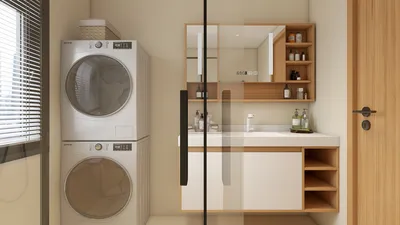
A few years back, a client posed a challenging question: could we fit a walk-in shower, a full-size sink, and a washer-dryer into a mere 2m² bathroom, all without it resembling a cramped submarine? Initially, it seemed daunting, yet this project illuminated a crucial truth: small spaces can ignite incredible ideas. Today, I’m excited to unveil my top 10 small wet room bathroom concepts, drawn directly from my design notebook and my personal renovation experiences, while also highlighting how you can use tools like Homestyler to visualize these designs effectively.
1. Opt for Floor-to-Ceiling Tiles
I enthusiastically embrace the idea of tiling from floor to ceiling. This approach not only enhances the perception of height and unity in the space but also simplifies cleaning. Although it may incur higher material costs, the aesthetic rewards are substantial, especially when combined with a well-thought-out layout plan.
2. Incorporate Clear Glass Panels
Using frameless glass keeps the shower area feeling open and airy. In compact wet rooms, bulky frames can shrink the visual space; however, this technique allows light to flow freely without hindrances.
3. Install Wall-Mounted Fixtures
Choosing floating sinks and toilets frees up valuable floor area, making cleaning seamless and creating the perception of a more expansive footprint.
4. Utilize Niche Shelving in the Shower
Rather than filling your space with cluttered metal racks, consider building recessed shelving into the walls. This solution keeps your bottles organized and prevents a chaotic look in the shower.
5. Choose a Single-Slope Floor Drain
A straightforward slope toward a linear drain appears sleek and negates the necessity for a cumbersome shower tray, making it perfect for minimalist wet rooms.
6. Invest in Multi-Function Fixtures
An adaptable showerhead with a handheld option caters to everyone’s preferences while simplifying corner cleaning. I once collaborated with a client who incorporated it into a full-space redesign, enhancing overall ergonomics.
7. Favor Warm, Light Shades
Gentle whites, sandy beiges, or soft pastels reflect light beautifully. However, be cautious with pure white if your water contains high mineral levels, as it may stain grout more quickly.
8. Consider Underfloor Heating
Stepping onto a cold floor after a shower is never pleasant. Underfloor heating not only increases comfort but also accelerates drying, which is crucial in compact, fully tiled environments.
9. Use Large Mirrors
Strategically placed mirrors can visually double the size of your wet room. Just remember to select one with anti-fog capabilities, or you’ll find yourself wiping away steam every morning.
10. Ensure Built-In Ventilation
Adequate airflow is essential to prevent mold growth in consistently damp wet rooms. If possible, conceal the vent behind a decorative panel; one of my clients successfully disguised theirs within a wood-like ceiling to evoke a spa atmosphere. Pairing this with a carefully designed layout can create both beauty and functionality, which can be easily visualized using Homestyler.
FAQ
Q: Is it possible to convert my small bathroom into a wet room without elevating the floor?
A: Yes, but hiring a professional is crucial to establish the right slope and waterproofing. Sometimes, a slight raise of about 2–3cm may be necessary for optimal drainage.
Q: What’s the most common mistake in designing small wet rooms?
A: Overcomplication. Introducing too many materials, fixtures, or barriers can make the space feel even more confined. It’s best to maintain simplicity and cohesion.
Looking to elevate your home design game? Homestyler is your go-to platform! With its user-friendly online design tool, stunning 3D renderings, and a wealth of DIY video tutorials, you can effortlessly create and visualize your dream space. Start designing today!