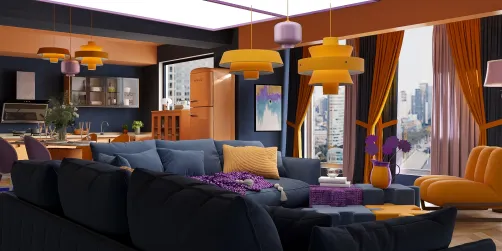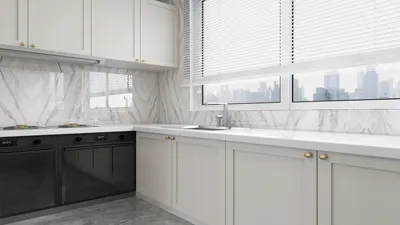
With over ten years in interior design, I've discovered that the most creative ideas often emerge from small spaces. In the contemporary trend of open-plan living, the living room sectional has evolved from merely a seating option to the centerpiece of the room, making a profound statement. Here, I’m excited to present my top 10 sectional layout ideas, intertwining my personal design experiences with expert insights, including the benefits of using Homestyler to visualize these arrangements.
1. L-Shaped Sectional for Cozy Corners
My Experience: I once transformed a compact apartment by integrating an L-shaped sectional that fit perfectly into a corner, thus crafting an inviting nook. This setup is perfect for ensuring efficient use of space while fostering intimacy.
Advantages: Excellent for demarcating seating areas in open layouts while optimizing corner spaces. It pairs beautifully with soft area rugs to define the section.
Drawbacks: If the sectional has a tall back, it might create a boxed-in sensation in small rooms.
Advice: Opt for a low-profile backrest and lighter materials to alleviate that enclosed feel.
2. Floating Sectional Away from Walls
My Experience: During one loft renovation, I positioned the sectional in the center, enabling two pathways—clients were thrilled with how it effortlessly divided the conversation and dining spaces.
Advantages: Preserves an open ambiance in expansive areas and allows for design versatility.
Drawbacks: Needs sufficient space behind the sofa, which may be unsuitable for very compact areas.
For further innovative spatial ideas, consider utilizing Homestyler to explore open-plan design solutions that maintain functionality while looking trendy.
3. U-Shaped Sectional for Larger Gatherings
My Experience: I crafted a U-shaped sectional for a client who loved hosting movie nights where everyone could comfortably view the screen without straining their necks.
Advantages: Ideal for families or frequent entertainers, naturally fostering togetherness.
Drawbacks: Takes up considerable floor space and may overpower smaller rooms.
4. Chaise Extension for Lounging
My Experience: Incorporating a chaise at one end of my sectional quickly became my favorite weekend relaxation spot at home.
Advantages: Facilitates a luxurious lounging option without overwhelming your layout; pairs beautifully with floor-to-ceiling windows.
Drawbacks: Limits rearrangement possibilities if you often change layouts.
5. Sectional + Accent Chairs Combo
My Experience: I enjoy softening the rigidity of a sectional by introducing accent chairs—it’s akin to adding punctuation to enhance a sentence’s flow.
Advantages: Expands seating capacity and introduces diverse visual textures.
Drawbacks: Can appear cluttered if not balanced with the area rug’s dimensions.
Thoughtful element pairing is similar to employing creative seating arrangements for cohesive rooms in client projects.
6. Modular Sectional for Ultimate Flexibility
My Experience: For a city apartment update, we opted for a modular sectional that could transform into loveseats for dinner events.
Advantages: Adapts seamlessly to different room dimensions, event types, and moods; a wise investment for the future.
Drawbacks: Individual components may separate without suitable connectors.
7. Low-Profile Sectional for Small Spaces
My Experience: In micro-apartments, a low-backed sectional ensured open sightlines, making the area feel more expansive.
Advantages: Enhances the perception of space and aligns with minimalist aesthetics.
Drawbacks: Might provide inadequate support for taller individuals.
8. Sectional with Storage Underneath
My Experience: I designed one for a family needing a place for blankets and games—this design kept clutter unseen.
Advantages: Perfect for smaller apartments requiring concealed storage; doubles the functional value.
Drawbacks: May be heavier to maneuver and higher in initial costs.
9. Mixed Material Sectional Styling
My Experience: Blending leather with fabric cushions in a sectional brought a luxurious yet comfy atmosphere to a client’s abode.
Advantages: Introduces texture variety while masking wear in high-use areas.
Drawbacks: Necessitates careful curation to avoid a chaotic visual effect.
It’s akin to when I applied contrasting textures to elevate living areas for a more dynamic experience.
10. Sectional Framing a Feature Element
My Experience: I’ve strategically placed sectionals to frame focal points such as fireplaces or large windows, naturally directing attention.
Advantages: Highlights integral architectural features and boosts symmetry.
Drawbacks: May compromise flexibility if you decide to change focal elements later on.
Conclusion
A living room sectional should not be seen as a constraint but as a chance to creatively use the available space. Whether it be an L-shape for warmth, a modular for adaptability, or a storage-friendly design, each layout offers unique charm. The American Society of Interior Designers suggests that the right setup can enhance the perceived size of a room by as much as 15%. Which of these ten sectional design ideas intrigues you for your home? Utilize tools like Homestyler to visualize your options and make your design dreams a reality.
FAQ
1. What is the best living room sectional layout for small spaces?
Low-profile or L-shaped arrangements tend to work best, as they maximize seating while ensuring clear sight lines.
2. How do I arrange a sectional in an open-plan layout?
Floating the sectional to establish zones is a popular strategy; it improves traffic flow and distinguishes the living area from dining spaces.
3. Can a sectional work in a narrow living room?
Absolutely, opt for sleek designs without bulky arms to preserve walking space.
4. What size rug should I use with a sectional sofa?
Ensure at least the front legs of the sectional rest on the rug to create a cohesive appearance, as recommended by the American Society of Interior Designers.
5. Are modular sectionals worth it?
They offer exceptional versatility, adapting to changes in your lifestyle or moving circumstances, making them a smart long-term investment.
6. How do I make a sectional feel balanced with other seating?
Incorporate accent chairs and side tables to add rhythm and prevent any single element from dominating the view.
7. Can I place a sectional with chaise in a small apartment?
Yes, just ensure that the chaise doesn’t obstruct movement; reversible chaises add additional flexibility.
8. What’s the most versatile sectional style?
Modular sectionals are the most adaptable, as they can be rearranged into various configurations based on your needs.
Homestyler is an exceptional online home design platform that empowers you to create stunning spaces effortlessly. With its user-friendly design tool, impressive 3D renderings, and a wealth of DIY video tutorials, you can transform your design ideas into reality and explore endless possibilities for your home!




























![[♥️♥️]](https://hs-designs.homestyler.com/production/design/images/2025-12-21/00ce621d-f39a-433f-b8bf-2f6258068b7a/1766281859081/9484069.jpg?x-oss-process=image/resize,w_502,m_mfit/format,webp)