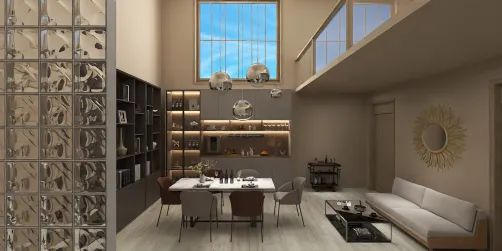
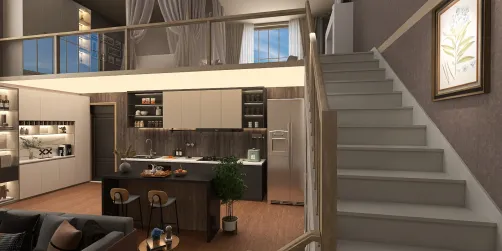
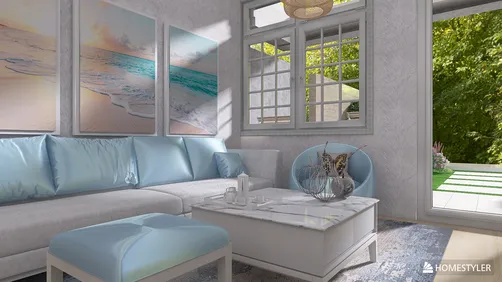
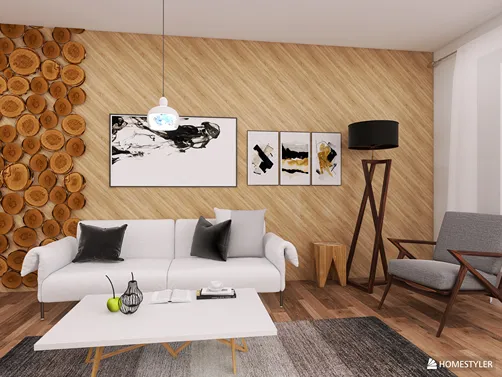
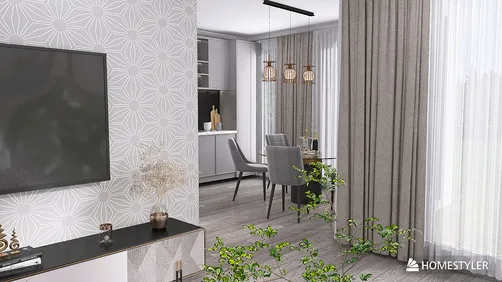
In the last ten years of designing small apartments, I've discovered that the timeless allure of a grey and white living room palette never fades away. This color scheme is adaptable, easy to customize, and — particularly beneficial for compact spaces — delivers that desired airy, sunlight-filled atmosphere. Small environments often ignite great creativity, and today, I'm excited to present 10 grey and white living room concepts that merge my personal experiences with expert design advice. These ideas range from minimalist aesthetics to inviting, layered styles that can breathe new life into your home using tools like Homestyler.
1. Minimalist Grey and White Design
In my experience with a client in Shanghai who sought a serene, uncluttered ambiance, I embraced a minimalist grey and white approach. The design featured sharp lines, straightforward forms, and no unnecessary embellishments.
Advantages: This style keeps the area feeling spacious and contemporary. It's particularly effective for ideas in small living rooms, where light reflects off the white, while the grey grounds the overall appearance.
Disadvantages: It might come across as slightly chilly without the addition of textures or decorative elements.
Suggestion: Introduce a tactile rug to soften the aesthetic and reduce echo.
2. Grey Sofa Set Against White Walls
In my apartment, I've opted for pristine white walls, pairing them with a luxurious deep-grey sofa. This combination offers a versatile backdrop complemented by a comforting anchor.
Advantages: This setup facilitates easy alterations with seasonal cushions and decor. The white walls amplify natural light in compact living areas.
Disadvantages: Grey upholstery can highlight dust, necessitating regular cleaning.
Utilizing Homestyler allows you to experiment with grey and white sofa layouts virtually before making lasting decisions.
3. Sheer White Curtains with a Grey Accent Wall
I once revitalized a dim rental by painting one wall a bold charcoal grey and adding sheer white curtains — this instantly infused depth while maintaining brightness.
Advantages: Accent walls enhance character, while sheer curtains create a beautifully soft glow of incoming light.
Disadvantages: Excess dark grey may lead to an enclosed feel if over-applied.
4. Textured Layers in Grey and White
Texture is my go-to strategy for averting the dullness of monochrome: consider wool throws, linen pillows, and knitted poufs.
Advantages: This approach introduces warmth and variety to a limited color scheme, a technique endorsed by the American Society of Interior Designers.
Disadvantages: Sourcing natural materials can be costly.
5. Grey and White Combined with Wooden Accents
Integrating wooden elements (like an oak coffee table and walnut shelves) into a grey and white palette softens the look and adds an organic touch.
Advantages: It introduces warmth and diversifies the color scheme. This combination works seamlessly with Scandinavian-inspired living room designs.
Disadvantages: Too many wood tones can clash; it's best to limit the finishes to one or two.
6. A Grey Rug as the Centerpiece of a White Room
In many of my compact projects, utilizing a large grey rug has anchored the overall aesthetic. It conceals everyday wear better than lighter alternatives.
Advantages: It visually grounds furniture and is ideal for rental units where flooring modifications are not feasible.
Disadvantages: Dark rugs might need more frequent vacuuming to maintain a fresh appearance.
7. White Shelving on Grey Backdrops
Float white shelves against soft grey walls to achieve a chic, gallery-like effect that is also practical.
Advantages: Perfect for showcasing art or plants, and the brightness of the shelves enhances the wall without the need for painting.
Disadvantages: Requires careful arrangement to avoid creating visual clutter.
8. Pattern Mixing in Grey and White
I enjoy blending stripes, geometric patterns, and subtle florals — all in shades of grey and white — to introduce quiet visual appeal.
Advantages: This approach cultivates a tailored, layered atmosphere without being overwhelming. It's perfect for those with eclectic tastes.
Disadvantages: Mixing patterns can cause discord if the scales and tones are mismatched.
9. Metallic Accents with Grey and White
In urban settings, incorporating metallic details such as brushed gold lamps or chrome coffee tables can elevate a grey and white design.
Advantages: Reflective surfaces boost illumination, as highlighted in Houzz trend analyses. They add a touch of glamour without necessitating a complete overhaul.
Disadvantages: Trend-driven metallics may not age well if overemphasized.
Suggestion: Maintain harmony by sticking to one metallic finish.
10. Gentle Grey and White with Vibrant Touches
One of my preferred ‘safe’ experiments is to maintain 90% grey and white while introducing a vibrant cushion or art piece for seasonal variation.
Advantages: It allows the grey and white to serve as a versatile foundation. This method is especially effective for small-space color planning.
Disadvantages: An overabundance of vibrant elements can disrupt the calming essence of the palette.
Conclusion
Ultimately, a grey and white living room embodies more than mere limitations; it's about astute layering, texture, and equilibrium. With the right strategies, you can infuse depth, warmth, and character, even in confined areas, as design reports from Elle Decor corroborate. Which of these concepts are you eager to implement in your own space?
FAQ
1. Is grey and white suitable for a small living room?
Absolutely, this combination reflects light and fosters an airy ambiance while adding a contemporary flair.
2. How can I prevent a grey and white room from appearing too cold?
Incorporate layered textures, warm lighting, and natural features such as wood or greenery.
3. What accent colors complement grey and white effectively?
Soft pastels, navy blue, or metallic hues harmonize beautifully without clashing with the primary palette.
4. Are grey sofas challenging to maintain?
They may reveal dust and lint, but consistent vacuuming can address this issue.
5. Can different shades of grey be combined in a single room?
Definitely — varying tones create depth and prevent a flat visual, according to the British Institute of Interior Design.
6. Do grey and white coexist in traditional interiors?
Yes, when paired with classic furniture shapes and textures, this palette can achieve a timeless look rather than appearing stark.
7. How can I select the right shade of grey paint?
Test samples under various lighting conditions — cooler greys display blue undertones, while warmer variants incline towards taupe or beige.
8. Is it possible to visualize my grey and white room before painting?
Yes, utilize digital design tools to imagine polished grey and white layouts prior to commencing any actual work.
Discover the joy of home design with Homestyler! This user-friendly platform offers an intuitive online design tool, stunning 3D renderings, and a wealth of design projects. Plus, with engaging video tutorials, you’ll be inspired to create your dream space effortlessly.