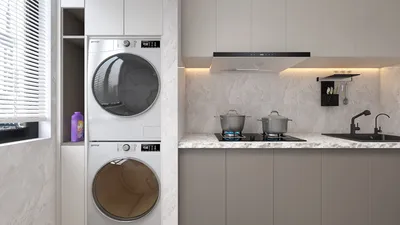


I once attempted to fit an island into a narrow seven-foot galley kitchen because a client insisted on having a ‘real island’—and I unfortunately miscalculated the dimensions. We nearly installed a piece that would have completely obstructed the flow of the space, which served as a lesson that in small kitchens, clever design is more important than bravery. If you're looking to add compact charm without creating chaos, begin with space-efficient island ideas that prioritize clearances and versatility. One excellent option is using Homestyler to visualize these concepts.
1. Slim, elongated islands functioning as counter extensions
I enjoy the design of a slim island that serves as a functional extension of the countertop—think of a butcher-block top supported on slender legs or a floating shelf. This design is perfect for breakfast, provides additional prep space, and maintains open sightlines; the drawback is minimal seating, so ensure you choose stools that can be tucked away completely beneath the island.
save pin
2. Mobile islands with wheels for versatile flexibility
Wheeled options are often overlooked. A mobile island offers prep space when needed and can be easily moved when it’s not. I once had a rolling island with a drop leaf that transformed into a serving cart during gatherings—both stylish and functional. However, make sure to select high-quality locking casters to prevent it from shifting unexpectedly while in use.
save pin
3. Islands with integrated storage and narrow designs
In compact kitchens, I design islands that include side-opening drawers or built-in vertical racks for trays and baking sheets—allowing the island to feel spacious without occupying too much floor area. For precise planning, I always create a scale-accurate layout prior to purchasing cabinets, as small errors can significantly impact tight spaces: scale-accurate layout.
save pin
4. Peninsula-style islands that connect rather than isolate
When true islands aren’t feasible, a peninsula can provide island benefits without needing the surrounding clearance. It facilitates an L-shaped workflow, allowing for the inclusion of a compact sink or a short breakfast bar. The downside might be a more enclosed feeling, but thoughtful lighting and open shelving can enhance the space's airiness.
save pin
5. Multi-functional islands combining seating, storage, and appliances
A clever trick for tiny kitchens is to incorporate multiple uses into the design—think drawer microwaves, pull-out cutting boards, and a compact appliance garage all rolled into one. While this might incur a slightly higher initial cost, the return on floor space and convenience is well worth it. Before making a decision, utilize 3D tools like Homestyler to visualize how the island will fit within your kitchen's layout and avoid any unexpected outcomes.
save pin
FAQ
Q1: What’s the minimum space needed around an island?
A: It's advisable to maintain at least 36 inches (91 cm) of space around the island for walkways; ideally, 42–48 inches is preferable for multiple cooks. This ensures that both traffic flow and cooking zones remain functional.
Q2: Can small kitchens actually accommodate islands?
A: Absolutely—provided the island is appropriately sized, mobile, or configured as a peninsula. It’s essential to focus on maintaining the work triangle and sightlines rather than the island's dimensions.
Q3: Are rolling islands stable enough for heavy preparation tasks?
A: With proper locking casters and a solid top, rolling islands can be quite stable for serious kitchen prep. I recommend opting for wheels that lock in place and a robust surface if you do a lot of chopping.
Q4: What materials are best suited for small islands?
A: Lightweight yet durable surfaces such as butcher block, engineered stone, or compact laminate keep the island practical without overwhelming the space. Budget-friendly laminate can effectively mimic more expensive materials.
Q5: How should I select seating for a narrow island?
A: Choose stools that can be tucked under the overhang, and consider backless designs to save on visual space. Measure the knee-to-knee clearance—about 18 inches per person—to avoid cramped seating arrangements.
Q6: Is it advisable to fit plumbing or appliances in a small island?
A: It is possible, though be prepared for higher installation costs associated with plumbing and ventilation. I usually suggest conserving appliance-heavy options for islands only when the overall layout enhances workflow.
Q7: What design considerations help improve flow in small kitchens?
A: Maintain clear major pathways, uphold countertop prep zones, and avoid islands that impede access to ovens or refrigerators. According to the National Kitchen & Bath Association (NKBA), ensure at least 36 inches of clearance around islands for safe circulation (source: https://www.nkba.org).
Q8: How can I test my island concept before making a purchase?
A: Utilize digital planning tools or create simple cardboard models at full scale to evaluate movement and ergonomics. Prototyping with mock-ups can save money and help prevent issues—I've avoided many unnecessary trips to the hardware store by testing out a taped layout of the island first.
save pin
Homestyler is an exceptional online home design platform that empowers you to create stunning interiors effortlessly. With its user-friendly design tool, impressive 3D renderings, and a wealth of design projects and DIY video tutorials, transforming your space has never been easier or more inspiring!
Projete agora para LIVRE
































