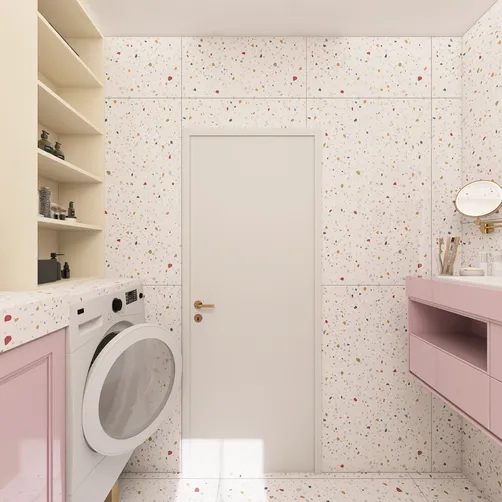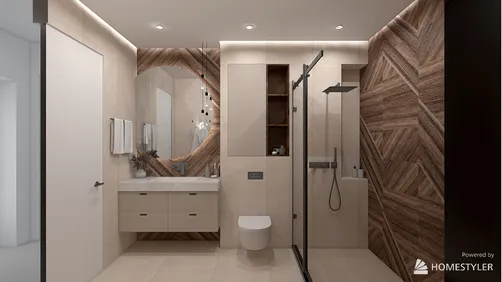
I once worked with a client who wanted an elegant matte-black pocket door to create a secret 'spa vibe' in their bathroom, but I realized the lock I purchased didn’t fit due to the thin jamb. This rookie mistake cost me a whole evening of adjustments. However, this experience taught me that pocket door locks are like the secret ingredient to a recipe: seemingly small yet incredibly impactful. Properly selected locks can transform an awkward layout into a serene retreat. Here, I present five practical inspirations for pocket door bathroom locks that I have successfully implemented in various projects utilizing Homestyler for planning.
1. Privacy Thumb-Turn Mortise Lock
My preferred choice for pocket doors where structure permits a mortise installation: a neat thumb-turn inside paired with an emergency release on the outside. This lock feels sturdy, presents a sleek look, and offers the reliable privacy you would expect from a hotel. The catch? You need sufficient jamb and door thickness for the mortise, which sometimes means reinforcing ultra-thin doors with a strike plate or a thin metal sleeve.
save pin
2. Sliding Pocket Door Hook Lock
Hook locks are straightforward and highly space-efficient. They are ideal for lightweight pocket doors in rental bathrooms where durability is crucial but budgets are limited. They’re also easy to install and fix, although they might not feel as 'premium' as a mortise lock. During a condominium project, I opted for a hook lock and incorporated a soft-close mechanism to avoid slamming; a small enhancement can make a significant difference.
save pin
3. Flush Pull with Integrated Privacy Cylinder
A flush pull that conceals a turn-latch provides the cleanest appearance, eliminating any protruding hardware that could snag towels. This design is modern and perfect for tight hallways where swinging doors would impede movement. However, installation can be tricky since the cylinder is embedded within the door, so precise cutouts are essential. To ensure accuracy, I once created a mock-up with cardboard before proceeding to cut the door.
save pin
4. Electronic Keypad or Sensor Lock
For cutting-edge bathrooms, or for families wanting to avoid fumbling in the dark, a slim electronic keypad or sensor on a pocket door is an excellent option. I installed one during a loft conversion, and the clients appreciated the convenience tremendously. The only downside is battery replacement; I usually position them near the top of the pocket cavity to keep wiring and access neat. If you're considering digital solutions, check out Homestyler for tips on planning wiring and clearances in compact spaces.
save pin
5. Indicator-Slider with Emergency Access
Sometimes the simplest options work best: an indicator-slider that displays occupied/unoccupied and has a small emergency access slot. This is an economical choice and works well in narrower doors. I installed this in a shared bathroom for a family of five, which significantly reduced accidental interruptions. Keep in mind that the indicator mechanism may stick over time; a dab of silicone grease once a year typically resolves that issue.
save pin
FAQ
Q1: What is the best lock type for a pocket bathroom door?
A1: I generally recommend using a thumb-turn mortise for its sturdiness; however, for thinner doors, a flush pull with an integrated cylinder or a hook lock can be more practical.
Q2: Can I retrofit a pocket door lock without removing the door?
A2: Often yes for surface-mounted or flush pull locks, but mortise installations usually require the door to be partially or fully removed to access the edge.
Q3: Are electronic locks safe for bathrooms?
A3: Yes, modern electronic locks are reliable and convenient; choose units equipped with a battery backup and an emergency mechanical override for peace of mind.
Q4: How do I handle emergency access for a locked bathroom pocket door?
A4: Opt for locks featuring an external emergency release option or select cylinders that offer emergency entry; steer clear of permanent deadbolts that could potentially trap an occupant.
Q5: Will humidity affect pocket door locks in bathrooms?
A5: Yes, humidity can corrode cheaper locks; I suggest using stainless or marine-grade finishes and providing occasional lubrication to prevent sticking.
Q6: What door thickness is needed for a mortise pocket lock?
A6: Most mortise sets require a thickness between 1-3/8" to 1-3/4"; always check product specifications. Reinforcing thinner edges with a metal sleeve can enhance compatibility.
Q7: Where can I plan precise clearances for locks and wiring in a compact layout?
A7: I usually create a 3D plan to visualize the pocket cavity and hardware placements before ordering components — tools like Homestyler can assist in optimizing hardware and wiring in tight spaces.
Q8: Are there building code considerations for bathroom pocket door locks?
A8: Indeed — many local codes call for emergency egress and accessible hardware; always consult local regulations or a licensed contractor. For detailed insights on accessibility and door hardware, consider reviewing the International Building Code (IBC) and ADA Standards.
save pin
Homestyler is your go-to online home design platform! With its user-friendly design tool, stunning 3D renderings, and a plethora of inspiring design projects and video tutorials, you can effortlessly create the home of your dreams. Start your design journey today!