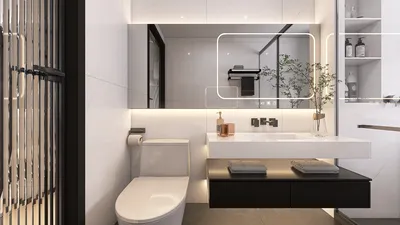
One of my clients once wanted to fit a cozy dining nook for two into a mere 6-foot corridor — and yes, that was indeed a unique challenge. This experience taught me invaluable lessons about priorities that no book could convey. Early in my career, I realized that having an efficient workflow is far more critical than opting for extravagant finishes: in a galley kitchen, how well you move around matters significantly more than your marble budget. Small spaces inspire large ideas, and I'm excited to share five practical galley kitchen concepts that I incorporate into real-life projects to enhance both functionality and style, highlighting tools like Homestyler to visualize these changes.
1. Take advantage of tall, narrow vertical storage.
Full-height cabinets and slim pull-out pantries along a galley run are among my favorites — they provide more storage than people often anticipate and help keep countertops tidy. This approach offers significant storage without the need to expand the overall footprint; however, careful planning of shelf heights is necessary to ensure that frequently used items are easy to access.
save pin
2. Ensure continuous countertops for seamless visual flow.
Extending an uninterrupted countertop along one or both walls not only visually stretches the space but also simplifies cleaning tasks. I’ve achieved this look using both budget-friendly laminate and luxurious quartz — both options work beautifully; the challenge lies in concealing seams and properly routing appliances to maintain practicality.
save pin
3. Incorporate light, reflective surfaces to enhance the sense of space.
Glossy cabinet finishes, a light-colored backsplash, and under-cabinet lighting can transform a narrow kitchen, making it feel more open and airy rather than cramped. When I have clients visualize the entire layout in 3D with Homestyler, they are often amazed at how the choice of brighter materials alters the atmosphere — just keep in mind that such surfaces can show fingerprints more easily.
save pin
4. Use two-tone cabinets to create visual depth without adding bulk.
By painting the upper cabinets a lighter color and the lower ones a darker shade, you can produce an illusion of depth while maintaining an impression of higher ceilings. I’ve employed combinations such as navy lowers with soft white uppers on multiple projects — this pairing is both stylish and forgiving; however, ensuring matching finishes can take extra time during procurement.
save pin
5. Favor open shelving and intelligent appliance selections.
Open shelves positioned at eye level can replace bulky cabinets, allowing easy access to daily dishes, while pairing them with slim appliances helps keep the corridor looking uncluttered. For those pressed for time, utilizing AI tools like Homestyler for planning can streamline the process of testing appliance placements and circulation before making purchases, but it’s worth noting that open shelving does require regular tidying.
save pin
FAQ
Q1: What is the ideal width for a galley kitchen?
I generally recommend a minimum overall width of 7–8 feet to allow two individuals to pass comfortably, with a 36-inch work aisle; that said, very narrow galleys can serve single cooks effectively. The National Kitchen & Bath Association provides guidance on layouts that emphasize a clear work triangle.
Q2: Are galley kitchens exclusive to small apartments?
Not necessarily — they deliver efficient layouts for both compact spaces and long, narrow homes. Their strength lies in creating streamlined workflows, though they can feel cramped without sufficient lighting and smart storage solutions.
Q3: How should I select appliances for a galley kitchen?
Opt for compact, integrated appliances whenever feasible, and consider drawer dishwashers or narrower refrigerators to save precious aisle space. Precise measurements and prioritizing daily usage functions are crucial.
Q4: Is open shelving a practical solution in a galley kitchen?
Yes, for items used regularly, it is not only practical but can also serve a decorative purpose. However, it requires consistent organization and cleaning. It’s advisable to incorporate a mix: closed cabinetry for bulkier items, while leaving open shelves for decorative display.
Q5: Can a galley kitchen accommodate an island?
An island can be integrated into the design only if you have a total width of at least 9–10 feet; otherwise, it will obstruct movement. In more compact galley designs, a slim rolling cart can act as a flexible alternative to a permanent island.
Q6: What type of lighting is most effective in a galley kitchen?
Layered lighting is essential: using recessed downlights for general illumination, task lighting beneath cabinets, and a standout pendant light at one end creates depth. Incorporating reflective backsplashes and light-colored cabinetry can significantly enhance the overall effect.
Q7: How can I maximize storage without causing clutter?
Employ vertical storage solutions, deep drawers for pots, and utensil organizers to maintain minimal countertops by keeping small appliances out of sight in cabinets. Regularly decluttering is key to ensuring smooth functionality in small kitchens.
Q8: Are there affordable materials that deliver a high-end appearance?
Definitely — options like engineered quartz, high-quality laminates, and ceramic tiles can replicate the look of more expensive materials while being durable and budget-friendly. I often combine a statement material with cost-effective choices to strike a balance between budget and style.
save pin
Discover your dream space with Homestyler! This user-friendly online design platform offers powerful 3D rendering, a vast selection of design projects, and helpful DIY video tutorials. Whether you're a novice or a seasoned designer, Homestyler makes bringing your interior design visions to life a breeze!






























![[♥️♥️]](https://hs-designs.homestyler.com/production/design/images/2025-12-21/00ce621d-f39a-433f-b8bf-2f6258068b7a/1766281859081/9484069.jpg?x-oss-process=image/resize,w_502,m_mfit/format,webp)