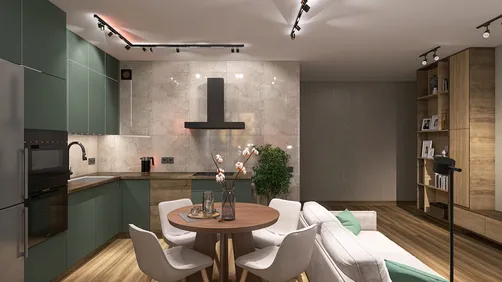
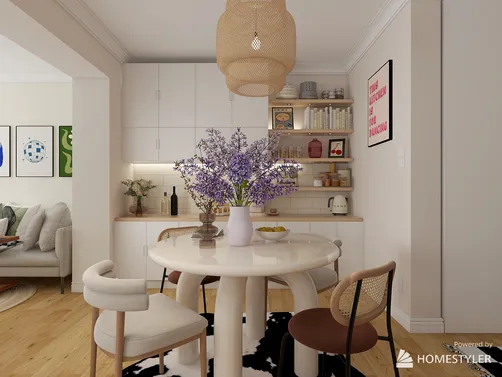
Over the years, I have created multiple dining tables inspired by mid-century design. The most enduring pieces prioritize essential elements: genuine materials, precise proportions, and a satin finish that enhances light while minimizing glare. This straightforward guide outlines a build process that you can accomplish with basic tools in a weekend, all while adhering to the classic lines and ergonomic principles of mid-century design. To visualize your layout and streamline the process, consider utilizing Homestyler for an easy room planning experience.
Before you begin cutting materials, it's important to customize the size of your table to accommodate human factors and facilitate movement around it. For dining ergonomics, a table height between 28 to 30 inches is ideal, with 29 inches providing the optimal match for chair seat heights of 17 to 18 inches, along with sufficient knee clearance. Aim for 24 inches of linear table edge per person to ensure ample elbow room—according to Steelcase research, this space contributes to a comfortable dining experience. Moreover, maintain a minimum of 36 inches as a clear walkway around the table to prevent congestion during use; this aligns with standard interior flow guidelines. If you wish to explore different configurations before constructing your table, a quick session with a layout tool, such as Homestyler, can facilitate planning.
When it comes to your table’s light and finish, these factors are equally as important as the dimensions. I prefer a softly glowing, low-gloss sheen which prevents harsh reflections in ambient lighting. The IES recommends managing glare and ensuring balanced luminance for visual comfort. A satin top can create a serene atmosphere in the dining space under typical ambient light levels of 300 to 500 lux found in homes. In terms of color, notes from Verywell Mind on color psychology indicate that warmer woods are inviting and grounding, while softer shades minimize visual noise—an ideal choice for the restrained mid-century aesthetic. For further insights into environmental comfort standards, consider the guidance from WELL v2 on lighting and materials that promote healthy living spaces.
Design Intent: Embrace Mid-Century Proportions That Feel Just Right
Mid-century modern dining tables are characterized by their sleek geometry—thin surfaces, tapered legs, and a design that gives the appearance of a "floating" top, supported by discreet rails. I keep the surface thickness between 3/4 and 1 inch, while ensuring its structural integrity through under-routing or subtle battens. The legs taper from approximately 1.75 inches at the top to 1 inch at the foot, slightly splayed at an angle of 3 to 5 degrees for both stability and that signature mid-century look. The apron should be kept shallow—around 2 to 2.5 inches—to retain the floating appearance while allowing for adequate knee space.
Materials: Authentic Wood and Streamlined Joinery
The choice of wood species greatly influences the table's overall aesthetic. Options like walnut, teak, and white oak are timeless favorites; walnut offers warmth and sophistication, teak presents a golden, nautical look, and white oak provides a light grain with exceptional durability. If you’re working with a tight budget, consider using high-quality hardwood plywood for the tabletop with solid wood edging. Joinery for mid-century builds typically favors clean methods: use mortise-and-tenon or domino joints for connecting legs to aprons, and consider threaded inserts for a disassemblable base if the table needs to be relocated. Avoid bulky metal brackets that can disrupt the streamlined look, keeping hardware internal and subtle.
Cut List (For a 6-Person Table, measuring 72 x 36 x 29 inches)
Top dimensions: 72 x 36 inches, with a thickness of 3/4 to 1 inch.
Apron rails: two long sections measuring 68 x 2.25 x 3/4 inches; two short sections measuring 32 x 2.25 x 3/4 inches.
Legs: four pieces sized 1.75 x 1.75 x 29 inches, tapered on two sides down to 1 inch at the bottom.
Optional center stretcher for added stiffness: 34 x 1.5 x 3/4 inches, with a half-lap joint to attach to the aprons.
Edge banding (if using plywood): 3/4 x 3/4 inch solid wood strips with mitered corners.
Step 1: Mill and Assemble the Tabletop
For those using solid wood, cut boards to a width of 4 to 6 inches to manage movement, join the edges, and then glue them together. Arrange the grain for a harmonious rhythm and book-match pairs whenever feasible. Once the glue is cured, plane or sand the surface to achieve a uniform thickness. Softening the edges with a 1/16–1/8 inch round-over achieves a mid-century profile that avoids harsh bevels while retaining comfort.
Step 2: Shape and Taper the Legs
Mark a taper that begins 6–8 inches below the apron level, tapering to about 1 inch at the foot. Use a jig or track saw for precision cuts, followed by a hand plane for a clean finish. Introduce a subtle splay of 3 to 5 degrees by adjusting the shoulders on the tops of the legs or angling the mortises in the aprons. Ensure tapers are on two adjacent faces for a lighter visual effect from various angles.
Step 3: Construct the Apron and Joinery
Cut the apron rails to ensure at least 24 inches of knee clearance from the finished floor to the bottom of the apron. Layout the mortise-and-tenon or domino joinery for all corners; for those who prefer hardware, threaded inserts in the legs combined with machine screws through the aprons can create concealed knock-down joints. Assemble everything dry to ensure squareness and verify the splay angles before applying glue.
Step 4: Enhance Stiffness Without Adding Bulk
Incorporating a center stretcher adds stability to longer tables while maintaining a clean aesthetic. Use half-lap joints for the stretcher when attaching it to the short aprons, or utilize slim steel flat bars recessed beneath the top as hidden support. The objective is to achieve rigidity without increasing visual heaviness.
Step 5: Sanding and Preparing for Finish
Progress through sanding grits of 120, 180, and 220, raising the grain with a damp cloth before the final sanding if utilizing a water-based finish. Mid-century designs typically feature satin surfaces; avoid high-gloss finishes that could exaggerate glare and attract fingerprints. Ensure thorough dust removal using a vacuum and tack cloth—any remaining particles may disrupt the appearance of thin finishes.
Step 6: Choosing Finishes That Align with the Era
Select finishes that honor the mid-century aesthetic: hardwax oil for a natural touch and easy repairs, or a satin water-based polyurethane for durability without yellowing. If color is desired, opt for understated tones—light walnut or teak shades work well. Test finish samples under your actual dining room lighting since the perceived warmth can vary with color temperature; lamps rated at 2700–3000K enhance warm woods, while 3500K tends to keep oak feeling clean without appearing cold.
Step 7: Assembly and Ensuring Levelness
Assemble the base, ensuring to clamp it square and confirm that the diagonals match. Attach the top using figure-8 fasteners or elongated screw slots to accommodate seasonal wood movement. Level each leg on a flat surface; make micro-adjustments with furniture glides as needed. Confirm that the final height remains within the 28 to 30-inch range.
Step 8: Evaluating Seating Capacity and Space for Tableware
Designed for 72 x 36 inches, this table can comfortably accommodate six people—three on each side—allowing 24 inches per individual, with additional space at the ends for serving plates. If planning for eight people, extend the length to 84–96 inches or increase the width to 42 inches to ensure adequate spacing for plates and glasses. Maintain an aisle clearance of 36 inches around the table and bump it up to 42 inches on the busiest sides for smoother movement.
Variations: Exploring Round and Extension Styles
Round tables encapsulate mid-century charm, featuring pedestal bases and chamfered edges. A 48-inch round table can seat four; expanding to 54 to 60 inches accommodates six. For extension designs, incorporate leaf pins and a concealed runner system; be sure to maintain clean apron breaks and align the grain direction across the leaves to create a seamless surface appearance.
Material Sustainability and Care
Whenever possible, choose FSC-certified lumber and prefer hardwax oils with low VOC emissions. Mid-century pieces can maintain their appeal when lightly cared for: re-oil annually, spot-sand any scratches, and avoid silicone-based polishes that leave a residue. Employ felt pads to protect the floor and minimize noise—small acoustic improvements for lively dining settings.
Layout Planning: Fit the Table Before You Build
Use painter's tape to mock up the table’s footprint and validate circulation paths and chair pull-back areas. If your space is constrained or serves multiple functions, simulate various configurations using a layout planner, like Homestyler, to check alignments with lighting and cabinetry; this preliminary step can significantly reduce the risk of size-related disappointments later on.
Troubleshooting Common Issues
Wobbliness often arises from racking; consider incorporating a diagonal clamp during the glue-up or adding a subtle stretcher. Cupping in solid tops typically results from imbalanced moisture; ensure both faces are sealed uniformly and allow for proper acclimation. If the finish has a sticky texture, allow more time for the layers to dry, and steer clear of high humidity environments; water-based polyurethanes require proper airflow for optimal curing.
FAQ
The ideal table height is around 29 inches, which aligns well with 17 to 18 inch chair seats, providing comfortable knee clearance. A range of 28 to 30 inches is acceptable; make sure to check with the chairs you will be using.
Allocate 24 inches per diner for comfortable elbow space. If you're aiming for a more luxurious setup, stretch this to 28 to 30 inches, in line with ergonomic standards commonly referenced in workplace seating research.
Classic choices include walnut and teak. White oak offers a lighter, Scandinavian aesthetic. If budget constraints arise, opt for high-quality plywood with solid wood edge banding as an alternative.
Opt for satin finishes and maintain ambient lighting at comfortable levels (around 300 to 500 lux for dining). Steer clear of high-gloss topcoats and place lighting strategically to minimize direct reflections.
Incorporating a slight splay of 3 to 5 degrees enhances stability and highlights the characteristic mid-century stance. This can be complemented with a gentle taper for a lightweight silhouette.
Using mortise-and-tenon or domino joints for leg-to-apron connections keeps the design neat and ensures robust strength. For those requiring a disassemblable feature, consider threaded inserts with hidden machine screws inside the aprons.
Connect the tabletop using figure-8 fasteners or elongated screw slots. Avoid direct gluing of the top to the base to allow for seasonal expansion and contraction of the wood.
Hardwax oil offers a tactile, low-sheen finish that's easy to touch up. Alternatively, a satin water-based polyurethane provides greater resistance against stains and scratches without a heavy gloss appearance.
Maintain apron widths of approximately 2 to 2.5 inches. Coupled with a 29-inch table height, this design leaves about 24 inches of knee space, comfortable for the majority of adults.
Tape out the footprint and chair pull-back zones in your space, or experiment with different setups using a room design visualization tool like Homestyler to confirm that you have 36 to 42 inches of clearance around the table.
Homestyler is your go-to online home design platform, perfect for transforming your creative ideas into reality. Its intuitive design tool, stunning 3D renderings, diverse design projects, and helpful video tutorials make home designing easy and enjoyable for everyone, regardless of experience. Start your design journey today!