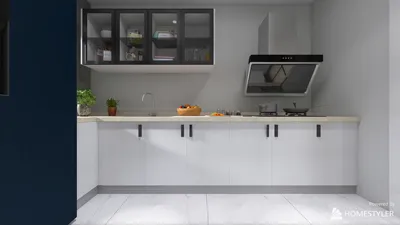
Creating a 3D wall can significantly enhance your interior design projects, making your presentations more captivating. Whether you are a seasoned interior designer or a passionate amateur, grasping the fundamentals of 3D drawing will enable you to translate your concepts into reality. In this article, we will explore the key techniques for illustrating a wall in three-dimensional space, integrating the use of Homestyler for further refinement.
Grasping 3D Perspective
Before you embark on your drawing journey, it's crucial to understand perspective. 3D drawing creates an illusion of depth on a flat surface, so establishing a vanishing point along with a horizon line is essential.
The horizon line indicates the viewer's eye level. Create a horizontal line across your paper or digital workspace; this will act as a foundation for your 3D wall.
Next, select a point along this horizon line; this is your vanishing point. Lines will converge here, forming the appearance of depth. For a wall illustration, consider positioning the vanishing point centrally.
Sketching Your Wall
With your perspective firmly in place, you can begin sketching the wall. Follow these steps:
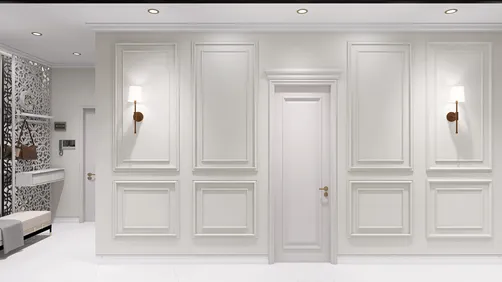
Incorporate features like windows, doors, or decorative panels into your wall. Maintain the perspective by ensuring that these elements' lines also converge at the vanishing point.
To enrich the realism of your wall, apply shading and texture. Reflect on the light source's direction to shade appropriately. Techniques such as hatching or cross-hatching can help create a sense of depth.
Adding Final Touches
After completing your wall, take a moment to step back and review your artwork. Make any adjustments needed to enhance the three-dimensional effect. You can also introduce color to breathe life into your drawing.
Conclusion
Mastering 3D wall drawing is an invaluable ability for anyone passionate about interior design. By adhering to these steps, you can produce convincing 3D visualizations of your creative ideas, especially when utilizing tools like Homestyler.
FAQ
Q: What materials are needed for 3D drawing? A: Basic drawing tools such as pencils, rulers, and erasers suffice. For digital drawing, programs like SketchUp or Adobe Illustrator are advised.
Q: How can I enhance my 3D drawing abilities? A: Begin by rendering simple 3D objects and progressively tackle more intricate designs. Consistent practice will lead to skill improvement over time.