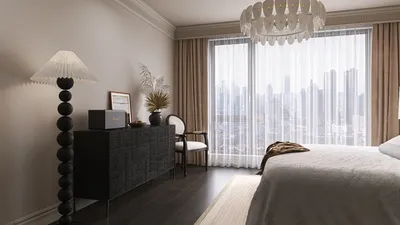


I once had a client who dreamed of a tiny living space that combined the tranquility of a Kyoto teahouse with the charm of a Swedish summer cabin. We had a good laugh while going through the mood boards, and surprisingly, the end result was a success. Working with small spaces necessitates making decisions, which can actually be beneficial: fewer choices lead to a more defined character. If you're looking to create a compact living room that exudes calm, warmth, and practicality, these five Japandi-inspired suggestions, enhanced by Homestyler, are just what you need. To quickly brainstorm ideas, I often leverage AI-assisted layout planning for instant options.
1. Begin with a gentle neutral color palette and tactile contrasts.
I typically advise starting with warm off-whites, soft greys, and light wood tones, like ash or oak. Then, introducing a dark accent, such as matte black or charcoal, can help to anchor the space. This creates an obvious benefit: a restrained color scheme makes a small room appear calmer and visually more spacious. However, you must be cautious to avoid a flat appearance—introducing textures through woven rugs, linen cushions, and artisan ceramic vases keeps the viewer engaged.
save pin
2. Opt for low-profile furniture to maintain sightlines.
In compact Japandi-style living areas, lower furniture enhances the perception of ceiling height. I recommend selecting a slim sofa with visible legs and a shallow depth. Many clients are amazed at how much more spacious their room feels afterwards. However, the disadvantage is that lower furniture may provide less support for taller individuals; therefore, I include a simple lumbar cushion and an ottoman that can also serve as a blanket storage solution.
save pin
3. Ensure every item serves multiple functions.
Space is valuable, so I prioritize furniture that serves dual purposes, such as benches with hidden storage, nesting tables, or media shelves that can also display decorative items. I’ll sketch initial layout ideas on paper, then explore them further using spatial zoning methods with Homestyler to ensure optimal traffic flow. The benefits are substantial—less clutter and more intelligent use of space, although the initial investment for well-designed, multifunctional furniture might be higher.
save pin
4. Focus on vertical accents rather than cluttered walls.
Utilizing vertical storage solutions and narrow shelving keeps floors clear while adding a refined Japandi aesthetic. A long shelf that carefully displays a few curated items, or a slim ladder shelf for plants and books, can achieve this well. If you opt for a space without a TV, a floating shelf can hold a slim soundbar and a couple of ceramics, promoting a minimalistic yet soulful look. However, this approach requires discipline, as too many decorative pieces can disrupt the serene atmosphere, so be sure to edit your selections frequently.
save pin
5. Create a cozy corner with layered lighting.
Small rooms thrive on layered lighting: a ceiling wash, a warm floor lamp next to the seating area, and a small spotlight for accentuating a plant or artwork. I often design a reading nook with a compact lounge chair and a slender lamp that serves as an inviting focal point. If you wish to visualize the textures and ambiance, refer to cozy reading nook examples in Homestyler, which showcase the interplay of light and materials. The reward is a thoughtfully curated space, though careful wiring planning is essential to prevent visible extension cords.
save pin
FAQ
Q1: What is Japandi style?
Japandi is a fusion of Japanese wabi-sabi minimalism and Scandinavian practicality and warmth. It emphasizes natural materials, muted colors, and meaningful simplicity.
Q2: How can I enlarge the perception of a small living room without renovation?
Use a cohesive neutral color scheme, choose low-profile furniture, and keep floor space unobstructed; mirrors and vertical patterns work well too. Decluttering and incorporating multifunctional furnishings creates visual openness.
Q3: Is dark wood incorporated in Japandi design?
Certainly—dark accents can introduce depth, yet Japandi generally favors lighter woods like ash or oak, complemented by occasional charcoal or black details for contrast.
Q4: What flooring is best suited for a Japandi living area?
Natural wood or wood-like flooring in light to medium shades is preferable for warmth and continuity; rugs made from natural fibers can help define seating areas without disrupting the flow.
Q5: How do I choose art for a Japandi-inspired space?
Select one or two understated art pieces—consider sumi-e inspired works or simple photographs—and ensure they have ample space around them. Negative space is a crucial element of this style.
Q6: Do plants have a place in Japandi interiors?
Absolutely—plants can enliven the space and embody Wabi-Sabi's charm. Choose easy-maintenance, sculptural plants such as a fiddle leaf fig or a modest bonsai, arranged purposefully.
Q7: What lighting temperature is preferred for Japandi?
Warm white (2700K-3000K) is ideal for accentuating natural wood tones and fostering a cozy atmosphere. Layering multiple lighting sources grants flexibility.
Q8: Where can I find more information on Japandi design principles?
To gain a thorough understanding of this trend and its origins, Architectural Digest offers an excellent guide on Japandi that explores its Asian and Scandinavian roots. You can check it out at Architectural Digest (2020): https://www.architecturaldigest.com/story/japandi-style.
save pin
Homestyler is your go-to online home design platform! With its user-friendly design tool, stunning 3D renderings, and a wealth of DIY video tutorials, you can effortlessly create and visualize your dream spaces. Unleash your creativity and transform your home today!
Design Now for FREE
































