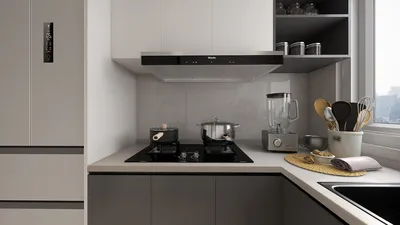


In a previous project, I installed a ceiling fan in a compact galley kitchen at a client’s insistence that it resemble a vintage airplane propeller. This led to a redesign since it barely fit above the cabinets. While small kitchens can highlight design flaws, they also inspire inventive solutions that I truly appreciate.
Here are five kitchen ceiling fan ideas that I've successfully implemented in actual projects, each accompanied by practical tips, pros and cons, and advice on placement. If you're looking to visualize the design from every angle before making a decision, that’s typically my initial approach.
1. Low-profile flush mount fans are ideal for low ceilings
When vertical space is limited, I prefer using a flush mount ceiling fan. It provides needed airflow without creating a cramped feeling in the kitchen. Such fans are quieter and safer when placed near upper cabinets, although they won’t provide the vigorous airflow of a fan that hangs lower.
Tip: Opt for a wider blade span (44"–52") if possible to offset the lower motor height. Flush mount fans are generally priced in the mid-range, as you invest in a slim motor and proper balance.
save pin
2. Integrated light-and-fan combinations for multifunctionality
In kitchens where every fixture needs to serve multiple purposes, integrating task lighting with a ceiling fan is both practical and stylish. In a rental kitchen, I replaced two outdated pendant lights with one such unit, instantly refreshing the space.
Keep in mind that integrated units can be trickier to upgrade down the line; if flexibility is important to you, consider selecting a model that offers removable trim or separate controls.
save pin
3. Industrial-style paddle fans for an open concept
For open-plan kitchens, an industrial ceiling fan with metal blades and matte finishes delivers a striking visual along with strong airflow. In a loft project, I combined one with exposed shelving, effectively balancing the heavier textures present in the design.
However, these fans can accumulate grease more quickly in cooking areas, so be prepared with finishes that are easy to clean and more frequent maintenance. Prior to installation, I recommend sketching the kitchen layout to assess sightlines and necessary clearances.
save pin
4. Remote-controlled fans for tricky wiring scenarios
If your kitchen has complicated wiring or you desire separate control of speed and lighting, a remote-control fan can significantly simplify the situation. In a renovation, I utilized remotes to enable distinct dimming options for prep and ambient lighting.
While remotes offer convenience, they also add another battery-operated gadget to your routine; ensure the remote aligns with your daily habits and verify that the receiver won’t obstruct other ceiling-mounted lights.
save pin
5. Mini and directional fans above kitchen islands
Rather than opting for a single large fan, consider installing two small directional fans above an island to manage airflow without introducing a bulky fixture into the cooking work area. I applied this method in a compact kitchen where it enhanced ventilation while minimizing shadowing.
These smaller fans are less visually intrusive and easier to position, although they do require precise placement — I recommend conducting a quick mock-up to test various fan positions in the layout before drilling.
save pin
FAQ
Q1: What size ceiling fan is suitable for a small kitchen?
I typically suggest a blade span of 36"–52" for small kitchens, depending on the room's width. For optimal results, measure the longest wall-to-wall distance and select a fan that balances airflow without overwhelming the space.
Q2: Can ceiling fans help with kitchen odors and moisture?
Absolutely — fans assist in air circulation and can mitigate lingering odors, though they shouldn't replace proper ventilation like an outdoor range hood. For optimal results, use fans in conjunction with your vent hood.
Q3: Are ceiling fans safe to install above kitchen islands?
They are safe provided you follow clearance guidelines: maintain a minimum of 7 feet from the floor to the fan blades and avoid positioning them directly over cooking surfaces. For islands, consider smaller or directional fans to lessen grease accumulation.
Q4: Do ceiling fans lead to increased energy expenses?
No, ceiling fans consume relatively minimal power and can create a cooler feel in the kitchen, often allowing you to raise the thermostat during summer months. According to ENERGY STAR, using fans strategically can lower HVAC energy usage.
Q5: Should I select DC or AC motors for kitchen ceiling fans?
DC motors are more efficient, operate quietly, and offer finer speed control, albeit at a higher initial cost. AC motors are tried and true, typically less expensive; I suggest opting for DC motors if noise reduction and long-term savings are priorities.
Q6: How can I maintain cleanliness of kitchen fan blades?
Select blades with sealed finishes that resist grease buildup, and ensure they are wiped down every 1–2 months in busy cooking environments. Removable blades or washable covers can significantly simplify this task.
Q7: Is it feasible to install a ceiling fan myself in the kitchen?
If you’re comfortable with wiring and the mounting box is rated for fan loads, you may be able to handle it yourself. However, kitchens often have complex electrical setups and ventilation considerations, so I usually recommend hiring a licensed electrician to ensure safety and compliance.
Q8: What fan styles are most suitable for modern kitchens?
Sleek blades, matte finishes, and integrated LED lighting are currently trending — they match well with modern cabinetry and clean lines. I often pair these styles with complementary hardware finishes, such as brass, black, or nickel, to create a cohesive look.
save pin
Built on technology originally developed at Autodesk, Homestyler empowers anyone to design beautiful, realistic spaces in minutes. Join over 18 million users who have already discovered a smarter way to plan, visualize, and bring their dream homes to life — all from the comfort of a browser.
Homestyler is your go-to platform for transforming your home design dreams into reality. With its user-friendly online design tool, stunning 3D renderings, and a wealth of inspiring design projects and video tutorials, creating your ideal space has never been easier or more enjoyable!
Zaprojektuj teraz za darmo
































