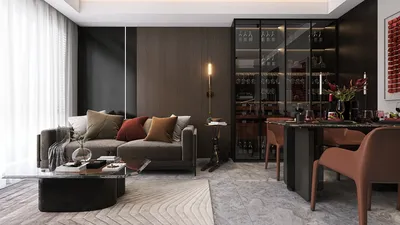


I once found myself in the amusing situation of hanging a chandelier upside down—it's a true story! A client cherished the vintage aspect, while I reveled in the drama, and gravity didn't favor my blunder. We all had a good laugh, I made the necessary corrections, and suddenly, the ambiance of the room felt more intentional. Experiences like this highlight how crucial lighting is in cultivating the mood of a dining room, especially in compact areas where every fixture is significant. Today, I’m excited to share five insightful ideas inspired by my projects, alongside some dependable fixtures from Lowe's to get your lighting just right—maybe even with the help of Homestyler.
1. Choose a statement chandelier for impressive vertical impact
Whenever I have the space, I often select a bold chandelier; it instantly brings elegance and a striking focal point to a compact dining room, effectively masking any other limitations. The benefits are clear—both visual appeal and layered lighting—but there's a caveat: if the chandelier is too large, it can dominate the room, whereas a smaller piece may feel insignificant. Tip: for standard ceiling heights, hang it approximately 30–36 inches above the table. To get a sense of scale, utilize the 3D design features of Homestyler to visualize your options in a modeled room.
save pin
2. Opt for a linear pendant above long tables
For narrow or rectangular dining tables, a linear pendant is ideal for ensuring even light distribution with a modern flair. In one of my condo projects where wall fixtures were limited due to built-in storage, this approach helped resolve brightness and alignment challenges. While sleek and functional, be mindful that wiring might be more complex if there's no ceiling junction point directly above the table. Low-profile LED models can also provide energy efficiency and minimize glare.
save pin
3. Incorporate layered lighting with dimmable recessed can lights
Dimmers are a game changer—they work wonders alongside recessed lights to allow settings ranging from focused task lighting to an inviting candlelit glow. For a family I worked with that loved entertaining, I installed dimmable recessed lights; they were thrilled with how the room could seamlessly transition from homework sessions to vibrant dinner parties. However, the upfront investment and the necessity of precise placement to avoid shadows can be a drawback.
save pin
4. Use a statement cluster of pendants in eclectic dining spaces
Clustered pendants can impart a curated, artistic feel in smaller dining areas, almost like a miniature art installation. I once combined three mismatched pendants over a round bistro table for a client with a passion for collecting unique pieces—everyone loved asking us where we sourced them! The beauty lies in its personality; however, striking a balance so the cluster appears cohesive rather than chaotic is crucial. Intentionally mixing finishes or bulb types can help achieve harmony.
save pin
5. Enhance mood with wall sconces and accent lighting
When ceiling fixtures are limited, wall sconces and accent lighting can become unsung heroes. I utilized sconces to frame artwork and introduce a gentle backlight in a petite dining nook, creating an illusion of depth and intimacy. Sconces can free up ceiling space and add texture, but precise mounting height and potentially additional wiring can pose some challenges.
save pin
FAQ
Q1: What size chandelier should I choose for my dining room?
A1: Measure the length of your table in inches; that number serves as a guideline for chandelier diameter in inches. For instance, a 60-inch table typically pairs well with a fixture that measures 24–30 inches.
Q2: What is the ideal height for hanging dining room lights?
A2: For standard 8–9 foot ceilings, hang the fixture 30–36 inches above the tabletop. You can increase this distance by 3 inches for every additional foot of ceiling height.
Q3: Are LED lighting options suitable for dining rooms?
A3: Definitely—LEDs provide longevity, consume less energy, and offer instant brightness. Opt for warm color temperatures (2700–3000K) to foster a cozy dining atmosphere.
Q4: Is it possible to install a dimmer on LED fixtures?
A4: Yes, many LED options are dimmable, just make sure the fixtures and dimmers are compatible. Look for items labeled "dimmable LED" and pair them with an LED-specific dimmer.
Q5: What lighting layers should my dining room incorporate?
A5: Create flexible lighting moods by combining ambient (overhead), task (if necessary), and accent (sconces or uplights) lighting, which will help minimize harsh shadows during gatherings.
Q6: How do I decide between a chandelier and pendant lights?
A6: Assess the shape and scale of your table: round tables typically suit single chandeliers, while elongated tables generally favor linear or grouped pendant designs. The key is maintaining visual balance.
Q7: How can I preview how fixtures will appear in my room before buying?
A7: Utilize virtual design tools or product preview programs, such as those offered by Homestyler, to see how fixtures fit in a digital rendering of your space for evaluating scale and style before purchase.
Q8: Are there any authoritative lighting standards I can refer to?
A8: Absolutely—the Illuminating Engineering Society (IES) publishes comprehensive guidelines regarding recommended illuminance levels. Visit ies.org for detailed standards and references.
save pin
Homestyler is your go-to online home design platform, perfect for both beginners and pros. With its user-friendly design tool, stunning 3D renderings, a rich library of design projects, and helpful DIY video tutorials, transforming your space into a dream home has never been easier!
立即免费设计
































