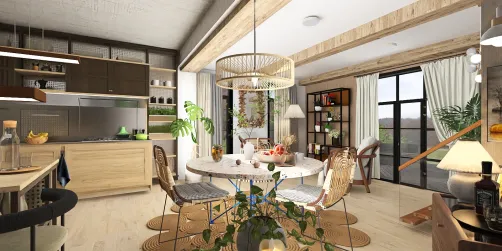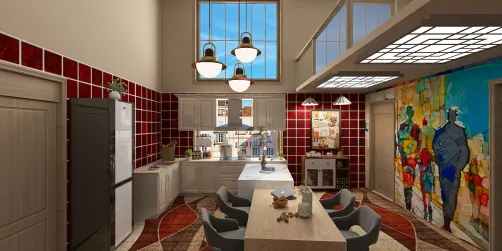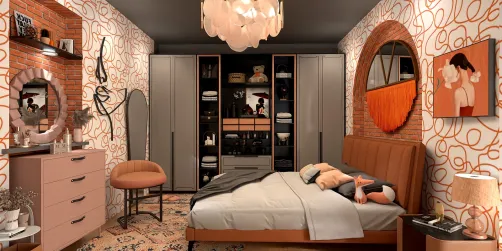
I once had a client who was adamant about employing vibrant red hex tiles in a compact bathroom, claiming it would infuse energy into the space. Initially, I hesitated, but then I recognized that small areas are often perfect for bold design choices, provided they are executed wisely. That petite bathroom highlighted for me that limited spaces can ignite vast creativity, and flooring serves as one of the quickest means to transform a room's ambiance. Incorporating tools like Homestyler can help visualize these transformations effectively.
1. Large tiles to create an illusion of space
I enjoy integrating large-format porcelain tiles in smaller bathrooms since fewer grout lines result in a smoother, more spacious appearance. This design trick plays with visual perception, making the area seem larger than it truly is. The primary benefit is the sleek, contemporary look that also simplifies cleaning; however, achieving a level subfloor is crucial for proper installation. In a recent project, changing from 12" tiles to 24"x24" tiles significantly enhanced the bathroom's visual space without altering its dimensions. Using tools like Homestyler can aid in planning such transformations.
save pin
2. Diagonal or herringbone patterns for enhanced depth
Arranging tiles diagonally or in a herringbone layout adds depth and movement, inviting the eye to travel across the room. Though this approach may incur slightly higher labor costs and waste, the result is a floor that appears longer — ideal for narrow bathrooms. I recently utilized a subtle herringbone design in a rental bathroom, resulting in tenant feedback that the layout felt "luxurious," which is always a positive outcome. Homestyler can assist in visualizing these layouts to maximize their impact.
save pin
3. Light wood-look planks for a warm touch
Light-hued wood-look porcelain or luxury vinyl planks (LVP) provide warmth while eliminating the moisture concerns associated with real wood. When laid lengthwise, they can elongate the space and complement white vanities perfectly. The trade-off lies between aesthetics and authenticity; while real wood offers grain depth, wood-look alternatives deliver durability and lower upkeep. I specified LVP for a busy family's compact bathroom, and they appreciated its slip resistance and easy maintenance. Using Homestyler can help in selecting the right color tones for the desired effect.
save pin
4. Seamless flooring transition to adjacent spaces
Continuing the same flooring from a hallway or bedroom into a small bathroom minimizes visual breaks and fosters a cohesive flow, enhancing the sense of space. The main hurdle is selecting a water-resistant material and accurately planning transition points. In one compact condo, extending the 3D flooring into the bathroom made the entire apartment feel more connected and less confined. Homestyler can be a great asset in planning such transitions, allowing for better visual coherence.
save pin
5. Striking small-format tiles as a centerpiece
Incorporating small mosaic or patterned tiles within a unified color palette can establish a focal point without overwhelming the space. This is particularly effective as an accent in wet zones or behind floating vanities. Although small tiles necessitate more grout maintenance and thorough cleaning, the aesthetic appeal can be well worth the effort. I once persuaded a hesitant homeowner to opt for blue penny rounds, which instantly breathed personality into the tiny bathroom. Utilizing Homestyler can help visualize these design choices before implementation.
If you're eager to quickly experiment with these ideas, using a room planner like Homestyler allows you to test tile sizes and layouts before committing to any purchases. Visualizing patterns at an actual scale can often save both time and money in your renovation journey.
save pin
FAQ
Q: What type of flooring works best for small bathrooms? A: Porcelain tile and luxury vinyl plank (LVP) are excellent choices due to their moisture resistance and variety of sizes that can influence the perception of space.
Q: Can using larger tiles make a bathroom appear bigger? A: Absolutely — larger tiles diminish grout lines and establish a more uniform surface, enhancing the room's spaciousness.
Q: Is wood flooring a poor choice for a bathroom? A: Real wood can warp in humid conditions; opt for engineered wood if well-sealed, or consider wood-look porcelain or LVP for improved durability.
Q: How can I minimize grout lines in a compact bathroom? A: Utilize large-format tiles or rectified tiles to reduce grout joints; choosing grout colors similar to the tiles also helps downplay lines.
Q: Are patterned tiles overwhelming for small bathrooms? A: Patterns can be effective if applied judiciously as focal points; a controlled color scheme prevents the space from appearing cluttered.
Q: What is a budget-friendly way to enhance bathroom floors? A: Luxury vinyl planks are economical, DIY-friendly options that emulate higher-end materials while being water-resistant and durable.
Q: How critical is slip resistance? A: It's crucial — opt for textured finishes or slip-resistant LVP and tiles for wet areas, particularly if there are children or elderly individuals in the household. For detailed guidelines, refer to ASTM standards related to slip resistance (ASTM C1028 or updated ANSI/NFSI methods).
Q: Is it possible to use the same flooring in both the bathroom and hallway? A: Yes — carrying a consistent flooring throughout improves flow; just ensure the material can withstand bathroom moisture and appropriately plan transitions.
save pin
Homestyler is your go-to online home design platform! With its user-friendly design tool, stunning 3D renderings, and a wealth of design projects and video tutorials, transforming your space has never been easier or more inspiring. Start creating your dream home today!