



A Thoughtful Studio: When Every Detail Works Quietly for Daily Life
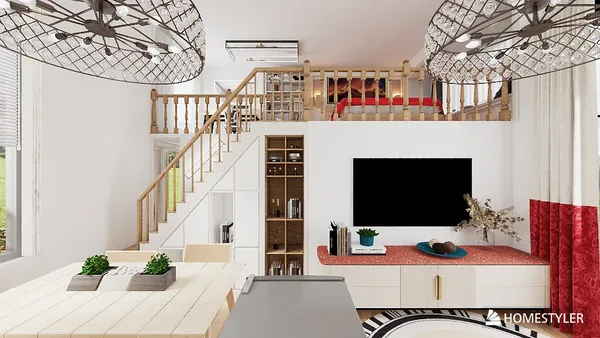
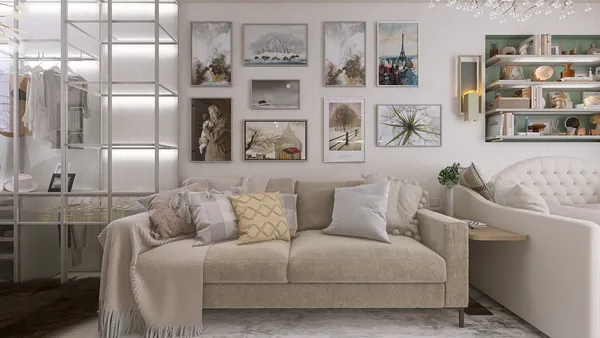
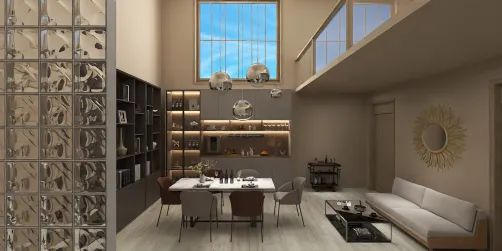
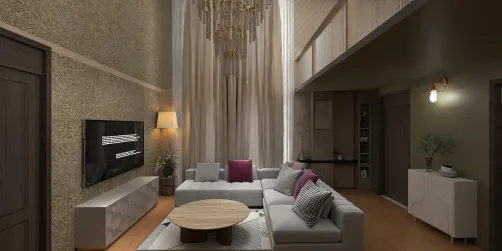
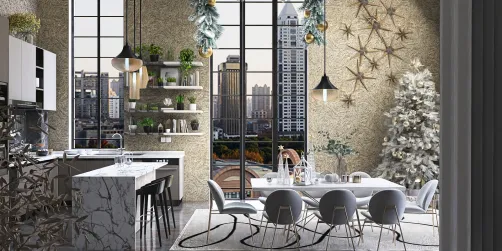
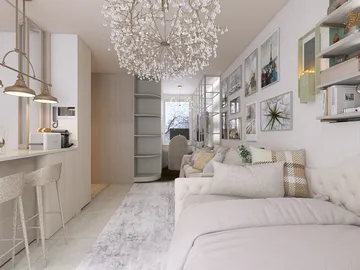
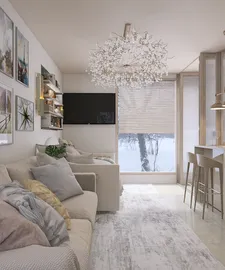
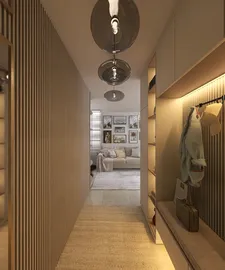
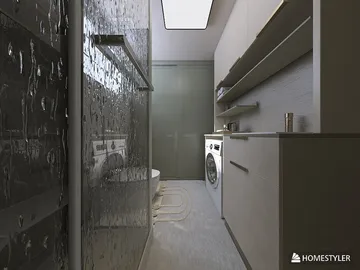
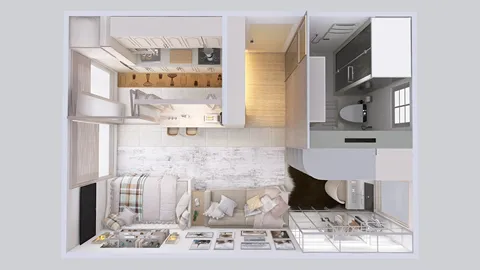
This studio apartment is designed around efficiency, adaptability, and everyday comfort—responding to how compact living is experienced today. Rather than relying on permanent walls, the layout uses zoning and multi-functional elements to allow one space to perform multiple roles throughout the day. Circulation remains open, while each zone is clearly defined through furniture placement, lighting, and material transitions. At the entrance, a full-height mirror conceals the bathroom door, maintaining a clean visual axis while enhancing spatial perception. Inside, integrated storage is designed to accommodate clothes drying, addressing the absence of a balcony in a practical yet unobtrusive way. The sleeping zone is conceived as a daybed instead of a fixed bed. During the day, it functions as a seating area; at night, a pull-out bed transforms it into a comfortable sleeping arrangement. A movable side table adapts accordingly, serving as a nightstand or a casual surface when the space shifts into lounge mode. The TV placement avoids dominating the room, positioned at the foot of the bed to support flexible viewing without defining the layout around screen use. This encourages a quieter, more intentional daily routine. A wall niche with integrated lighting provides both storage and ambient illumination, adding warmth and depth while reinforcing the winter atmosphere. The wardrobe is combined with the workspace, forming a compact dressing and working zone that maximizes efficiency without visual overload. The kitchen is semi-separated using folding doors, allowing it to be opened or closed as needed. A compact island bridges the kitchen and living area, offering seating and integrated storage for daily essentials—enabling simple breakfast routines even when the kitchen is fully closed. This studio is not designed to hide daily life, but to support it—quietly adapting to changing needs while maintaining warmth, clarity, and comfort.
This studio apartment is designed around efficiency, adaptability, and everyday comfort—responding to how compact living is experienced today. Rather than relying on permanent walls, the layout uses zoning and multi-functional elements to allow one space to perform multiple roles throughout the day. Circulation remains open, while each zone is clearly defined through furniture placement, lighting, and material transitions. At the entrance, a full-height mirror conceals the bathroom door, maintaining a clean visual axis while enhancing spatial perception. Inside, integrated storage is designed to accommodate clothes drying, addressing the absence of a balcony in a practical yet unobtrusive way. The sleeping zone is conceived as a daybed instead of a fixed bed. During the day, it functions as a seating area; at night, a pull-out bed transforms it into a comfortable sleeping arrangement. A movable side table adapts accordingly, serving as a nightstand or a casual surface when the space shifts into lounge mode. The TV placement avoids dominating the room, positioned at the foot of the bed to support flexible viewing without defining the layout around screen use. This encourages a quieter, more intentional daily routine. A wall niche with integrated lighting provides both storage and ambient illumination, adding warmth and depth while reinforcing the winter atmosphere. The wardrobe is combined with the workspace, forming a compact dressing and working zone that maximizes efficiency without visual overload. The kitchen is semi-separated using folding doors, allowing it to be opened or closed as needed. A compact island bridges the kitchen and living area, offering seating and integrated storage for daily essentials—enabling simple breakfast routines even when the kitchen is fully closed. This studio is not designed to hide daily life, but to support it—quietly adapting to changing needs while maintaining warmth, clarity, and comfort.



Más diseños por Kamila Baswedan
Ver más