

Direct Answer
Developers incorporate den spaces in apartment designs to add versatility without incurring the expenses or regulatory hurdles required for a full bedroom. A den serves multiple roles such as a home office, nursery, or guest area, while enabling developers to create smaller, more economical units that are easier to approve in dense urban environments using tools like Homestyler.
In contemporary apartment developments, dens are strategically placed close to living areas and are dimensioned to remain just under the legal criteria for bedrooms.
Quick Takeaways
Introduction
Having collaborated with residential developers for over ten years, I've evaluated countless apartment layouts featuring a small room labeled as a “den” adjacent to the living space. Though purchasers often mistake it for a compact bedroom initially, dens represent a deliberate architectural choice that shapes the functionality of modern floor plans.
The core motivation is straightforward: flexibility drives demand. In highly populated urban markets, efficient use of every square foot is critical. Developers juggle construction expenses, zoning laws, and buyer preferences. Incorporating a den delivers the sense of an additional room without imposing the stringent building code obligations linked to an official bedroom.
Understanding the planning rationale behind dens requires analyzing the spatial strategies developers employ. Real-world apartment layouts reveal that dens are rarely incidental; they are carefully crafted to enhance livability while maintaining overall unit efficiency.
Let's explore why dens are a favored element in modern residential architecture and how developers approach their integration.
save pin
Why Modern Apartments Often Include Den Spaces
Key Insight: Dens are incorporated because they boost perceived unit value without triggering the costs and regulations associated with adding another legal bedroom.
In most North American markets, a room qualifies as a bedroom only if it meets specific criteria, including window size and egress standards.
Adding a legal bedroom often necessitates enlarging the apartment or modifying exterior walls to insert windows, both of which escalate construction costs significantly.
A den circumvents these limitations effectively.
Features common in developer-created dens include compact size, location away from exterior walls, and lack of mandatory windows.
From a sales and marketing standpoint, this approach is advantageous. Apartments marketed as "one bedroom plus den" typically garner substantially more interest than standard one-bedroom units, even when their square footage difference is minimal.
Typical Floor Plan Strategies Used by Developers
Key Insight: Dens usually emerge by repurposing leftover circulation space situated between the living room and the main bedroom.
Upon reviewing numerous developer plans, dens consistently arise from three common layout schemes.
Popular tactics involve positioning the primary bedroom alongside exterior windows while placing the den deeper within the unit's interior.
Developers frequently utilize digital design platforms such as Homestyler to simulate various arrangements rapidly and determine optimal den locations during early planning stages.
save pin
Interactive apartment layout tools demonstrate how fine-tuning spatial leftover areas can convert them into functional dens.
Urban Space Constraints and Den Design
Key Insight: Exorbitant land prices and zoning restrictions in cities make dens one of the most efficient methods for enhancing livability in compact urban apartments.
In metropolitan hubs like Los Angeles, Toronto, and New York, escalating land costs push developers toward smaller dwelling units. Data from the Urban Land Institute highlights a trend of shrinking average apartment sizes across major cities over the past decade.
This trend creates a design challenge: Residents still seek distinct separation for work, sleep, and leisure spaces.
Dens address this by offering a flexible small area that can function as:
The COVID-19 pandemic accelerated demand for private home workspaces, increasing the appeal of den-equipped apartments in rental markets.
Answer Box
Apartment dens exist primarily to provide adaptable living spaces without complicating the building process. Strategically located within units, they create multipurpose spots while preserving layout efficiency, a design ease often visualized with Homestyler.
How Dens Increase Flexibility in Apartment Units
Key Insight: The true benefit of a den lies in its adaptability throughout different phases of a resident’s life.
In projects I've consulted on, developers often refer to dens as "lifestyle buffers" because they allow a single unit to accommodate diverse resident needs without renovation.
Common uses of dens in actual apartments include home offices, guest rooms, nurseries, or creative spaces.
Many tenants personalize these rooms with built-in shelving or compact desks. Layout visualization through planning tools like Homestyler helps designers understand the practical daily uses of these compact spaces.
save pin
Market Demand for Apartments With Dens
Key Insight: Units with one bedroom plus den consistently outperform standard one-bedroom apartments in terms of buyer interest and perceived value.
Listings advertising a den often experience higher engagement rates, as the label suggests enhanced flexibility, even if the actual size difference is marginal.
Reasons buyers favor dens include greater usable space perception and support for remote work lifestyles.
However, a poorly sized or ventilated den might become less functional. Experienced designers focus on ceiling height, natural lighting, and depth to ensure these rooms feel inviting rather than cramped.
save pin
Future Trends in Flexible Apartment Layouts
Key Insight: The evolution of apartment dens points toward "flex rooms" tailored for hybrid lifestyles and work-from-home demands.
Developers are experimenting with intentionally designed dens rather than leftover spaces, reflecting a shift towards highly adaptable home environments.
Final Summary
FAQ
Why do apartments have dens instead of second bedrooms?
Dens avoid rigid building code mandates like egress windows, allowing added flexible space without costly construction complications.
What is the difference between a den and a bedroom?
Bedrooms must meet legal criteria such as window dimensions and emergency exits, whereas dens generally lack these features and serve as multifunctional areas.
Are apartments with dens worth it?
For many occupants, yes. Dens enhance livability by providing spaces for offices, guest areas, or hobbies in smaller apartments.
How big is a typical apartment den?
Apartment dens usually measure between 40 and 70 square feet, though exact dimensions depend on the building design.
Can a den be used as a bedroom?
While dens can be used for sleeping, they typically cannot be officially marketed or rented as bedrooms.
Why are apartment dens often near the living room?
Locating dens near living rooms preserves exterior walls for bedrooms that require windows as per code.
Do dens increase apartment value?
Listings featuring dens tend to attract more attention because they imply versatility and support home working environments.
What is the urban apartment den concept?
The urban apartment den concept refers to small, multifunctional rooms designed to maximize efficiency and adaptability in compact city apartments.
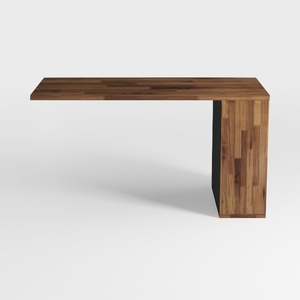
Minimalist Solid Walnut Wood Desk 3D Model

Minimalist Walnut Wood White Fabric Upholstered Dining Chair 3D Model

Minimalist Gray Fabric Round Ottoman 3D Model
Homestyler offers an easy-to-use online design tool combined with stunning 3D renderings, inspiring interior projects, and helpful DIY video tutorials—making it simple and fun to create your dream home design.
Zaprojektuj teraz za darmo
































