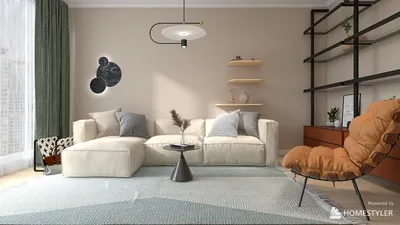


In one of my past projects, a client requested each room to have a distinct color as a way to "express personality." This led to a chaotic visual experience until we decided to undertake a whole-house palette exercise, which ultimately brought coherence to the design. This small change not only salvaged the project but also reinforced the idea that even compact spaces can inspire grand concepts, similar to what you can explore using Homestyler.
1. Serene neutrals with textured layers
Beginning with warm neutral shades, like soft greige for walls and off-white for trims, paired with textures such as woven rugs or matte plaster, is always a winning strategy. These choices enhance light reflection and create the illusion of spaciousness, avoiding any flatness. However, ensuring it doesn’t come across as monotonous can be challenging; I tackle this by introducing tactile finishes and subtle accent walls.
save pin
2. Cozy earth tones that harmonize throughout
Consider hues like clay, terracotta, and warm taupes that gradually change as you move throughout the house. This method exudes warmth and intention, particularly beneficial in historic homes, and it easily accommodates mismatched furniture pieces. A budgeting tip: Always test large samples in natural lighting, as a single gallon of the wrong shade can result in a costly error.
save pin
3. Striking high-contrast monochromatic schemes
For a contemporary aesthetic, I often suggest a monochromatic color palette featuring varying shades of a single hue accented by intense black or deep charcoal. While this creates a striking look that’s easy to upkeep, it can risk feeling uninviting; thus, I warm it with the inclusion of wood tones or textiles. When designing adjacent cooking areas, a well-planned kitchen color layout helps define transitions.
save pin
4. Harmonized pastels with bold accents
Pastel colors can seamlessly bind an open-concept living space when each room incorporates a matching base tone while occasionally using a vivid accent color (like teal or marigold). This approach is playful and family-friendly, but durable and washable finishes are a must in areas prone to fingerprints.
save pin
5. Nature-inspired hues of greens and blues
Shades of green and blue evoke a sense of the outdoors—soft seafoam in bedrooms, rich forest in studies, and airy sky tones in hallways. These colors offer a calming effect and pair wonderfully with natural materials. To ensure a harmonious outcome, I utilize 3D color mockups with Homestyler to visualize how different tones interact with varying light conditions.
For a quick resolution: select a unifying neutral tone, a family of accent colors, and one bold anchor shade you truly love. This simple three-part approach has been a game changer for many of my projects.
save pin
FAQ
Q: How do I select a cohesive color scheme for the entire house? Begin with a base neutral that resonates with you, then choose two to three accent colors to be replicated across various rooms in different saturations. Include one striking anchor for key spaces to ensure each area possesses its own identity.
Q: Will using a single paint color render my home dull? Not at all! By varying finishes, textures, and patterns, uniform color can actually enhance the sense of space and purpose; the trick lies in creating contrast through a variety of materials.
Q: How does natural light impact color selection? Significantly—north-facing spaces tend to appear cooler, while those facing south appear warmer. Always test samples on multiple walls and examine them at various times during the day to avoid unexpected outcomes.
Q: Is it advisable to use bold shades in small areas? Absolutely—compact rooms are fantastic for experimenting with vibrant colors, as they can create an inviting ambiance. The key is to balance them with lighter adjacent spaces to maintain overall harmony in the home.
Q: What is the recommended number of paint finishes? I typically advise using two to three: opt for matte or eggshell for expansive walls, satin for trim and areas with high traffic, and semi-gloss for kitchens and bathrooms. This ensures visual intrigue while keeping maintenance straightforward.
Q: What’s the best way to test color options? Apply 2x2 foot swatches on each wall and observe them over a period of 48 hours under different lighting conditions. For a more precise preview, digital renderings or mockups effectively showcase colors across rooms.
Q: What does LRV mean and why is it important? LRV (Light Reflectance Value) quantifies how much light a color reflects; higher LRVs tend to look lighter and brighten spaces. For detailed guidance, check out Benjamin Moore’s color education resources: https://www.benjaminmoore.com/en-us/color-overview/color-education/what-is-lrv
Q: Should I consider hiring a professional for whole-house color design? If you’re uncertain about how colors transition between spaces or face complex lighting situations, a designer can save you both time and money by averting costly repainting sessions. Often, even a brief consultation can clarify the toughest decisions.
Discover the ease of home design with Homestyler! This user-friendly platform offers an intuitive online design tool, stunning 3D renderings, and a wealth of DIY video tutorials. Whether you're a novice or a pro, bring your interior design visions to life effortlessly!
Design Now for FREE
































