

Humidifiers should not be viewed as cooling solutions, as introducing moisture into the air generally doesn't lower room temperatures. In fact, many residential and commercial spaces experience elevated warmth and stuffiness when humidity levels rise, as the body's natural ability to release heat through evaporation diminishes. While dry air can be uncomfortable and unhealthy, excessive humidity can lead to issues like condensation and mold growth. Therefore, finding a balance is crucial for thermal comfort.
Data collected by ASHRAE and WELL v2 supports the idea that optimal relative humidity (RH) levels range between 30% and 60%. This range maximizes comfort for occupants when temperatures are maintained within a typical conditioning range. Additionally, WELL v2 highlights that keeping RH from 30% to 50% can help control dust mites and mold while enhancing respiratory comfort. Research from Steelcase reveals a direct relationship between discomfort due to temperature and air quality and reduced task focus, indicating that while humidifiers can alleviate dry indoor air, they cannot replace cooling systems.
Perception can be just as influential as physical environment. Insights from Verywell Mind's analysis of color psychology suggest that cooler shades, such as blues and greens, create a calming ambiance. Combining appropriate humidity levels with visually cool elements may help mitigate the feeling of heat without actually altering air temperature. Moreover, in exceptionally dry indoor conditions (with RH below 25%), using a humidifier can enhance comfort by softening the air, though it won't genuinely cool the space.
Understanding Humidity's Impact on Thermal Comfort
Our bodies mostly rely on sweating and evaporation to regulate temperature. In humid conditions, this evaporation process becomes sluggish, resulting in perspiration pooling on the skin and increasing our perception of heat. Conversely, in arid environments, perspiration evaporates rapidly, offering a cooling effect but potentially leading to dry skin, throat, and eyes. A balanced RH of about 40% to 50% typically minimizes static, nasal irritation, and allows for effective heat dissipation. Therefore, if a space is overly dry, using a humidifier can enhance comfort; however, adding moisture to an already humid environment may intensify the sensation of heat.
Understanding Common Misunderstandings: Humidifiers vs. Evaporative Coolers
A common misconception is that humidifiers can function like evaporative coolers. While evaporative coolers effectively lower air temperatures by utilizing water to absorb heat, they are engineered to manage significant airflow volumes using pads and exhaust mechanisms. In contrast, humidifiers, especially ultrasonic and warm-mist varieties, only add moisture without providing the necessary airflow for substantial cooling. In dry climates, an evaporative cooler can drastically reduce temperatures; however, a standard tabletop humidifier cannot achieve this.
When a Humidifier Might Seem Refreshing
Under specific conditions, a humidifier might feel somewhat rejuvenating, particularly in very dry environments (with RH below 25%) heated by warm air systems. Slightly increasing humidity in these cases can alleviate dryness in the skin and mucous membranes, leading some individuals to perceive a reduction in heat. Keep in mind, however, that the room's actual temperature remains largely unchanged; the comfort gained is due solely to decreased dryness.
Acoustics, Airflow, and Human Comfort Factors
Various factors contribute to overall comfort, not just temperature and humidity. Elements like fan noise and air circulation play significant roles. A quiet fan running at a low speed can enhance heat loss from the skin through convection, making a room feel cooler without altering humidity levels. Consistent thermal conditions foster better focus; however, sudden spikes in humidity can result in fogged windows and damped environments, negatively affecting concentration—a trend observed in multiple workplace studies including those conducted by Steelcase on ambient comfort and performance.
Lighting and Color: Visual Cooling Techniques
The design of lighting can influence perceived warmth within a space. Cooler correlated color temperatures (around 4000-5000K) often contribute to a clearer feel that psychologically offsets warm environments. Color choice is equally crucial; bright, cooler shades can reduce perceived heat, while rich warm tones can enhance the warm atmosphere. Although these approaches are perception-based rather than HVAC solutions, they can be particularly effective in smaller areas where mechanical adjustments are limited.
Material Considerations and Humidity Risks
Humidity levels interact significantly with building materials. For example, hygroscopic materials such as solid wood will expand and contract with changes in RH, affecting the alignment of joints, doors, and cabinetry. Higher humidity levels also increase condensation risks on cool surfaces, potentially leading to mold growth. Maintaining RH at around 40% to 50% helps preserve the integrity of wood, fabric, and electronic devices. In spaces like bathrooms or kitchens, proper ventilation is essential before introducing humidification to prevent condensation and microbial issues.
Aligning RH with Layout and Airflow
Effective space planning directly affects airflow dynamics. To optimize humidifier performance, avoid positioning them in isolated corners; instead, place them where air can circulate freely without saturating nearby surfaces. In compact homes and offices, consider testing a compact fan to evenly distribute moisture and minimize damp spots. Rethinking furniture arrangements or workstation layout can greatly impact airflow efficiency, and utilizing tools like room layout planners or apps can assist in visualizing airflow patterns and optimal device placement.
Selecting the Correct Humidifier
Humidifiers typically fall into three categories: cool-mist ultrasonic, evaporative wick, and warm-mist (steam). Ultrasonic units operate quietly; however, they may disperse mineral dust unless used with distilled water. Evaporative models automatically limit humidity because the evaporation process slows as RH rises, thus helping to guard against over-humidification. Warm-mist options may marginally increase the sensation of warmth. Regardless, none of these devices are intended to cool a space; their primary function is to control moisture levels.
Health and Maintenance Considerations
Neglecting proper maintenance can quickly turn a humidifier from a tool for comfort into a health hazard. Regularly clean the tanks, replace filters as instructed, and use distilled or demineralized water to minimize scale buildup. Monitoring RH with an accurate hygrometer is crucial, aiming for a practical target of 40% to 50% RH. Excessive humidity can lead to pesky issues like window condensation, damp carpets, and mold—signals to reduce humidifier use and enhance ventilation.
Final Insights
It is important to remember that while a humidifier can add comfort in dry conditions by increasing humidity, it does not cool a room. True cooling needs improved airflow, reduction in heat gains, or active refrigeration methods. To achieve a harmonious indoor environment, maintain RH within the 30%–60% comfort range, ideally around 40%–50% in most living spaces, and integrate humidity control with strategies for airflow, lighting, and material choices.
Resources and Additional Information
For a comprehensive understanding of health and comfort standards related to humidity and air quality, check out the WELL v2 Air features. Additionally, the implications of workplace comfort on employee performance and concentration are elaborated in Steelcase Research.
Frequently Asked Questions
No, a standard humidifier does not reduce dry-bulb temperature. Conversely, in extremely arid conditions, evaporative coolers can cool the air through the evaporation process, which is not a function of typical humidifiers.
The optimal RH for most occupied areas is generally between 40% and 50%. This range strikes a balance between comfort, respiratory health, and stability for materials while minimizing condensation risks.
Yes, if the environment is already humid, introducing more moisture can diminish the evaporative cooling effect on the skin, potentially leading to a warmer and more oppressive atmosphere.
Cool-mist ultrasonic or evaporative models typically feel more neutral in warmer seasons; however, warm-mist options may slightly heighten perceived warmth, making them ideal in winter but less suitable in summer.
Indications of over-humidification include window condensation, musty smells, or damp surfaces. If a hygrometer indicates RH over 60%, it signals the need to reduce humidifier use and boost ventilation.
Generally, yes. Fans enhance both evaporative and convective cooling at the skin, enhancing comfort without altering humidity levels.
Certainly. Wood reacts to humidity changes, expanding when RH is high and contracting in lower levels, which can lead to structural issues. Fabrics and carpets may promote mold growth in consistently high humidity.
It's advisable to use distilled water with ultrasonic humidifiers to prevent mineral dust, while for evaporative models, consistent filtering and cleaning are necessary practices.
While plants slightly contribute to local humidity through transpiration, they do not function to cool indoor environments in the same way that mechanical systems do. Their impact is often minimal and localized.
Air conditioning systems typically dehumidify when cooling. In extremely dry climates or during winter, adding a small amount of humidity can enhance comfort, but it's essential to monitor RH to stay within the ideal range of 40% to 50%.

Meridian Furniture 77054Natural Everson Collection
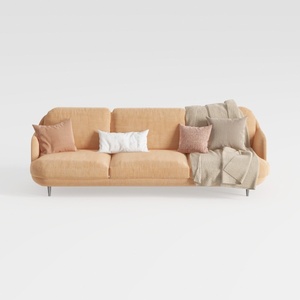

Modern Minimalist Peach Fabric Sofa with Throw Pillows and Blanket 3D Model

Minimalist Solid Wood Linen Fabric Three Seat Sofa 3D Model
Experience the magic of home design with Homestyler! This user-friendly platform offers a robust online design tool, stunning 3D renderings, and a wealth of DIY video tutorials. Transform your space effortlessly and unleash your creativity today!
Zaprojektuj teraz za darmo
































