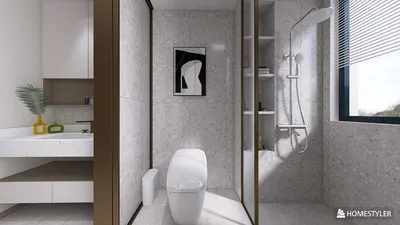


During one renovation project, I arrived expecting to work on two full bathrooms when the homeowner surprised me by revealing they had "2.5 baths." This amusing moment reminded me of how bewildering the term 'half bath' can be for many. Such minor terminology confusions drive my passion for demystifying design language for clients, as compact spaces often inspire the most innovative ideas.
In this article, I will clarify the meaning of a 2.5 bathroom and provide five practical design inspirations I’ve successfully implemented in real projects to enhance the utility of those extra half-baths. Well-designed small bathrooms can significantly improve functionality and even enhance resale value—if planned strategically.
Understanding the Meaning of 2.5 Bathrooms
A 2.5 bathroom designation typically indicates that there are two full bathrooms (each equipped with a toilet, sink, and either a shower or tub) in addition to one half-bath, often referred to as a powder room. This half-bath includes just a toilet and sink, without a shower or tub, and is generally situated close to social areas—like the entryway, living room, or kitchen—to keep guests away from the private bathrooms. This seemingly minor feature greatly enhances everyday convenience and adds notable resale value.
save pin
1. Optimize the Half-Bath with Vertical Storage Solutions
In a townhouse I renovated, I was faced with the challenge of designing a powder room within a 3x4 ft space. By choosing to utilize vertical space—such as open shelving above the toilet, a slim medicine cabinet, and a wall-mounted sink—I managed to create an intentional and spacious feel. The key takeaway is achieving ample storage within a confined area requires visual organization; keeping items tidy or using decorative baskets for a clutter-free appearance is essential.
save pin
2. Transform One Full Bath into a Luxurious En-Suite
If your layout includes two full bathrooms, consider designating one as the primary en-suite while optimizing the other for family usage. In a project I worked on, I elevated the en-suite with features like a frameless shower, ambient lighting, and heated towel rails. Although this involves a higher investment, it creates a luxurious atmosphere that potential buyers are sure to appreciate. Just be mindful of the budget—phased upgrades can help prevent overspending during renovations.
save pin
3. Use a Powder Room to Showcase a Unique Design Feature
Powder rooms provide an ideal opportunity for bold design decisions—think eye-catching tiles, striking wallpaper, or a distinctive mirror. I once adorned the sink wall with vivid tiles, keeping the rest neutral, which resulted in significant visual impact while minimizing material costs. The benefit here lies in achieving a high aesthetic return for a relatively small outlay; however, be cautious of trends, which can change more swiftly in such focused spaces—opt for styles you truly love.
save pin
4. Implement a Jack-and-Jill Bathroom Layout for the Second Full Bath
For homes with fewer bathrooms, a Jack-and-Jill layout can be an ingenious solution, featuring a shared full bath positioned between two bedrooms. In a renovation targeted towards families, I created this design by adding dual sinks and dedicated storage areas. It streamlined morning routines but required meticulous planning regarding privacy and door positioning. While perfect for families, it may not be ideal for setups where both bedrooms prioritize adult privacy.
save pin
5. Trade Closet Space for a More Spacious Bath
In some cases, reallocating a bit of space from a nearby closet can significantly enhance the functionality of a full bath—whether that means larger shower dimensions or the inclusion of a double vanity. I’ve encountered pushback from clients regarding the loss of a coat closet, but when it results in a less congested bathroom, the positive impact on daily routines is often worth it. The key is balancing the loss of storage with the gains in the bathroom's functionality, possibly by incorporating built-ins elsewhere.
save pin
Quick Practical Recommendations
For any layout involving a 2.5 baths, I always advise following a project checklist. Start by outlining plumbing walls, ensuring adequate ventilation, and selecting durable materials for wet areas. Simple modifications, such as installing a wall-hung toilet or a pocket door, can free up valuable inches without extensive costs.
save pin
Tools I Recommend with Homestyler
When designing layouts, I frequently create sketches and utilize a 3D model to visualize the space and avoid unexpected outcomes. Tools like Homestyler are invaluable for understanding how a half-bath integrates with shared living spaces and determining if sacrificing a closet is beneficial.
save pin
Frequently Asked Questions
Q: Is a half-bath included in the bathroom count? A: Yes, a half-bath (powder room) counts as ".5" in the total bathroom tally—it has a toilet and sink but does not include a tub or shower.
Q: Does having a 2.5 bathroom improve a home's resale value? A: Generally, yes—adding a half-bath on the main floor is often a practical method of enhancing buyer appeal and convenience, increasing resale desirability.
Q: What is the typical location for a half-bath? A: Typically, half-baths are positioned near the entryway, living area, or kitchen to ensure guests do not need to access private bedrooms.
Q: Can a half-bath be converted to a full bath? A: This is feasible, but generally requires additional space and plumbing access for a shower or tub; anticipate moderate to significant renovation expenses based on the existing layout.
Q: How much space does a half-bath require? A: An ideal powder room usually needs at least 15–20 sq ft, although compact designs can function in smaller areas with wall-mounted fixtures and pocket doors.
Q: Are there building code standards for half-baths? A: Yes—requirements differ, but codes typically include minimum space for fixtures and ventilation; it is wise to consult local regulations or professionals. For detailed standards, refer to the International Residential Code (IRC).
Q: Should a second full bath take priority over a half-bath? A: This decision hinges on family size and preferences—families with children usually benefit from two full bathrooms, while having a half-bath enhances convenience for guests and daily use.
Q: How can I efficiently plan a 2.5-bath layout? A: Begin by mapping out existing plumbing walls, and employ scaled sketches or a 3D planner to explore fixture placement and clearances prior to execution.
save pin
Homestyler is your go-to online home design platform! With its user-friendly design tool, stunning 3D renderings, and a wealth of DIY video tutorials, you can effortlessly create and visualize your dream space. Transform your home design journey today!
立即免费设计
































