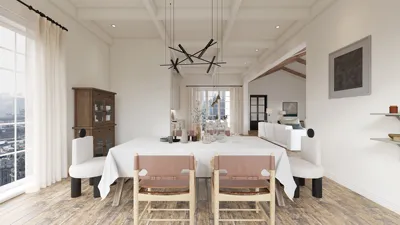


As someone who has organized various multi-guest events, I've discovered that accommodating twelve attendees—particularly six couples—yields the best results when the seating arrangement promotes conversational clusters, allows for easy movement, and offers a subtle degree of privacy between pairs. In terms of space, a typical living room ranges from 180 to 300 square feet. To ensure comfort for your guests, plan for 12 to 18 linear feet of seating and include 2 to 3 extra surfaces for drinks. Research by Steelcase indicates that the orientation of seating significantly impacts engagement; arrangements that are semi-circular or angled facilitate better face-to-face interaction, in contrast to traditional row seating. The WELL v2 guidelines also highlight the importance of maintaining comfortable clearances, generally around 36 inches for circulation paths, which is vital when hosting a dozen individuals.
When entertaining larger groups, the acoustics and lighting become increasingly important. The Illuminating Engineering Society (IES) advises incorporating layered ambient and task lighting with warm-white sources in the 2700 to 3000K range, which not only feels welcoming but also ensures accurate facial rendering. Soft furnishings and area rugs can significantly reduce echo, preventing conversations from devolving into noise. I have found that spacing seats 24 to 30 inches apart, along with side tables positioned 18 to 22 inches within reach, helps maintain personal boundaries while allowing for easy sharing of snacks and stories. Regarding color selection, Verywell Mind suggests that greens and soft blues effectively diminish tension, making them ideal for prolonged social engagements.
Fundamental Concepts for Hosting Twelve Guests
• Establish three to four conversation zones to avoid one dominant area.
• Maintain 36-inch pathways and steer clear of narrow corners near entry points.
• Incorporate seating of varying heights—such as sofas, lounge chairs, and dining chairs—to cater to diverse body types and comfort preferences.
• Utilize symmetrical anchors to help couples feel balanced (e.g., paired chairs, matching end tables).
• Designate at least one quieter corner for guests who prefer less intense interactions.
Design Option 1: Dual Semi-Circles for Enhanced Visibility
Form two semi-circles of seats facing a central coffee table—one semi-circle can feature a sofa with two lounge chairs, and the other may include four dining-style chairs. Couples have the option to sit side by side or at an angle, fostering connection while encouraging diverse group conversations. Position a slim console or credenza behind one arc for drink service and maintain gaps of 36 inches between arcs to ensure smooth movement.
Design Option 2: Island Seating with Perimeter Support
Center a modular sofa or two loveseats facing each other. Surrounding the perimeter, place four armchairs in the corners, paired with small side tables. This creates a vibrant central zone alongside quieter corner conversations for couples who enjoy more privacy. Adding a rug beneath the central island creates a defined social area while also enhancing acoustics.
Design Option 3: Tri-Zone Arrangement (Living, Dining, Lounge)
Implement three distinct areas: a living space (sofa plus two chairs), a dining table for four, and a lounge corner with two club chairs. Couples can move between zones as the energy levels change. Keep sightlines unobstructed—avoid tall dividers between clusters—and ensure lighting alignment: use pendants over the dining area, a floor lamp near the lounge, and dimmable ceiling lights in the main space. To experiment with zoning and circulation, consider using an interior layout planner like the innovative Homestyler tool to simulate layouts and traffic patterns.
Design Option 4: Symmetrical Setup with Paired Chairs
Place two sofas opposite one another and flank each end with matching pairs of chairs (four in total). This arrangement provides six primary seats on the sofas and six more private seats in the paired chairs—ideal for couples who prefer to sit together. A long, narrow coffee table creates a unified surface area while avoiding obstruction of knees.
Design Option 5: The Conversation Spine
Create a spine by arranging a long table or bench down the center, with seating in angled pairs on either side, each oriented slightly towards the spine to maintain a cohesive atmosphere. This format is particularly effective in narrower rooms and apartments, preserving 36-inch circulation paths on both sides. Use portable stools for flexible seating arrangements as guests arrive or depart.
Design Option 6: Corner Niches with a Central Hub
Establish a central hub using a round coffee table surrounded by four chairs, then position two sofas at 90-degree angles in adjacent corners. This blended setup facilitates group storytelling in the center while providing corner retreats for couples seeking intimacy. A round table minimizes sharp edges, enhancing comfort for larger gatherings.
Lighting, Comfort, and Acoustics Considerations
Incorporate layered lighting: dimmable ceiling lights for ambient illumination, complemented by two or three floor lamps and table lamps at reading height. Aim for 10-20 footcandles of ambient light in living zones, increasing to 30-40 on surfaces set with snacks or games. Warm 2700-3000K lamps ensure everyone appears natural. Introduce fabrics, rugs, and drapes to control sound; aim for a balanced acoustic environment where voices are audible without strain. Position seats to minimize glare from TV screens or windows with sheer layers.
Human Factors and Ergonomics Insights
Opt for seat depths of 18 to 22 inches for maximum comfort; consider providing lumbar pillows for shorter guests. Armrests can alleviate shoulder strain during lengthy conversations. Table heights should be around 16-18 inches for coffee tables, 28-30 inches for dining tables, and 24-26 inches for side tables to facilitate comfortable reach. Maintain an 18-inch gap between the seat edge and the table to ensure adequate knee room.
Behavioral Flow Insights
Typically, couples prefer to sit closely together at first, then may opt for adjacent seats as discussions expand. Position trays or side tables within 18 to 22 inches' reach to minimize interruptions. Ensure the bar or buffet is located away from the entry to prevent bottlenecks; a console against a long wall is a practical solution.
Color and Material Strategies
Employ calming base hues—such as sage, soft blue, and warm neutrals—paired with accent cushions in vibrant coral or mustard tones to invigorate the space without overwhelming guests. Select durable, tactile fabrics for seating that will experience heavy use; blended performance weaves handle spills effectively during larger gatherings. Incorporate one standout piece—such as a piece of art or a sculptural lamp—to anchor the room's design without overwhelming it.
Quick Space Planning Suggestions
• Start by mapping out clearances, then layer in seating.
• Anchor the seating with a rug that accommodates all front legs of chairs.
• Incorporate multi-height seating to create visual rhythm.
• Position at least two small tables in each cluster for drinks and phones.
• For a rapid visualization process, consider using an interior layout planner like the Homestyler tool to easily prototype and share design ideas.
Frequently Asked Questions
Q1: What space is required for twelve guests?
A1: When planning for conversational seating, allocate approximately 12 to 18 linear feet of seating along with 36-inch circulation paths. For rooms of around 200 to 300 square feet, three to four clusters work effectively.
Q2: What is the ideal lighting color temperature for group comfort?
A2: A warm-white temperature of 2700 to 3000K creates an inviting environment while ensuring skin tones are accurately represented, consistent with common IES and residential standards.
Q3: How can I alleviate acoustic fatigue?
A3: Layer soft materials—such as rugs, curtains, and upholstered furnishings—and avoid expansive bare surfaces. Segment the room into smaller clusters to minimize overlapping conversations.
Q4: Should couples sit next to each other or apart?
A4: Offer a combination: paired seating for those who prefer closeness and diagonally arranged seats for more dynamic group interactions.
Q5: What are the appropriate table sizes for shared snacks and drinks?
A5: Coffee tables should range from 16 to 18 inches in height with an 18-inch knee clearance; side tables should be 24 to 26 inches high and placed 18 to 22 inches from seats for ease of access.
Q6: How can I keep pathways clear?
A6: Preserve 36-inch paths for circulation, especially from entry points to seating arrangements and between clusters. Avoid placing tables directly in high-traffic areas.
Q7: Which colors promote relaxation for guests?
A7: Soft greens and blues are widely known for their calming properties that mitigate tension; pairing these hues with warm neutrals maintains an inviting palette.
Q8: What is the best way to provide additional seating safely?
A8: Utilize lightweight stools or armless chairs that can be conveniently tucked under tables when not in use to maintain clear pathways and sightlines.
Q9: How many clusters should I aim for?
A9: For twelve guests, three to four clusters are ideal to prevent one dominant group and to foster smaller, intimate discussions.
Q10: Any ergonomic tips for accommodating guests of varying heights?
A10: Provide a variety of seat depths (18 to 22 inches), accommodating armrests, and lumbar support pillows to create a comfortable experience; blending lounge and dining seating can enhance posture adaptability.

Minimalist Sage Green Fabric Tufted Three Seater Sofa 3D Model
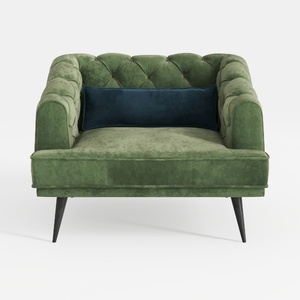
Modern Green Velvet Tufted Armchair with Accent Pillow 3D Model

Minimalist Pastel Solid Wood Side Table 3D Model
Looking to transform your home? Homestyler is the ultimate online design platform for you! With its user-friendly design tool, stunning 3D renderings, and a wealth of inspiring DIY video tutorials, you can effortlessly create and visualize your dream space today.
Zaprojektuj teraz za darmo
































