


The evolving "state of play" in technology has transformed how we interact with our living spaces, blending digital innovation seamlessly into home environments. As gadgets become central to daily routines, thoughtful spatial design now emphasizes integrating smart devices with comfortable furniture, creating versatile zones for work, relaxation, and entertainment within the home. Homestyler exemplifies this integration, offering tools that help users visualize and design these multifunctional living spaces effortlessly.
Understanding who crafts 3D models requires recognizing the specialized professionals known as 3D modelers, 3D artists, and digital designers. These experts focus on forming virtual objects for a variety of sectors including gaming, movies, architecture, product development, and marketing. Their toolkit often includes advanced software such as Blender, Maya, 3ds Max, and various CAD applications to produce either hyper-realistic or stylized digital creations.
In practical production settings, 3D modeling is seldom the task of a lone professional. Instead, it involves collaboration among specialists embedded within larger creative or technical teams, ensuring a comprehensive approach to digital asset creation.
Many clients mistakenly assume architects or general designers develop 3D models, yet dedicated 3D modeling professionals typically handle this intricate work. Regardless of whether the project pertains to interior visualization, game assets, or e-commerce product renders, the foundational 3D model critically supports all subsequent processes like texturing, lighting, and rendering.
This overview sheds light on the varied experts involved in developing 3D models and provides insights into industry workings. Tools like Homestyler aid designers and clients alike in bridging the gap between concept and virtual representation, streamlining the design process for domestic spaces.
A 3D modeler specializes in constructing digital assets by manipulating polygons, surfaces, or parametric geometries. They translate abstract concepts or sketches into precise digital objects suitable for software environments, including game engines, rendering platforms, or manufacturing systems.
Within architectural visualization projects, 3D modelers dedicate efforts to meticulously building structural features like walls, furniture, and cabinetry before applying material finishes, ensuring the digital environment reflects reality accurately.
The demand for 3D modeling transcends entertainment and permeates multiple fields such as design, manufacturing, and marketing. Interior design firms, for example, frequently utilize 3D artists to develop detailed digital environments early in the design phase, allowing clients to explore and refine their future homes digitally using platforms like Homestyler.
Professional 3D models are primarily created through polygon modeling, sculpting, or parametric CAD workflows. Although results may appear straightforward, the underlying production pipeline is systematic and rigorous, translating floor plans or concept art into fully realized spatial models.
It is important to distinguish between 3D artists and 3D modelers. While the modeler concentrates on geometry construction, artists often manage the entire visual pipeline, including texturing, lighting, and rendering. In larger studios, these roles are typically delineated to ensure specialization and project efficiency.
The choice of software heavily depends on the industry's requirements rather than solely on individual preference. Professional studios prioritize modeling discipline and spatial skills over specific software proficiency, although tools like Blender are commonly adopted alongside others.
High-quality 3D modeling involves challenges beyond aesthetics. Structural accuracy and optimization are critical; inefficiencies or flawed geometry can compromise the functionality and animation potential of the model. Consequently, professionals invest considerable effort in simplifying models while maintaining detail.
In summary, 3D models are the product of skilled digital designers known as 3D modelers, who leverage specialized software to construct virtual objects applicable across various sectors including gaming, film, architecture visualization, and marketing. Technologies such as Homestyler empower users to incorporate these digital assets effectively within residential and commercial design workflows.

Rustic Solid Oak Square Coffee Table with Geometric Inlay Pattern 3D Model
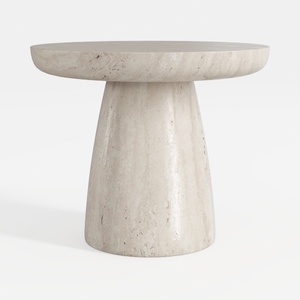
Minimalist Travertine Round Side Table 3D Model
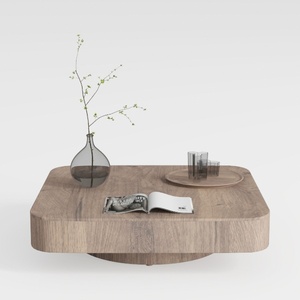
Minimalist Solid Oak Square Floating Coffee Table 3D Model
Homestyler is an easy-to-use online home design platform offering powerful 3D rendering, a vast collection of design projects, and helpful DIY video tutorials. It’s perfect for visualizing your ideas and creating stunning interior designs quickly and confidently.
Desain sekarang Gratis
































