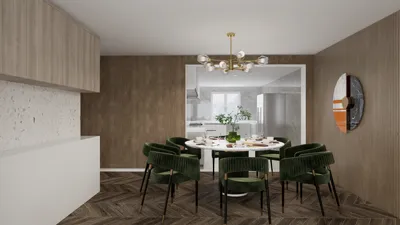


The evolving "state of play" in technology has transformed how we interact with our living spaces, blending digital innovation seamlessly into home environments. As gadgets become central to daily routines, thoughtful spatial design now emphasizes integrating smart devices with comfortable furniture, creating versatile zones for work, relaxation, and entertainment within the home.
Direct Answer
To craft a 3D tree house model effectively, begin by sculpting the tree trunk and primary branches. Then, design a lightweight platform structure anchored securely to the tree. Afterward, incorporate walls, roofing components, railings, and ladders, followed by adding textures, lighting, and details of the surrounding environment. Utilizing tools like Homestyler can help visualize these spatial arrangements in detail.
The crucial approach is to consider the tree as the foundational support and design the house around the natural shape of branches instead of imposing a rigid rectangular structure arbitrarily.
Quick Takeaways
Introduction
Newcomers often approach 3D tree house modeling incorrectly by designing a diminutive house first and then attempting to attach it to a tree. Through extensive experience in visualizing projects and conceptualizing outdoor structures, I've found that starting with the tree itself yields far more believable outcomes.
A convincing tree house appears to emerge organically from the tree. The orientation of branches, trunk girth, and support beams all dictate the design. Whether your purpose is architectural visualization, gaming assets, or conceptual art, grasping this relationship ensures the model feels structurally credible.
In this tutorial, I will guide you through the workflow I personally use when developing tree house concepts for landscape and outdoor design projects, often previewed with the help of platforms like Homestyler.
What Software Works Best for Creating a 3D Tree House Model?
Key Insight: The ideal software varies depending on whether your objective is visualization, game development, or architectural planning.
Different applications manage organic shapes and architectural elements uniquely. Tree houses straddle both worlds, making the choice of tool critical to efficiency and realism.
Popular tools used by designers include:
Many professionals integrate multiple software packages—for instance, sculpting the tree in Blender while constructing the house framework in SketchUp or previewing spatial layouts in Homestyler.
How Do You Model the Tree Structure First?
Key Insight: The tree should inform the architectural design, not be altered to fit preconceived building shapes.
In authentic construction, tree houses are heavily dependent on natural branch placement and trunk durability. Artificial tree geometry compromises the entire scene's credibility.
Basic modeling steps include:
Overlooking secondary branches can be a subtle but critical error. These finer elements visually anchor the structure and prevent it from appearing like merely a pole with an attached shack.
How Is the Tree House Platform Built?
Key Insight: The platform acts as the core support for any tree house design.
Once the tree model is complete, proceed by constructing a structural frame that realistically connects to the trunk or major branches.
Key platform components involve:
Experience shows that slightly asymmetrical beam placement adds authenticity. Perfect symmetry is rare in practical tree house builds.
What Details Make a 3D Tree House Model Look Realistic?
Key Insight: Minor environmental details surpass architectural complexity in importance.
Many models fail because they look too pristine compared to their natural surroundings. Real tree houses exhibit weathering, texture variation, and imperfections.
Suggestions to enhance realism include:
Lighting plays a crucial role. Warm sunset illumination filtering through branches instantly adds cinematic appeal.
Common Mistakes When Designing a 3D Tree House
Key Insight: Most unrealistic models falter due to flawed structural logic.
After reviewing numerous designs, common errors are apparent.
Typical problems include:
An effective test is to imagine whether a carpenter could feasibly build the structure. If it seems impossible in the real world, the 3D model usually appears wrong as well.
How Do You Export or Render the Final Tree House Scene?
Key Insight: Rendering quality often distinguishes amateurish models from professional ones.
After completing modeling, the last step is preparing the scene for rendering or exporting.
Typical workflow includes:
For portfolio presentations, slightly angled aerial shots best showcase the platform and roof together.
Answer Box
A successful 3D tree house model begins with a realistic tree base, proceeds with a structurally sound platform, and includes lightweight wooden elements. Paying attention to environmental details, lighting, and natural imperfections makes the model convincing. Tools like Homestyler can facilitate planning and visualizing such integrated spaces.
Final Summary
FAQ
What software is best for creating a 3D tree house model?
Blender and SketchUp are widely favored. Blender excels at organic tree forms, whereas SketchUp streamlines architectural constructions. Additionally, Homestyler can aid in visualizing interiors and spatial layouts.
Can beginners create a 3D tree house model?
Absolutely. Starting with basic shapes like cylinders for trunks and cubes for houses is recommended. Details can be built up gradually as the core structure solidifies.
How long does it take to build a tree house model?
A simple 3D tree house model may require 2–4 hours, whereas intricate environment scenes could take several days.
Do I need realistic trees for a tree house model?
Yes. The tree dictates the design. Unrealistic trunk or branch geometry will undermine the entire model’s believability.
What textures are best for a tree house?
Textures such as wood planks, bark, and natural weathering maps greatly enhance realism.
Should the tree house be symmetrical?
No. Minor asymmetries contribute to a natural, believable design.
Can a 3D tree house model be used in games?
Yes. Optimized tree house models are commonly integrated into game engines like Unity or Unreal for forested environments.
What makes a tree house model look realistic?
Accurate branch support, natural materials, environmental lighting, and sound structural logic are essential for realism.



Homestyler offers an easy-to-use online design tool with stunning 3D renderings, a vast collection of interior design projects, and helpful DIY video tutorials—perfect for bringing your home decoration ideas to life effortlessly and creatively.
立即免费设计
































