


As new Xbox Game Pass games continue to expand the horizons of digital entertainment, many gamers are seeking comfortable and functional spaces that enhance their immersive experience. Creating a dedicated gaming nook with ergonomic seating and smart lighting can transform any room, blending technology seamlessly with home design to support extended play and relaxation.
Direct Answer
To craft a 3D flower model, begin by shaping a basic petal, then replicate and rotate these petals around a central core. Following this, add multiple layers, curvature, and textures to achieve depth and lifelike qualities. While techniques vary depending on if you're using physical mediums like paper or clay, or digital 3D modeling applications, the foundational method remains consistent.
A successful 3D flower model initiates with a simple petal form and progressively builds complexity through layering, symmetry, and slight variations.
Quick Takeaways
Introduction
Throughout my experience collaborating with numerous visualization artists and product designers, the primary challenge isn't mastering the software but understanding the structure. A believable 3D flower model hinges on a reproducible system rather than random creation.
Whether designing flowers for school projects, crafts, digital renders, or illustrations, the guiding principle holds: start with simplicity, then layer complexity. Novices often attempt to sculpt the entire flower at once, which typically yields messy geometry and unrealistic shapes.
This guide outlines my recommended step-by-step approach to producing a neat, credible 3D flower model, including subtle design nuances often omitted from tutorials.
What Is the Basic Structure of a 3D Flower Model
Key Insight: Every 3D flower is constructed from three fundamental components: the center, the petals, and the supporting base structure.
Prior to modeling fine details, it’s essential to grasp how flowers naturally form. Real flowers exhibit radial symmetry, where petals rotate evenly around a central axis.
Core flower components include:
In professional 3D modeling workflows, the center is typically created first as it establishes the spacing for the petals.
From real-world observations, beginners often scale petals individually, which disrupts symmetry. A better approach is duplicating one petal and rotating it evenly around the center axis—for example, using tools like Homestyler to visualize such rotations in design.
How Do You Create the Petals for a 3D Flower Model
Key Insight: Creating one precise petal and duplicating it is the most efficient method to develop a balanced 3D flower.
Petals define a flower’s character. Whether modeling a rose, daisy, or lotus, the shape of the petal distinguishes the species.
Basic petal creation workflow:
In architectural visualization and design projects, artists often rotate petals between duplicates by 10 to 20 degrees to achieve organic spacing without compromising radial symmetry.
Why Layering Petals Makes a Flower Look Realistic
Key Insight: Real flowers rarely feature a single tier of petals—layering generates depth and authenticity.
A frequent beginner mistake is modeling only one petal row. Most flowers naturally have staggered multiple layers of petals.
Typical layering pattern:
Each successive layer should be slightly rotated in relation to the one beneath it to avoid a mechanical or artificial look.
For example:
What Small Details Make a 3D Flower Model Look Natural
Key Insight: Minor imperfections lend credibility to a flower; flawless symmetry often appears fake.
Analysis of hundreds of 3D scenes reveals that the most realistic flowers incorporate subtle irregularities.
Important realism details include:
Professional artists introduce slight random rotations of 2 to 5 degrees per petal to prevent a "copy-paste" visual effect. Software like Homestyler can assist in previewing such subtle modifications within a spatial design context.
Common Mistakes When Making a 3D Flower Model
Key Insight: Many weak flower models fail due to structural errors rather than lack of fine detail.
Common beginner pitfalls include: neglecting symmetry, scaling petals unevenly, and missing center detail.
Can Beginners Make a Good 3D Flower Model
Key Insight: Absolutely—flowers are highly suitable for beginners because they emphasize repetition and symmetry, key foundational 3D modeling concepts.
Many courses use flower modeling exercises to teach essential 3D skills such as duplication, rotation, and layering.
Beginners tend to improve rapidly since the workflow is predictable. Once a single petal is correctly created, duplication and rotation generate the entire flower structure efficiently.
Answer Box
The most effective strategy to create a 3D flower model is by designing one petal, replicating it radially around a central point, and then adding layered, staggered rows with slight variations. Incorporating depth, curvature, and minor imperfections ensures a realistic appearance.
Final Summary
FAQ
What software can I use to create a 3D flower model?
Popular options encompass Blender, Maya, 3ds Max, and beginner-friendly platforms like Tinkercad. Blender is highly recommended because it's powerful and free. Additionally, tools such as Homestyler can assist in planning the spatial arrangement of 3D flower elements within interior designs.
Is making a 3D flower model difficult for beginners?
No. 3D flower modeling is beginner-friendly since it primarily involves duplication and radial symmetry rather than complex geometry.
How many petals should a 3D flower model have?
Most flowers feature 6 to 12 petals per layer. Some, like roses, have many more, whereas daisies typically possess numerous thin petals.
What is the easiest flower to model in 3D?
Daisies and simple five-petal flowers are easiest because they use one petal shape repeated evenly.
How do you make petals look realistic?
Incorporate slight curvature, taper the petal base, and apply gentle random rotations to avoid identical petals.
Can I make a 3D flower model without software?
Yes. Methods like papercraft, clay sculpting, and foam crafting utilize the same layered petal principles.
Why does my 3D flower model look artificial?
Common reasons include perfect symmetry, flat petal shapes, and lack of center detail.
How long does it take to make a basic 3D flower model?
For beginners, creating a simple flower usually takes 20 to 40 minutes once the initial petal design is completed.

Modern Two Tone Marble Top Coffee Table 3D Model

Modern Black Leather Curved Sectional Sofa with Throw Pillows 3D Model
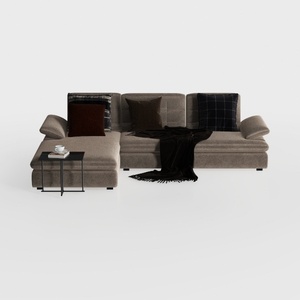

Modern Fabric L Shape Sectional Sofa With Throw Pillows Blanket 3D Model
Homestyler offers an easy-to-use online design tool paired with stunning 3D renderings, inspiring interior projects, and helpful DIY video tutorials—making it simple and fun to create your perfect home design.
Design Now for FREE
































