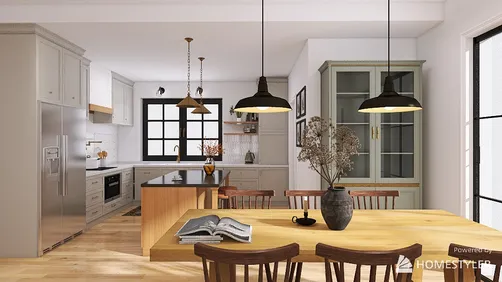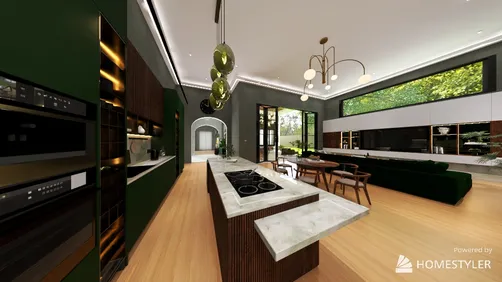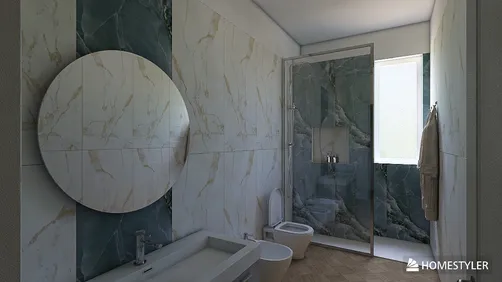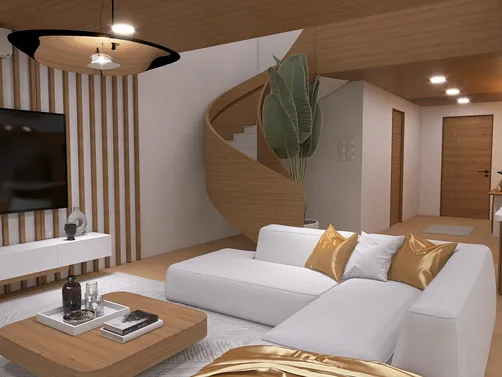
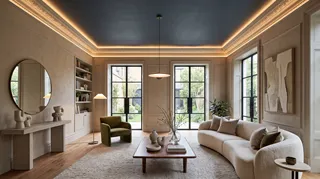

- Living room: Paint, trim, or beams can complement the main seating arrangement. Keep the ceiling treatment in proportion to the room’s focal point, such as a fireplace or large window.
- Bedroom: Softer colors, subtle wallpaper, or warm wood details can create a restful atmosphere. Avoid a visually busy pattern directly above the bed if you prefer a quieter setting.
- Kitchen: Choose finishes that tolerate the room’s humidity and cleaning needs. A simple painted ceiling or well-sealed planks are generally easier to maintain than delicate materials.
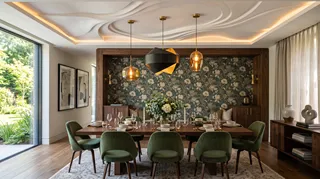
- Dining area: A pendant, medallion, or defined ceiling color can reinforce the table as the center of the room. Confirm that the fixture hangs at a comfortable height and does not obstruct sightlines.
- Hallway: A continuous color or narrow trim detail can make a long passage feel considered. Strong patterns may exaggerate a narrow space, so test a small area first.
The ceiling is often the largest uninterrupted surface in a room, yet it is usually left plain. Thoughtful ceiling decor ideas can change how a space feels without adding furniture or taking up floor area. The right treatment may make a low room feel more cohesive, give a tall room warmth, or draw attention to a dining table or bed. The key is to match the finish to the room’s proportions, light, and everyday use—not to decorate overhead simply because the surface is available.

Start with ceiling decor ideas that fit the room
Before choosing a finish, look at ceiling height, natural light, existing trim, and the room’s main focal point. A busy ceiling competes with patterned floors and statement furniture; a quiet one can help those features stand out. In my experience, the most successful ceiling updates solve a specific design problem: they soften a boxy room, add warmth to a large volume, or make a lighting plan feel intentional.
Check the surface for cracks, stains, peeling paint, or signs of moisture before covering it. A decorative finish will not fix an underlying leak or unstable plaster. If you rent, confirm what changes are allowed and favor reversible options such as removable decals or lightweight fabric panels installed with approved hardware.
For a quick visual test, create a simple room model or mood board before buying materials. Homestyler can help compare ceiling colors and fixture placement in context, which is more useful than judging a paint chip in isolation.
12 ceiling decor ideas to consider
1. Paint the ceiling a considered color
A ceiling does not have to be white. A pale tint can make a room feel finished while keeping the overhead plane visually light; a deeper shade can create intimacy in a den, powder room, or bedroom. Repeat the color in a small detail—such as a cushion, artwork, or curtain—to connect it to the rest of the room.
Test a large sample in morning and evening light. Ceiling color can look different from the same paint on a vertical wall because the angle and light exposure change how it reads. I recommend sampling the actual finish overhead before committing to the whole surface.
2. Carry wall color overhead
Painting walls and ceiling the same color reduces the visual break at the corners. This can make a compact room feel calmer and can disguise awkward transitions around alcoves. Use a finish appropriate to the surface and room conditions; kitchens and bathrooms need products suited to humidity and cleaning, along with proper ventilation.
3. Add a contrasting border
A painted perimeter or narrow color band can frame a ceiling without requiring elaborate millwork. It works especially well when the room already has a clear geometry, such as a dining area or a bed centered beneath a pendant. Keep the border proportionate: a very wide band can make the ceiling appear lower.
4. Install crown molding or simple trim
Molding gives the wall-to-ceiling junction a deliberate edge. Traditional profiles suit rooms with existing architectural detail, while plain, square-edged trim can feel more contemporary. Measure carefully and account for corners, ceiling irregularities, and the profile’s projection before ordering. In my experience, a modest profile installed neatly looks better than oversized trim that overwhelms a small room.
5. Use beams for warmth and rhythm
Exposed structural beams bring visual rhythm and a natural material overhead. In homes without original beams, lightweight decorative beams can suggest the look, but they must be securely attached to suitable framing. Avoid placing heavy elements based only on drywall anchors; consult an installer when the ceiling structure or load is uncertain.
6. Try beadboard or narrow planks
Painted beadboard and wood planks add texture and can suit cottages, porches, kitchens, or relaxed bedrooms. The direction of the boards affects the room’s appearance: running them along the longer dimension can emphasize length, while a contrasting layout can define a zone. Check that the material is rated for the room’s conditions and that installation does not block access to wiring or services.
7. Add wallpaper overhead
Ceiling wallpaper can turn a plain room into a more layered space. Small-scale patterns are often easier to live with overhead than large, high-contrast motifs, especially in rooms with low ceilings. Use wallpaper designed for the surface and follow the manufacturer’s preparation instructions; a smooth, sound substrate is essential for a clean result.
8. Create a subtle texture
Textured finishes can soften a room, but they are difficult to reverse and may complicate future repairs. Consider removable or replaceable panels if you want dimension without permanently altering the ceiling. If an existing texture may contain hazardous material—particularly in older buildings—do not sand or scrape it; arrange appropriate testing and professional advice first.
9. Make lighting part of the design
A decorative ceiling is more effective when the lighting supports it. A pendant can anchor a dining table, while recessed or surface-mounted fixtures provide general illumination. Layer ambient light with task or accent lighting rather than relying on one bright central source. Check fixture weight, electrical capacity, and local installation requirements with a qualified professional when needed.
10. Use a ceiling medallion selectively
A medallion can give a chandelier or pendant a stronger visual center, especially in a room with traditional trim. Choose a diameter that relates to both the fixture and the room; an oversized medallion can look disconnected, while a tiny one may disappear. Lightweight options are easier to install, but still need secure attachment and compatibility with the fixture canopy.
11. Define a zone with a ceiling feature
In an open-plan home, a change in paint, boards, or lighting can mark a dining or sitting area without adding a partition. Keep the feature aligned with the furniture below so it reads as intentional. A 3D layout can help test the boundary before work begins; Homestyler is one way to preview how a ceiling treatment relates to furniture and circulation.
12. Add a restrained reflective detail
A small reflective element—such as a polished metal fixture or a carefully placed mirrored panel—can bounce light and add contrast. Avoid covering a whole ceiling with mirror: glare, seams, cleaning, and installation weight can become practical problems. Use reflective finishes as accents and consider how they will look from seated and standing positions.

Match the treatment to the room
A practical planning checklist
- Inspect first. Resolve leaks, stains, loose plaster, and electrical concerns before decorating.
- Measure the room. Record ceiling height, dimensions, and the location of fixtures, vents, and access panels.
- Choose one lead feature. Decide whether color, texture, architecture, or lighting should do most of the work.
- Test at full scale. Use a large paint sample or a temporary paper mock-up and view it at different times of day.
- Check material requirements. Confirm weight, moisture suitability, fire rating where applicable, and installation instructions.
- Plan the budget beyond materials. Include surface preparation, tools, waste, labor, and any electrical work.
My advice is to make one change at a time when the room already has strong furnishings or patterned finishes. A ceiling should support the room’s composition, not compete with every other surface.
Common mistakes to avoid
- Choosing a finish before checking the ceiling condition. Decorative layers can conceal damage without solving it.
- Ignoring scale. Large beams, deep trim, or bold patterns may overwhelm a low or compact room.
- Forgetting the light source. A color that looks balanced in daylight may feel much darker under warm evening bulbs.
- Overlooking maintenance. Textured or intricate surfaces can collect dust and be harder to repaint or repair.
- Treating installation as purely cosmetic. Heavy fixtures and overhead materials need secure support; electrical work should meet local requirements.

Make the ceiling feel intentional
Good ceiling decor ideas begin with the room’s needs. Paint is a relatively direct way to change the mood; trim, beams, and planks add architectural character; wallpaper and texture bring pattern; and a considered lighting plan gives the surface purpose after dark. You do not need to combine all of them. Pick a treatment that suits the ceiling height, the room’s natural light, and the amount of visual detail already present.
What began as an Autodesk innovation has evolved into a design platform used by more than 20+ million registered users (platform data, 2026) around the globe. Homestyler combines powerful rendering, an intuitive editor, and a vast furniture library to help you turn inspiration into photorealistic designs — whether you're redesigning a single room or planning an entire home.
If you are unsure, start with a reversible test and view it from the places where you actually spend time. A small, well-planned change can make the whole room feel more complete. For a final layout check, Homestyler can help you visualize the ceiling alongside furniture, colors, and lighting before you commit.
Design Now for FREE