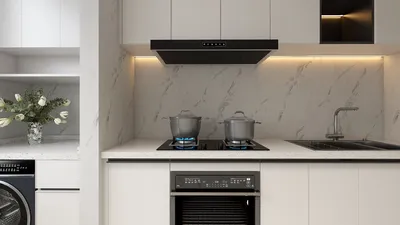


In today's world, technology shapes not only how we entertain ourselves but also how we design our living spaces. The popularity of games like League of Legends encourages a lifestyle centered around extended screen time and immersive digital experiences. This trend inspires home setups with ergonomic furniture and ambient lighting that enhance comfort and focus, creating a dedicated space that balances high-tech engagement with restful living.
Executive Summary
The integration of artificial intelligence in interior design has sparked intriguing discussions: can AI truly replace interior designers, or will human creativity and expertise remain indispensable? This article evaluates both AI and human designers along nine vital aspects — speed, creativity, customization, technical know-how, emotional insight, client interaction, sourcing, regulatory compliance, and project realization. The verdict highlights that while AI excels at rapid ideation, conceptualization, and generating multiple design options swiftly, human designers contribute unmatched emotional sensitivity, practical problem-solving skills, and accountability. Thus, AI serves best as an enhancer of the design process, empowering both homeowners and professionals to explore possibilities more efficiently and make better-informed choices.
Where AI Excels: Efficiency, Volume, and Exploration
In terms of sheer speed and output, AI outpaces human interior designers considerably. Using platforms like Homestyler, one can create a fully furnished, photorealistic room visualization in under a minute. Conversely, a human designer might require several days and considerable fees to produce multiple stylistic variations for the same space.
This rapid output makes AI perfect for the early discovery phase. Homeowners uncertain about their preferred style — whether modern, farmhouse, Japandi, or industrial — can experiment with dozens of aesthetics risk-free before settling on a direction. Such exploration helps uncover tastes that might otherwise remain hidden.
Picture walking into a designer’s studio and requesting 15 different interpretations of your living room. While most human professionals may decline or charge heavily for this volume of work, AI platforms like Homestyler can deliver these variations within minutes. Consequently, AI serves as an ideal tool for generating initial ideas, which can later be refined by a seasoned designer.
Where Human Designers Shine: Emotional Perception and Client Engagement
Although speed is noteworthy, effective design extends beyond quickly producing visuals; it requires grasping how a space resonates emotionally with its inhabitants. Here, human designers hold an irreplaceable advantage.
A talented designer asks questions that AI cannot, uncovering subtle preferences through dialogue.
For instance, a client expressing a desire for a “modern kitchen” might actually seek a cozy, functional area where children do homework while meals are prepared. AI reacts to explicit keywords, whereas human designers interpret the deeper intent behind those words.
Experienced professionals perceive nuance—such as hesitance at a fabric sample or enthusiasm for a color — adjusting recommendations accordingly. This dynamic emotional feedback loop is beyond AI’s current capability.
Comparing AI-generated interior design with human collaboration reveals a stark contrast: AI follows prompts to deliver results, whereas designers build relationships, comprehend family dynamics, anticipate evolving needs like growing families or aging in place, and sometimes protect clients from fads that could detract from a home's value.
Creativity: Divergent Insight Versus Pattern Recognition
AI’s creativity is based on analyzing millions of existing design images, recognizing patterns in color schemes, furniture pairings, and layouts, and remixing these elements into new designs. Although often impressive, these outputs are recombinations of existing templates and can feel formulaic.
This poses a risk of homogeneity if many use similar AI tools like Homestyler, leading to repetitive design trends and diminished originality in the market.
Human designers draw upon personal experiences — memories of spaces, emotional reactions to environments, and intuitive connections between disparate elements — enabling genuinely unique creations that break conventional molds.
While AI can quickly generate numerous options, human designers focus on crafting a singular vision that is truly original and reflective of the client’s personality.
The most potent creative process merges both worlds: leveraging AI for rapid idea generation and then distilling those ideas into an innovative, individualized design directed by human insight.
Customization: Generic Templates Versus Unique Tailoring
Though AI customization appears robust — input room size, style, and color preferences, and receive tailored visuals — its personalization lacks depth.
Human designers customize spaces with nuance and specificity that AI cannot achieve.
AI might create a visually pleasing room that feels generic, whereas a designer ensures the space is uniquely yours, reflecting your lifestyle and personality.
Technical Expertise and Compliance with Building Codes
Here, AI and human capabilities diverge clearly: no responsible professional would depend solely on AI for structural, safety, or code compliance matters. AI lacks knowledge of local regulations, load-bearing elements, and permit processes.
AI tools are valuable for envisioning possibilities but licensed professionals must always oversee sensitive technical aspects.
Sourcing and Procurement
Many AI-generated images, including those from platforms like Homestyler, feature furniture and décor that don't physically exist. This leads to frustration when clients fall for designs that cannot be realized in reality.
Some solutions mitigate this by integrating actual product catalogs, making AI-generated designs more actionable and facilitating real purchasing decisions.
Human designers offer sourcing expertise that goes beyond visuals — tapping exclusive networks to find authentic items, save money, and avoid procurement headaches.
Project Delivery: Renderings Versus Fully Executed Spaces
A stunning visualization is not the same as a completed room. The transition involves numerous steps: coordination, problem resolution, and decision-making that require human oversight.
While AI can’t manage contractors or quality-check installations, human designers bring accountability and hands-on management to ensure the vision becomes a liveable reality.
The Collaborative Approach: Leveraging AI as a Design Catalyst
The debate is not about choosing AI or human designers but about integrating both. Using a hybrid workflow typically reduces design costs by 40–60% while delivering superior outcomes compared to using either alone.
Many designers now embrace tools like Homestyler to augment their creativity and efficiency.
Decision Guide: When to Use Each Tool
FAQ
Can AI replace human interior designers? No. AI shines at visual ideation and rapid style exploration but lacks emotional intelligence and project management skills essential for end-to-end design success.
Is AI cost-effective? Generally yes. AI tools offer affordable access to design visuals, making style discovery easier while human expertise remains vital for complex planning and execution.
Does the hybrid method improve results? Absolutely. Combining AI-powered idea generation with professional refinement optimizes both cost and quality.
Are AI designs code-compliant? No. Always consult licensed professionals for regulatory matters.
Are all AI designs purchase-ready? Not always. Verify availability as some AI tools generate non-existent products.
Conclusion
The future of interior design lies in the synergy between AI and human professionals. AI tools democratize idea exploration and efficiency, while designers provide the empathy, expertise, and execution that bring spaces to life. Using AI technologies like Homestyler for initial design exploration, followed by expert human input, represents the smartest pathway to crafting a home that truly resonates.
Embrace technology as a partner in the design process rather than a competitor — this collaboration yields beautiful, personalized living environments that blend innovation with soul.

Minimalist Concrete Large Planter Pot with Greenery 3D Model

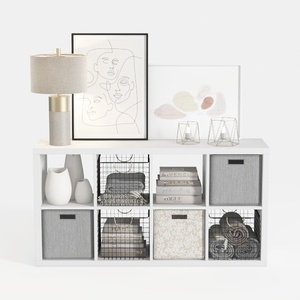
Modern Minimalist White Fabric Solid Wood Storage Cabinet 3D Model
Homestyler offers an easy-to-use online design tool with stunning 3D renderings, inspiring design projects, and helpful DIY video tutorials. It's perfect for bringing your home design ideas to life, whether you're a beginner or looking for professional-quality inspiration.
Zaprojektuj teraz za darmo
































