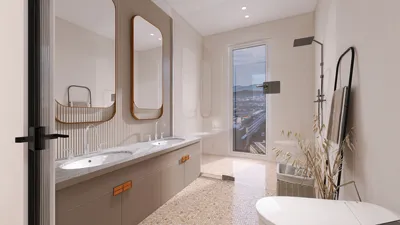


In today's smart homes, seamless integration of technology like the Nest app is key to managing comfort and security effortlessly. When the Nest app faces interruptions, it reminds us how crucial a reliable tech setup is in our living spaces. Designing furniture that accommodates smart devices while maintaining aesthetic harmony can enhance the overall functionality and atmosphere of any room, making technology a natural part of our home environment.
Executive Summary
AI-powered virtual staging revolutionizes the presentation of vacant property photos by transforming them into digitally furnished, market-ready visuals without incurring the expenses, logistical challenges, or time delays associated with traditional staging. Utilizing deep learning algorithms, these advanced tools analyze room dimensions, lighting, and perspective to insert photorealistic furniture and decor into empty spaces within minutes rather than days. This innovation enables real estate agents, property marketers, and commercial listing teams to accelerate listing readiness, reduce costs per property, and assist potential buyers in envisioning the functionality of rooms before visiting in person. This article explores the mechanisms behind AI virtual staging, necessary photo inputs, styling options, ethical considerations, quality control, and inherent limitations of AI-generated property imagery.
Why AI Virtual Staging is Essential for Property Listings
Empty rooms often present a persistent obstacle in real estate marketing. Prospective buyers viewing online listings may find it difficult to assess room scale, furniture arrangement, or the potential daily use of a space. A vacant living area can feel impersonal and uninviting, while an unfurnished bedroom may fail to convey comfort or lifestyle appeal.
Virtual staging bridges this gap in visualization. According to data from the National Association of Realtors (NAR), more than 80% of buyer's agents acknowledge that staging aids buyers in imagining a property as their future residence. Digitally furnished rooms in listing photos foster faster emotional connections than vacant room images.
The cost advantage is particularly beneficial for agencies managing multiple listings simultaneously. An agent responsible for staging five empty units can digitally furnish every room across all properties for less than the expense of a single rooms' physical staging. In workflows involving AI-driven home and commercial space design, virtual staging integrates naturally with other AI visualization technologies to expedite listing preparations.
How AI Virtual Staging Operates: A Detailed Process
AI virtual staging depends on computer vision models trained on vast datasets of interior photographs. These models identify architectural elements, estimate spatial depth, and accurately position virtual furnishings to match the room’s perspective and illumination.
The typical AI staging process consists of six stages:
Photo Input Specifications and Best Practices
The fidelity of virtual staging results directly correlates to the quality of input images. AI models are sensitive to factors such as resolution, consistent lighting, and lens-induced distortion.
Checklist for input quality:
Common pitfalls to avoid in input photos:
Styling Control and Customization Options
One major benefit of AI virtual staging versus physical staging is the capability to showcase a single room in various design themes, enabling marketing tailored to different buyer demographics without additional costs.
Typical available style presets include:
For commercial listings, virtual staging enhances room function clarity. A vacant commercial floor plan can be digitally dressed as an open office, reception, or co-working space, assisting potential tenants in understanding its possible uses.
Room Function Clarification: Assisting Buyers and Tenants in Visualizing Spaces
A key but often overlooked advantage of AI virtual staging lies in clarifying room purpose. Empty rooms lack contextual cues indicating intended functions; for instance, a 12x12-foot empty space could equally serve as a bedroom, office, nursery, or gym. Without visualization, buyers might leave undecided.
Virtual staging addresses this by illustrating reasonable room configurations:
This functionality goes beyond mere aesthetic improvements, directly answering the practical question: How would I realistically use this room?
Ethical Transparency: Disclosure Guidelines and Best Practices
AI virtual staging is widely accepted and lawful across North American MLS systems, provided that transparency protocols are followed. The principal rule is full disclosure of digitally enhanced photos to prospective buyers.
Typical disclosure methods include:
Practices to avoid include:
Major MLS organizations such as Bright MLS, CRMLS, Stellar MLS, and NWMLS mandate watermarking and explicit listing remarks to indicate virtual staging. It is advisable to verify local board regulations regularly, as these requirements evolve.
Applications of AI Virtual Staging in Commercial Real Estate
Though predominantly discussed in residential contexts, virtual staging technology is equally valuable in commercial property marketing. Vacant retail spaces, office suites, restaurant areas, and warehouses all face the same visualization challenges as residential listings.
For teams utilizing AI-based home design platforms or comprehensive 3D visualization toolkits, identical AI staging processes can be applied across residential and commercial properties, streamlining workflows.
Ensuring Quality: Pre-Publication Inspection Criteria
AI staging outputs might not always be flawless initially. Systematic quality assurance (QA) protocols help detect and correct issues before listing images go live.
QA checklist for digitally staged visuals:
If defects are discovered, many platforms allow image regeneration with modified parameters or manual editing of furniture positioning, piece substitution, or color adjustments.
Current Challenges and Limitations of AI Virtual Staging
While AI virtual staging is a potent marketing resource, it comes with notable constraints that practitioners should consider.
Common limitations include:
These factors underscore that AI staging serves as a visualization aid, complementary to truthful representation, professional photography, and in-person inspections—not a substitute.
Synergizing AI Virtual Staging with Comprehensive Visualization Systems
AI virtual staging integrates within a wider ecosystem of AI-driven property visualization—including floor plan generation, immersive 3D tours, and photorealistic rendering. For teams managing large-scale listings, combining virtual staging with AI interior modeling and 3D presentations produces cohesive marketing collateral, such as staged MLS images, rendered walkthrough videos for social media, and interactive 3D models on property sites.
This cohesive strategy is especially effective for off-plan developments where physical staging is unfeasible. High-quality, uniform AI-generated visuals become the cornerstone of marketing efforts.
Frequently Asked Questions
Is AI virtual staging permitted by MLS for property listings?
Yes. Provided all disclosure rules are adhered to, AI virtual staging is accepted by MLS boards across the US and Canada. Common protocols involve watermarking images, noting virtual staging in captions, and including disclaimers in listing descriptions. Omission of disclosures can trigger MLS penalties, listing removal, and legal disputes.
How does AI virtual staging cost compare to traditional physical staging?
AI-based staging typically costs between $20 and $30 per image, often available through subscription plans for high-volume usage. In contrast, physical staging expenses for a single room range from $500 to $3,000 depending on market factors and rental duration. For a typical three-bedroom home, AI staging might total $200–$400, compared to $3,000–$9,000 or more for physical staging.
Is AI virtual staging appropriate for occupied homes?
Best practices recommend applying virtual staging only to vacant rooms. Digitally modifying images of furnished homes risks misrepresenting actual property conditions. Most MLS and NAR guidelines advise photographing empty rooms prior to applying AI staging.
High-resolution images with a minimum of 2,000 pixels on the longest side, evenly distributed natural lighting, and straightforward shooting angles yield the most realistic results. Avoid ultra-wide lenses, mixed lighting sources, and excessive compression artifacts. Superior source photos produce lifelike staged outputs.
Absolutely. The same AI algorithms effectively stage commercial spaces such as empty office suites, retail units, restaurant interiors, and warehouses, helping potential tenants visualize possible layouts and functions prior to physical visits.
Including both virtual staging-enhanced and original unstaged photos is widely recommended to promote transparency and trust. Some MLS regions mandate this practice to ensure buyers can differentiate between real and digitally altered images.
No single strategy can assure quicker sales or higher prices. Virtual staging tends to increase listing engagement—leading to more views and showings compared to empty-room photos—but final sale outcomes depend on multiple factors including pricing, location, market trends, and property condition. AI staging remains a visualization aid rather than a pricing tool.
It is important to recognize that AI virtual staging complements but does not replace on-site property inspections, honest disclosure, legal expertise, or accurate pricing strategies. Compliance with local MLS rules and real estate laws remains essential.
Integrating Homestyler into Your Design Process
Leveraging platforms like Homestyler in conjunction with AI virtual staging tools enhances both design flexibility and visualization accuracy. Homestyler offers user-friendly interfaces for interior design planning, allowing users to experiment with different furniture arrangements and styles that align seamlessly with virtual staging outputs. This integration supports faster and more engaging listing preparations, enabling agents and designers to craft aesthetically pleasing and technologically optimized spaces that resonate strongly with buyers and tenants alike.

Minimalist White Solid Wood Dining Table 3D Model


Modern Marble Top Gold Metal Base Dining Table 3D Model

Modern Minimalist Solid Wood Office Desk with Office Chair 3D Model
Homestyler offers an easy-to-use online design tool with stunning 3D renderings, inspiring interior projects, and helpful DIY video tutorials. It’s perfect for bringing your home design ideas to life, whether you’re a beginner or an experienced decorator.
Design Now for FREE
































