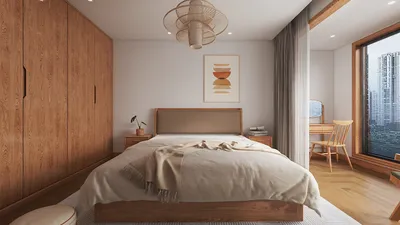


In today’s lifestyle, following icons like Paris Hilton not only shapes personal fashion but also influences how we curate our living spaces. Just as fashion trends evolve, so do our preferences for interiors, where bold colors and sleek designs reflect a glamorous yet comfortable ambiance. Integrating stylish furniture pieces inspired by celebrity flair can transform any room into a chic retreat, blending trend-conscious living with functional comfort.
The before-and-after transformations can appear quite convincing. However, the "after" images often lack an actual floor plan, precise measurements, or any connection to the real living space of the user.
AI-powered photo room redesign applications gained popularity rapidly. Upload a snapshot of your living area, select a style—be it Scandinavian, industrial, or coastal—and within moments, receive a refined image of your space reinvented. RoomGPT helped bring this concept to the masses, followed by numerous similar platforms.
While these results offer a visually appealing experience, their utility as legitimate planning instruments is very limited. Authentic room planners and AI photo redesigners tackle entirely distinct challenges; conflating them can mislead users into basing critical decisions on images with no underlying spatial information.
How AI photo redesign tools operate
Programs like RoomGPT utilize an image-to-image conversion technique whereby the input photo is analyzed for shapes and surfaces, then regenerated in a new aesthetic style. The algorithm has been trained on thousands of interior design images, enabling it to convincingly apply stylistic patterns.
However, what the AI cannot discern from a single photo is crucial:
The output image mimics a room but is not a spatial plan. All dimensions are imaginative, with furniture scaled to appear pleasing rather than corresponding to any real product or actual measurements.
The specific pitfalls this entails
For instance, a sofa seen in the redesigned image could be exactly what draws your eye. Yet, there is no way to verify its actual size, model, or whether it will physically fit your space. You cannot simply save the image and show it to a retailer to buy the exact piece — the product details and sizing are missing, replaced by pixels configured to resemble furniture.
If you're relocating and utilize such an AI tool to picture a new home, the results provide no reliable assessment of what truly accommodates the room. Furniture positioning might be impossible to replicate because the AI lacks knowledge of the space’s real dimensions.
A practical plan guides you on bed placement, clearance space, and door swing interference, whereas a redesigned photo primarily suggests aesthetic options like paint color. Both have value but serve different stages in the design process; only one supports concrete arrangement decisions.
These generators optimize for visual appeal rather than accuracy in space planning. Furniture may visually balance the image but could be overlapping or blocking access points in reality. The AI neither recognizes nor verifies these spatial conflicts.
The functionality of a genuine room planner
Unlike photo redesigners, room planners start from verified data: you enter exact room measurements. Furniture is positioned to scale, often selected from catalogs of real products or customized by dimensions you provide. The system validates fit, accessibility, and layout feasibility.
The 3D visualization produced by a room planner reflects your true floor plan, furnished with your actual choices, making it a reliable preview. If the design works in the planner, it will succeed in your home.
The appropriate use of photo redesign and planning tools
This is not a critique of AI photo redesign utilities themselves—they fulfill a purpose by allowing users to swiftly experiment with visual styles without requiring formal design knowledge or commitment. Testing different tones or moods on photos can help shape preferences efficiently.
However, these tools should not replace actual spatial planning. An effective workflow involves first exploring styles via AI redesigners, then validating and executing designs through serious room planners to ensure feasibility in your environment.
Used sequentially, both tools add value; used interchangeably or inversely, the AI redesign can create a misleading sense of completion without tangible planning.
Identifying whether a tool is a planner or a redesign app
A straightforward test: does the tool request your room’s dimensions? If it only requires photos or style choices, it acts as a redesign tool generating visual aesthetics without spatial data.
True room planners begin with measurements and build layouts, furniture placement, and 3D previews upon that foundation. Omitting that step means the tool cannot accurately assist in planning.
For instance, Homestyler’s room planner starts with dimension input. You draw your space, enter precise measurements, and every furniture decision stems from this data, resulting in accurate 3D renderings—not AI guesses based on photos. Homestyler is accessible online with no mandatory account for initial use.
Frequently asked questions
AI photo redesign tools, such as RoomGPT, transform your room’s photograph into stylized images in different aesthetic themes but do not generate spatial information like precise dimensions, floor plans, or furniture sizing. Conversely, authentic room planners work with your exact measurements to create actionable layouts.
No, AI-generated images from photo redesigners lack awareness of your room’s real size or furniture scale, preventing them from advising on what fits or how to position items. Room planners supply these insights by leveraging real spatial data from the outset.
Homestyler’s online room planner enables input of exact dimensions, precise furniture placement at scale, clearance checks, and creation of 3D previews grounded in your actual floor plan—offering reality-based designs without requiring user registration to get started.
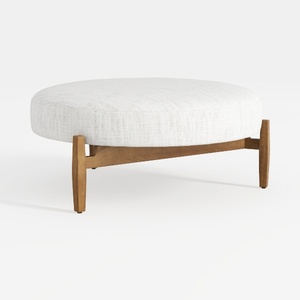

Minimalist Mid Century Fabric Round Ottoman 3D Model
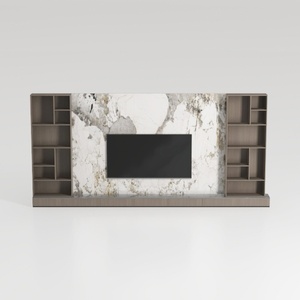
Modern Marble Solid Wood TV Wall Unit With Bookshelves 3D Model

Modern Marble Gold Trim Round Coffee Table 3D Model
Homestyler is a user-friendly online platform that lets you design your home effortlessly. With powerful 3D rendering, a vast collection of design projects, and helpful DIY video tutorials, it's perfect for creating and visualizing your dream interior. Give your space a fresh new look with ease!
Design Now for FREE
































