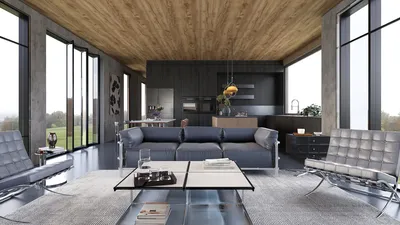


As Memorial Day Weekend 2026 approaches, many embrace the spirit of outdoor gatherings and relaxed fashion, blending comfort with style. This seasonal shift inspires a home environment that supports effortless living, where versatile furniture adapts to both lively social settings and quiet moments. Thoughtful space planning now often includes extendable dining tables and cozy lounge areas, making it easy to transition from casual attire to curated interiors that enhance the leisurely pace of long weekends.
At first glance, they might seem identical, but AI room planners and AI room design tools serve distinct purposes. One focuses on creating an accurate, functional layout for an actual room, while the other generates conceptual images of virtual spaces.
When searching for assistance with your room setup, you'll encounter two types of tools often mislabeled or marketed similarly: AI room planners and room design AI. Terms like "AI interior design" or "AI home decorator" add to the confusion, although their functionalities differ significantly.
Selecting the wrong tool can waste time and lead to decisions based on inaccurate representations—such as buying furniture or rearranging spaces without considering actual dimensions. AI room planners and room design AI address separate challenges; understanding their differences is key.
What room design AI actually does
Room design AI, including platforms like Midjourney or Adobe Firefly, functions primarily as image generators. By inputting prompts or photos, they create stylized visuals of rooms featuring different furniture or décor styles.
The visuals produced can be stunning, resembling editorial spreads with diverse furniture selections, finishes, and lighting effects. Users may even specify themes such as Scandinavian, industrial, or mid-century modern aesthetics.
However, these tools can't provide practical information: the dimensions of a sofa, whether it fits through doors, or if there's adequate circulation space. Their output serves as design inspiration rather than a feasible plan.
What an AI room planner actually does
Conversely, an AI room planner focuses on functionality and precision. By inputting exact room measurements and furniture dimensions, users can arrange their space digitally to plan layouts that work in real life before investing in purchases or moving items.
High-quality AI room planners, especially those like Homestyler, allow accurate placement of furniture at scale and generate realistic 3D models tailored to your specific environment.
The deliverable isn’t an imaginary space but a detailed plan customized for your distinct room and belongings, enhancing decision-making accuracy.
Side by side: the key differences
Why confusion arises
Both AI image generators and AI room planners often promise "instant room redesign" or "AI-powered transformations," and their output can look quite similar at a glance, such as 3D renders or stylized images.
The critical distinction lies beneath the surface: AI room planners like Homestyler build models using real spatial data and dimensions, whereas room design AI creates visualizations based solely on prompts or references without anchoring to actual measurements.
This distinction matters because users rely on these tools to inform concrete choices like moving logistics or furniture purchases. Only a planner grounded in real dimensions can ensure these decisions are reliable; an image generator cannot.
When to choose each type
To summarize honestly: room design AI excels at sparking creativity and generating style directions, while an AI room planner is indispensable for making practical layout and furniture placement decisions. Users benefit from combining both by first seeking inspiration and then validating their ideas within a functional planner like Homestyler.
What to consider in a capable AI room planner
Not every room planner is equally effective. When picking an AI room planner online, assess factors such as ease of use, requirement for account creation, and the ability to incorporate your actual room dimensions and existing furniture.
Homestyler meets these criteria by offering browser-based access with no mandatory signup, producing plans that reflect your true space instead of an AI's approximation.
For anyone intending to design real spaces rather than generate conceptual images, starting with a functional room planner like Homestyler is the optimal choice.
Frequently asked questions
An AI room planner is a specialized tool designed to let you create precise floor plans, position furniture to scale, and visualize functional layouts of real rooms. In contrast, room design AI tools are image generators producing artistic renditions unlinked to actual spatial data; they cannot confirm if furniture fits or how much clearing space exists.
No, AI image generators cannot determine size accuracy or spatial viability, making them unsuitable for practical space planning. AI room planners like Homestyler provide these essential capabilities, enabling real-world application of designs.
Choosing a functional AI room planner that accounts for actual dimensions and furniture sizes is crucial. Homestyler allows you to draw precise floor plans, arrange items correctly scaled, and view layouts in 3D—all accessible without creating an account.
By focusing on exact measurements and real furniture, Homestyler empowers users to make informed decisions based on accurate 3D visualizations, rather than relying on stylized, hypothetical images.


Natural Woven Rattan Square Ottoman Minimalist Boho 3D Model
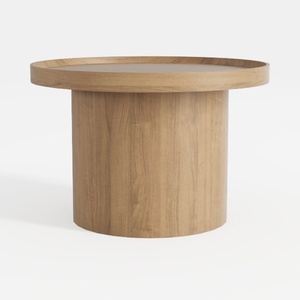
Minimalist Solid Oak Round Coffee Table 3D Model
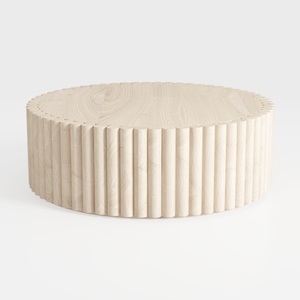
Minimalist Solid Wood Fluted Round Coffee Table 3D Model
Homestyler is a fantastic online home design platform offering powerful design tools, stunning 3D renderings, inspiring projects, and helpful DIY video tutorials. It makes creating and visualizing your dream space easy and enjoyable for everyone.
Desain sekarang Gratis
































