| Facade element | A good small-home choice | Why it works |
|---|---|---|
| Main wall | Warm white, pale sand, or muted gray-green | Keeps the front light without feeling stark |
| Entry door | One deeper accent color or natural wood | Creates a clear focal point |
| Trim | Match the wall or use a restrained contrast | Avoids chopping the facade into small pieces |
| Lighting | One or two simple, appropriately sized fixtures | Adds depth and makes the entry easier to find |
| Planting | A few repeated shapes or species | Gives the front a composed, not crowded, look |
A small home has one advantage a sprawling facade often doesn’t: every detail gets noticed. The door, the path, the light, even the house number can work together instead of competing for attention. The best small house facade ideas don’t try to disguise a compact footprint. They make it feel intentional.
Start by choosing one clear direction: warm and natural, crisp and modern, or colorful and welcoming. Then repeat a few materials and tones so the front reads as one composition. You don’t need a dramatic remodel to get there. A fresh coat of paint, a better porch light, and a planter in the right spot can change the whole first impression.
Here are practical ways to give a small home a more distinctive front, with options for different budgets, climates, and levels of commitment.
What makes a small facade feel balanced?
A compact facade can look busy when every feature asks for attention. Too many colors, contrasting trims, oversized planters, and decorative details can make the front feel smaller. A calmer approach is to pick one focal point, usually the entry, and let the rest support it.
Think in layers. The wall color is the background; the door and windows provide contrast; lighting and planting add depth. Repeating a material, such as wood on the door and a small screen, helps the pieces feel related. Scale matters more than quantity: one well-proportioned sconce often looks better than several small fixtures scattered across the wall.
Before buying anything, stand across the street and take a straight-on photo. It’s easier to spot visual clutter in a picture than while standing close to the house. Look for the strongest line, such as a roof edge or window alignment, and use it to guide changes.


Small house facade ideas that make a real difference
These ideas work best when you choose two or three that support the same look. You don’t need to do all nine. I’d start with the entry and lighting, then decide whether the facade needs color, texture, or greenery.
- Give the door a confident color. A muted olive, deep blue, terracotta, or charcoal can make the entrance easy to read. Test a sample in morning and afternoon light before committing. Paint costs vary by location and product, but a small door usually needs far less material than a full exterior repaint. Difficulty: easy. Time: a weekend, including prep and drying.
- Use a warm, limited palette. Pair a light wall with one darker accent and a natural material. For example, creamy stucco, a cedar-toned door, and dark metal hardware feel welcoming without adding visual noise. Keep trim close to the wall color if the facade is narrow.
- Add vertical texture where the front feels flat. A narrow timber screen, slatted panel, or textured finish can draw the eye upward. Keep it to one section, such as beside the entry, rather than covering every wall. Check local weather exposure and maintenance needs before choosing real wood.
- Make the path lead somewhere. A short, clear walkway gives the entrance a sense of arrival. If space is tight, use a simple line of pavers or a clean-edged gravel strip. Avoid a path that zigzags around oversized pots; it can make a small front yard feel even tighter.
- Choose a porch light for shape as well as function. A simple wall lantern or compact cylinder fixture can add a strong outline after dark. Check the fixture’s scale against the door and confirm it is rated for outdoor use. Warm light usually feels more inviting than a harsh, cool-white beam.
- Frame the entry with one or two planters. Repeating the same pot shape creates order. Choose plants suited to your sun and watering routine; a drought-tolerant grass or compact evergreen can be easier to maintain than a thirsty seasonal display.
- Make the windows feel connected. Matching shutters, a consistent trim color, or simple exterior shades can tie separate openings together. On a very small facade, avoid heavy treatments that cover too much glass or make the windows look pinched.
- Update the small details. House numbers, a mailbox, and a door handle are modest changes, but they sit close to eye level. Pick finishes that repeat elsewhere, such as black metal with black window frames. Keep the number easy to see from the street.
- Use a low boundary, not a visual wall. A short fence, clipped hedge, or open metal rail can define the front without hiding the house. If privacy is the priority, use a screen near a seating area rather than blocking the entire facade.


Pick a style that suits the house, not just the mood board
A facade should make sense with the building’s proportions and surroundings. A sleek charcoal front can look sharp on a simple modern home, but it may feel heavy on a narrow cottage with small windows. Likewise, rustic timber details can add warmth, but too many can make a compact front look crowded.
I like to think of style as a small set of repeatable choices rather than a theme. Choose a wall finish, a door treatment, and one metal finish. Then repeat those choices in the light, hardware, or planters. That gives the facade a point of view without turning it into a collection of unrelated trends.
| Look | Try this combination | Best suited to |
|---|---|---|
| Soft modern | Pale stucco, dark slim frames, simple planting | Clean-lined homes with uncomplicated shapes |
| Warm natural | Sand or cream walls, wood door, terracotta pots | Homes that need warmth without strong contrast |
| Color-forward | Neutral walls, one saturated door, restrained trim | A simple facade that can carry a focal color |
| Quiet traditional | Muted siding, matching trim, classic lantern | Homes with familiar proportions and a defined entry |
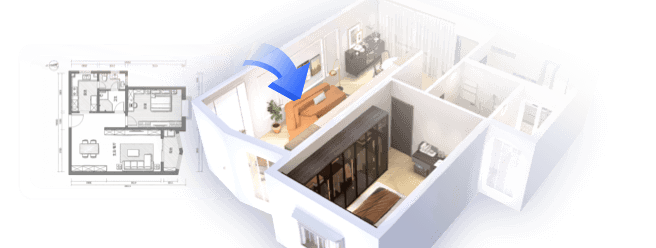
If you’re unsure whether a dark door or a timber screen will overwhelm the front, sketch the proportions first. Homestyler can help you test colors and placement before you buy paint or materials. Keep the mock-up simple: wall tone, door color, window frames, and one planting element are enough to compare options.


Common mistakes that make a small front feel smaller
The most common mistake is adding detail without deciding what should lead. A patterned path, bright door, contrasting trim, decorative shutters, and several different pots may all be attractive on their own. Together, they compete. Choose one focal point and let the other elements stay quieter.
Another issue is using a color because it looks good on a tiny sample. Exterior light changes throughout the day, and a color can read much brighter or cooler on a full wall. Paint a larger test patch in a discreet area and view it at different times. If repainting the whole facade is outside the budget, a door, trim, or entry wall can still make a noticeable difference.
Be cautious with scale, too. Oversized planters can block a narrow path, while tiny lights may disappear beside a tall door. Measure before ordering. For planting, leave enough room for mature growth and access to windows, drains, and utility equipment.
Finally, don’t ignore upkeep. A beautiful finish that needs frequent repainting may not suit a busy household or a harsh climate. Ask what the material needs over time, not only how it looks on installation day. A practical facade is one you can keep looking good without turning maintenance into a second job.
Start with the entry
The strongest small house facade ideas usually begin with one simple question: what should someone notice first? If the answer is the front door, make it distinct. If the house has lovely windows, frame them. If the entry is plain, use light and planting to give it depth.
Take a photo, choose a restrained palette, and make one change at a time. A painted door or a better-positioned planter is easy to assess before you commit to a larger project. When you’re ready to compare a few combinations, Homestyler can help you preview the overall look and keep the proportions in check.
What began as an Autodesk innovation has evolved into a design platform used by more than 20+ million registered users (platform data, 2026) around the globe. Homestyler combines powerful rendering, an intuitive editor, and a vast furniture library to help you turn inspiration into photorealistic designs — whether you're redesigning a single room or planning an entire home.
A small facade doesn’t need more decoration. It needs a few choices that belong together.
Concevez maintenant gratuitement