
| Room or condition | A good starting point | Why it works |
|---|---|---|
| Low ceiling | Slim cornice with a simple edge | Adds a finished transition without visually lowering the ceiling |
| Tall, formal room | Deeper cornice and larger panel frames | Holds its own against generous wall height |
| Small bedroom | One framed feature wall or half-height panels | Creates structure without crowding every surface |
| Contemporary living room | Flat, narrow molding in a tonal paint color | Keeps the detail architectural rather than ornate |
| Rental or temporary update | Lightweight, removable molding | Offers a lower-commitment way to test the look |
For a while, the safest renovation advice seemed to be: smooth walls, simple trim, and nothing that might interrupt the clean lines. Now the pendulum is swinging back. Designers and homeowners are looking again at boiserie and cornice—the wall panels and ceiling molding that give a room a sense of structure without adding another piece of furniture.
The appeal isn’t about recreating a grand salon in every apartment. It’s about making a plain room feel considered. A narrow frame can give a bedroom a focal point; a cornice can soften the meeting of wall and ceiling; painted panels can add depth without demanding a busy pattern. The trick is choosing a scale and finish that suit the room you actually have.
Why boiserie and cornice feel fresh again
Classic wall detailing has a long history, but its current appeal is practical as much as nostalgic. In a room with few architectural features, molding creates visual rhythm. It can make a new-build living room feel less anonymous, or give a rental-friendly bedroom a more finished look when lightweight, removable options are used.
The modern version is usually edited. Instead of covering every wall with elaborate carving, homeowners might frame one wall behind a bed, add a simple dado-height treatment in a dining area, or run a clean cornice around the ceiling. The result reads as architecture rather than decoration.
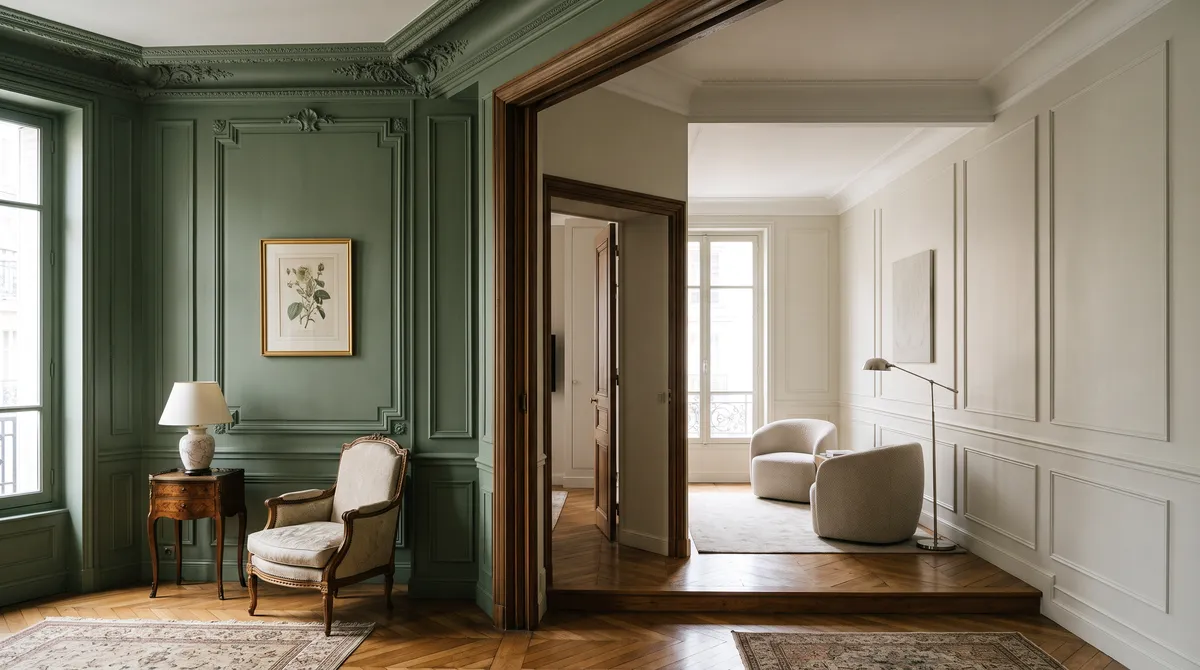
Color is part of the shift. White trim against white walls remains a reliable choice, but tonal treatments are gaining attention: paneling and wall painted in the same muted green, clay, or warm cream. The shadows do the work, so the room feels layered without a high-contrast grid. I’m especially fond of this approach in smaller rooms; it gives the eye detail to follow without chopping the walls into obvious blocks.
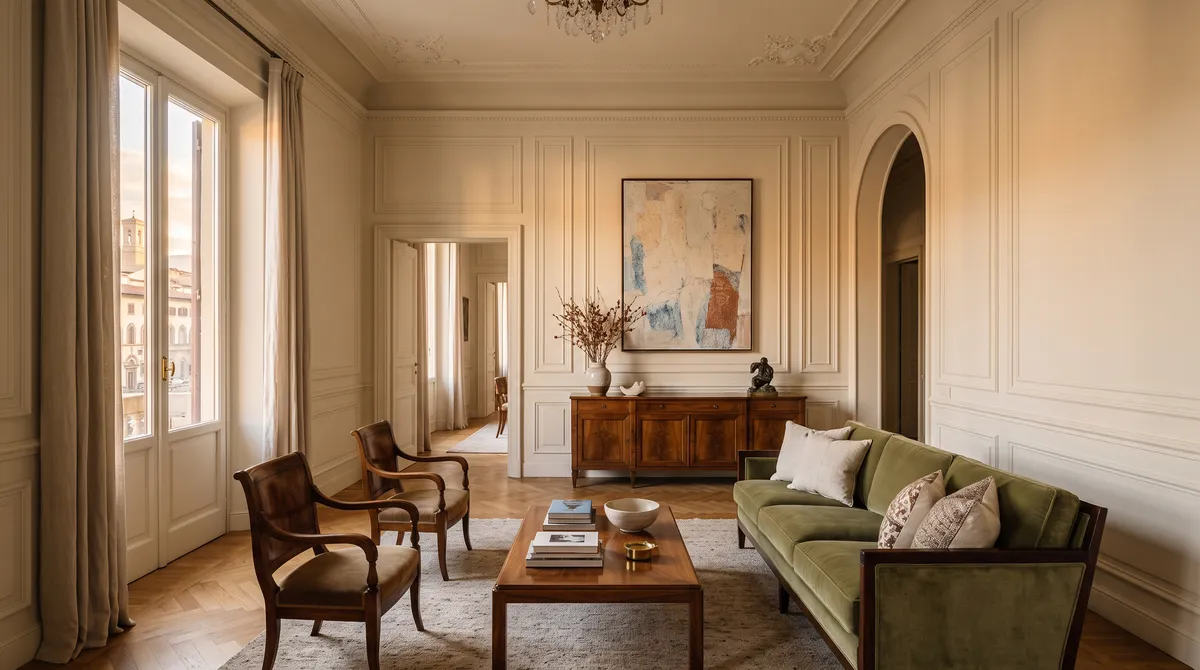
Before choosing a profile, look at the room’s existing proportions. A tall ceiling can carry a deeper cornice, while a low ceiling usually benefits from a slim, uncomplicated line. Likewise, a narrow wall needs fewer, wider panels rather than a row of tiny rectangles. The best detailing looks as if it belongs to the room, not as if it was added to prove a point.
Choose a profile that fits the room
There’s no single correct way to use boiserie and cornice. Start with the room’s architecture, then decide how much detail it can comfortably hold. A useful rule of thumb: if the furniture, flooring, and textiles already have strong patterns, keep the molding quiet. If the room is spare, a more pronounced profile can provide welcome character.
A few decisions make a noticeable difference:
- Match the profile to the home. A crisp, flat molding suits a modern apartment better than a heavily carved classical profile. In an older home, a little more depth may feel natural.
- Plan around what’s already on the wall. Door casings, radiators, switches, and built-in shelves all affect panel placement. Measure them before drawing a grid.
- Keep the spacing intentional. Equal gaps between frames usually look calmer than squeezing in one extra panel to fill a narrow section.
- Think about the ceiling line. A cornice should relate to the room’s height and the scale of the door trim. It doesn’t have to match exactly, but it shouldn’t look like an unrelated afterthought.
I’d sketch the wall elevations before buying materials. Even a rough drawing helps reveal when a panel frame will collide with a light switch or sit awkwardly close to a doorway. If you want to compare proportions and paint colors before committing, Homestyler can help you preview how the trim might sit alongside your furniture and room layout.

Paint, materials, and installation: keep the finish believable
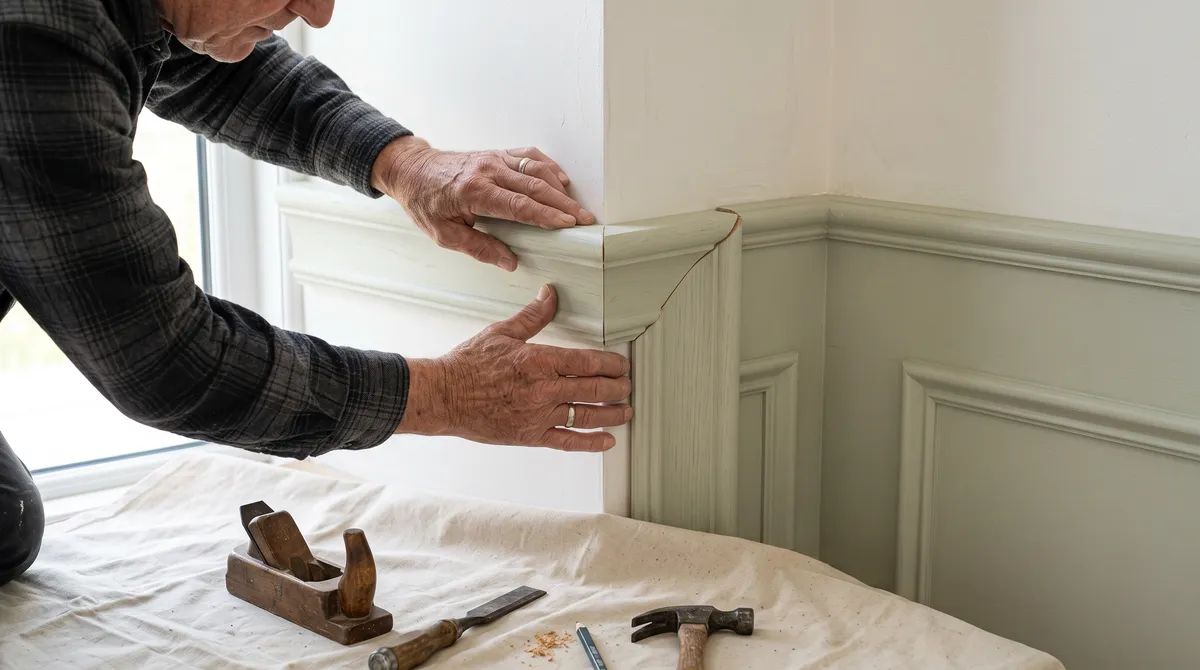
The material you choose affects both the look and the amount of work involved. Solid wood has a satisfying weight and can be repaired, but it takes careful cutting and finishing. MDF is often easier to paint and can be a practical choice for interior trim, provided it’s kept dry and installed according to the manufacturer’s guidance. Lightweight polystyrene or polyurethane profiles can simplify handling, though the finish and edge detail vary by product.
For a first project, a single wall is a sensible test. Measure the full width and height, mark the proposed frames with painter’s tape, and live with the layout for a day. That small pause can save you from installing a panel that feels too narrow once the bed or sofa is back in place.
Paint changes the mood more than many people expect. A crisp white frame against a colored wall emphasizes every line. Painting the molding and wall the same color makes the detail quieter and lets daylight reveal the relief. For a softer classic look, try warm white, muted olive, dusty blue, or a restrained terracotta tone. Sample the paint on the wall itself; a color that looks gentle on a small card can feel much stronger across a full panel.
A few practical checks before installation:
- Find the wall’s high and low points. Floors and ceilings aren’t always level, especially in older homes. Measure in several places rather than assuming the corners are square.
- Mark the layout lightly. Use a level and pencil, then check the spacing from the center of the wall outward.
- Cut and test one corner first. Cornice miters can be fiddly. A test piece helps you confirm the angle before cutting the full run.
- Fill and sand with restraint. Neat joints matter more than elaborate profiles. A smooth paint finish makes simple trim look intentional.
- Check the surface and fixing method. Follow the adhesive or fastener instructions for the material and wall type. If you’re unsure about wiring, plumbing, or a fragile surface, get qualified help.

Common mistakes—and how to avoid them
The most common misstep is choosing trim by looking at a product sample alone. A profile that seems modest in your hand can dominate a small room, while a very thin strip may disappear on a tall wall. Tape out the width and panel shapes at full scale before ordering. Stand back from the doorway, because that’s where you’ll see the room most often.
Another mistake is treating every wall the same. A full grid can look handsome in a formal room, but it may compete with a fireplace, built-in shelving, or a large artwork. Sometimes the better choice is to frame only the bed wall or use a lower panel treatment in a hallway. Let the room’s existing focal point lead.
Don’t ignore the practical details. Trim can make cleaning corners more involved, and deep profiles collect dust more readily than flat ones. In a busy family room, a durable, washable paint finish is worth considering. In a damp area, check that the chosen material is suitable for the conditions; decorative trim is not a substitute for proper moisture control.
If you’re renting, ask permission before attaching permanent molding or making changes that affect the wall finish. Removable products can be useful, but test a small, inconspicuous area first and follow the maker’s removal instructions. “Removable” doesn’t guarantee that every paint surface will come away untouched.
Finally, resist the urge to add detail just because the room feels unfinished. Sometimes the missing piece is a better curtain length, a larger rug, or a lamp with the right scale. Molding works best when it supports the room, not when it has to rescue every other decision.
Start with one wall
Boiserie and cornice can bring back the sense of craft that plain walls sometimes lack, but the most successful rooms don’t rely on ornament alone. They get the proportions right, keep the profiles in tune with the home, and use color to decide whether the detail should stand out or recede.
If you’re unsure, begin with one wall and a simple profile. Tape out the layout, check it from different parts of the room, and consider how it will sit beside your existing furniture. A small, well-planned change often feels more convincing than a grand scheme that overwhelms the space.
What began as an Autodesk innovation has evolved into a design platform used by more than 20+ million registered users (platform data, 2026) around the globe. Homestyler combines powerful rendering, an intuitive editor, and a vast furniture library to help you turn inspiration into photorealistic designs — whether you're redesigning a single room or planning an entire home.
Before you buy trim, try a few layouts and finishes in Homestyler. Seeing the wall treatment in context can make it easier to choose a scale you’ll still like after the tools are put away.
今すぐ无料でデザイン