- Keep the main surfaces simple. Use one dominant tile or wall finish, then add contrast in smaller doses.
- Choose storage that fits the routine. A shallow cabinet for daily toiletries is more useful than a deep shelf that becomes a jumble.
- Let the shower stay visually open. Clear glass or a simple curtain can preserve the view across the room.
- Use contrast with intention. A dark faucet or frame can add definition, but too many competing finishes make a tiny room feel busy.
A small bathroom can feel cramped even when it has all the right fixtures. The fix is rarely a dramatic renovation. More often, it comes down to a few smart choices: a vanity that leaves floor visible, a mirror that catches daylight, or a shower screen that doesn’t chop the room in half. These baños pequeños modernos ideas focus on changes that make a real difference in daily use, not just in a staged photo.
You’ll find options for renters and homeowners, quick updates and bigger projects, plus practical notes on cost, effort, and time. Start with the problem you notice most. If towels have nowhere to go, solve storage first. If the room feels dim, work on light and reflective surfaces before choosing a new color palette.
What makes baños pequeños modernos feel bigger?
A modern small bathroom works best when the eye can read the room clearly. That doesn’t mean everything has to be white or hidden away. It means reducing visual interruptions and making the most of the space you already have.
Begin by looking at the floor. A wall-mounted vanity or a vanity with legs exposes more flooring, which can make the room feel less boxed in. Then check the sightline from the doorway. A bulky shower curtain, a tall cabinet, or a dark vanity placed directly in view can make the room feel shorter. Replacing one visual barrier may do more than changing every tile.
Lighting matters just as much. A single ceiling fixture often leaves faces in shadow and corners gloomy. A mirror with side lighting or a pair of sconces can make the room more useful without adding clutter. If you’re renovating, plan the lighting before the mirror and medicine cabinet; otherwise, the fixtures may end up fighting for the same wall space.
A few principles help keep the design grounded:
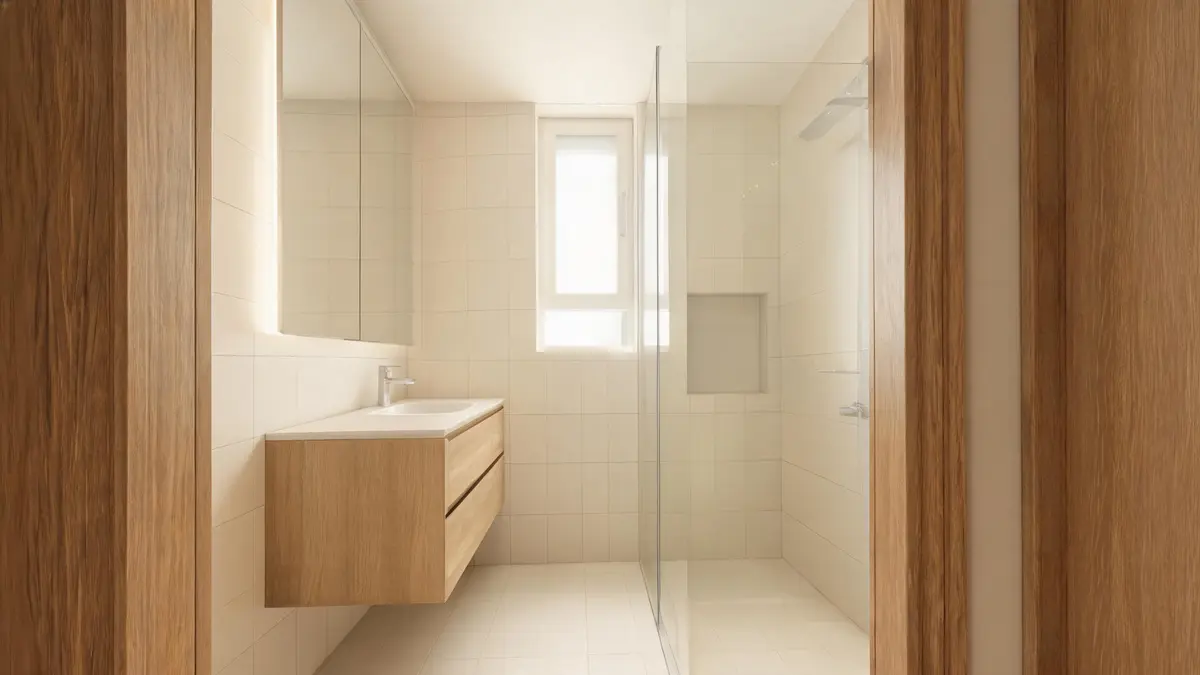
I’m a fan of warm neutrals over stark white in a windowless bathroom. Cream, pale stone, and light oak still reflect light, but they feel less clinical. The goal isn’t to trick anyone into thinking the room is huge. It’s to make the space feel calm and easy to move through.

15 modern small bathroom ideas worth trying
These ideas range from simple swaps to renovation choices. Costs vary by location and materials, so treat the ranges as broad planning estimates rather than quotes.
- Install a floating vanity.
Exposing the floor beneath the cabinet makes the room feel lighter and gives you a spot to tuck a small scale or basket. Choose drawers over a single deep cupboard if you want to keep everyday items organized. Typical cost: $300–$1,500 for the vanity, before installation. Effort: Medium. Time: A few hours to a day, depending on plumbing.
- Choose a shallow vanity.
In a narrow bathroom, reducing vanity depth can improve the path between the sink and the opposite wall. Measure the door swing and the clearance in front of the toilet before ordering. Typical cost: $250–$1,200. Effort: Medium. Time: Half a day to a day.
- Use a mirrored medicine cabinet.
It gives you a mirror and concealed storage in the same footprint. Recessed models sit neatly in the wall, but they require checking for pipes and wiring first. Typical cost: $100–$700. Effort: Low for surface-mounted; higher for recessed. Time: One to several hours.
- Extend tile vertically.
Vertical tile lines can draw the eye upward, especially behind a vanity or inside a shower. Keep the grout close in color to the tile if you want a quieter look. Typical cost: $8–$30 per square foot installed. Effort: High. Time: Several days.
- Add a recessed shower niche.
A niche keeps bottles off the floor and avoids a bulky hanging caddy. Place it where you can reach it without stepping into the spray. Typical cost: $200–$600 as part of a shower project. Effort: High. Time: Usually included in a multi-day tile job.
- Swap a shower curtain for clear glass.
A fixed panel or sliding door can open up the view, though glass needs regular wiping in hard-water areas. For a rental, a clean, light-colored curtain is the easier reversible option. Typical cost: $300–$1,500 installed. Effort: Medium to high. Time: A few hours to a day.
- Try a curbless shower if you’re renovating.
A continuous floor surface can make the bathroom feel more open. It requires careful waterproofing and drainage, so this is not a casual weekend project. Typical cost: Highly variable; often several thousand dollars as part of a full remodel. Effort: High. Time: Several days or more.
- Use a large mirror.
A mirror that spans most of the vanity wall reflects more light and makes the room feel less enclosed. Leave enough room for sconces or choose a mirror with integrated lighting. Typical cost: $100–$800. Effort: Low to medium. Time: One to three hours.
- Add layered lighting.
Combine a ceiling light with task lighting near the mirror. Choose damp-rated fixtures where required, and use a qualified electrician for new wiring. Typical cost: $50–$400 per fixture, plus installation. Effort: Medium. Time: A few hours.
- Pick a wall-hung toilet.
The visible floor continues beneath the bowl, and the tank is concealed in the wall. It can be a strong space-saving look, but installation is more involved than replacing a standard toilet. Typical cost: $500–$2,000 for the fixture and carrier, before labor. Effort: High. Time: Usually part of a larger renovation.
- Use a pocket door where possible.
A door that slides into the wall frees up the swing area. It’s most practical during a remodel, since the wall needs to accommodate the pocket and must be clear of services. Typical cost: $300–$1,000 for materials and hardware, before labor. Effort: High. Time: One to several days.
- Choose one continuous floor tile.
Using the same tile across the main floor and shower floor can reduce visual breaks, provided the tile is suitable for wet areas and has appropriate slip resistance. Typical cost: $5–$25 per square foot, before installation. Effort: High. Time: Several days.
- Make a narrow ledge do double duty.
A slim shelf above the toilet or beside the mirror can hold a few daily essentials without taking up floor space. Keep it shallow and avoid turning it into a display shelf for every spare bottle. Typical cost: $20–$150. Effort: Low. Time: Under two hours.
- Use a single accent color.
Sage, muted blue, or clay can bring warmth to a compact room. Repeat the color in one or two places, such as a painted vanity and a small accessory, rather than scattering it everywhere. Typical cost: $30–$200 for paint and small accessories. Effort: Low. Time: A weekend, including drying time.
- Replace bulky towel storage with hooks.
Hooks take up less visual space than a wide towel bar and can fit behind a door. Check that towels can dry properly and don’t brush against the toilet or shower. Typical cost: $10–$80. Effort: Low. Time: Under an hour.


Which upgrades suit your bathroom?
The best choice depends on what’s already working. A bathroom with a window may need less help from reflective finishes than a dark interior room. A rental calls for reversible changes; a full renovation is the moment to rethink the door, shower, and plumbing layout.
| Your situation | Start with | Why it helps |
|---|---|---|
| No window or weak daylight | Larger mirror and layered lighting | Reflects available light and improves visibility at the sink |
| Narrow walkway | Shallow or floating vanity | Gives you more usable clearance and keeps the floor visible |
| Shower feels boxed in | Clear glass or a light curtain | Preserves the sightline across the room |
| Too many bottles on display | Recessed niche or mirrored cabinet | Moves everyday clutter off the counter |
| Rental bathroom | Hooks, a new shower curtain, removable accessories | Makes a visible difference without permanent construction |
| Planning a full remodel | Pocket door, curbless shower, wall-hung toilet | Addresses layout and floor continuity while walls are open |
Before buying anything, measure the room and mark the door swing, toilet clearance, and shower entry. A fixture can look compact online and still make the route from the door to the sink awkward. I’d rather see a smaller vanity with a clear walkway than a larger one that turns every morning into a sideways shuffle.
If you’re unsure about color or scale, sketch the room or test a layout in Homestyler before committing to tile and fixtures. Seeing the vanity, mirror, and shower together can help you spot a crowded combination while it’s still just a plan.


Small bathroom mistakes that are easy to avoid
A small room doesn’t need fewer ideas; it needs fewer competing ones. The most common mistake is choosing every finish as a feature: patterned floor tile, bold wall tile, dark grout, a statement mirror, and several metal finishes. Each choice may look good on its own, but together they can make the room feel restless.
Another trap is buying storage before measuring. A deep cabinet can block a drawer, crowd the toilet, or make the doorway feel tight. Measure the usable wall, not just the empty space in a product photo. For shelves, check what you actually need to store. A narrow ledge is great for hand soap and a small plant; it won’t replace a linen closet.
Don’t overlook ventilation, either. A beautiful bathroom that stays damp is a maintenance headache. Make sure the exhaust fan works, and use finishes suited to wet areas. If you’re adding a niche or changing the shower floor, waterproofing matters more than the tile pattern.
For a quick refresh, try this order:
- Clear the counter and remove anything you don’t use daily.
- Replace one bulky item, such as a freestanding rack, with hooks or a slim shelf.
- Improve the mirror lighting.
- Choose one accent finish or color, then stop there.
That last step is harder than it sounds. I’ve seen a simple room get busier with every “small upgrade.” Give each change a job: storage, light, easier cleaning, or a clearer sightline. If it doesn’t solve one of those, it may not be worth squeezing in.
Start with the change you’ll notice every day
The most successful baños pequeños modernos don’t rely on a single magic fixture. They make the everyday route easier: open the door, reach the sink, find a towel, and step into the shower without bumping into something. That’s a better test than whether the room looks impressive in a wide-angle photo.
Pick one frustration and solve it first. If the counter is crowded, add concealed storage. If the room feels dark, improve the mirror and lighting. If the shower dominates the view, consider a lighter curtain or clear glass. Small, well-chosen changes often make a bathroom feel more considered without requiring a full gut renovation.
What began as an Autodesk innovation has evolved into a design platform used by more than 20+ million registered users (platform data, 2026) around the globe. Homestyler combines powerful rendering, an intuitive editor, and a vast furniture library to help you turn inspiration into photorealistic designs — whether you're redesigning a single room or planning an entire home.
For a larger project, map the layout before you shop. Try a few vanity sizes, tile tones, and shower configurations in Homestyler so you can compare the overall feel before making expensive decisions. Then measure twice, keep the finishes focused, and choose the upgrades that make your morning routine easier.
تصميم الآن مجانا