


Looking ahead, we see a shift towards smaller living spaces, more densely populated neighborhoods, and lifestyles that seamlessly weave together work, rest, and caregiving. My clients are feeling the impacts of this change—issues like acoustics, storage, and privacy manifest as if their home life faces restrictions. Industry insights confirm this trend: NAHB surveys indicate that buyers still prefer three bedrooms despite the declining average size of new homes. This dynamic makes 30x30 three-bedroom layouts a testing ground for adapting to future living patterns—my approach to transforming tight spaces into practical living tools that resonate with the principles of Homestyler.
Courtyard Core: Light-Well Spine
Design Principle: At the center lies a light-well that serves as the nucleus, allowing a 30x30 configuration with three bedrooms arranged around a bright void—balancing privacy with shared illumination for a future that prioritizes circadian wellbeing.
Flow: Entry leads into a gallery spine, connecting the living/kitchen area on one side and bedrooms in three corners; movement revolves around the light-well, resembling a continuous loop.
Sightlines: A clear view from the entrance to the sky; lateral perspectives traverse through glass panels, making the UI transitions from public spaces to private areas easily understandable without echoes of sound.
Storage: Built-in perimeter features act as storage solutions; a spacious pantry utilizes vertical space; hallway niches serve as mini-storage for personal items and linens.
Furniture Arrangement: Queen-sized modules measuring 60x80 with 30-inch side clearances; the living area centers around a 78-inch sofa; dining accommodates a 60-inch round table without obstructing pathways.
Conclusion: The light-well acts as a social operating system—calm, bright, and predictable—offering families quiet spaces alongside a luminous communal area.
save pin
Rail Stack: Distinction between Public/Private Transit
Design Principle: Two parallel corridors are created: one serves as the public space (living/kitchen) and the other as the private sector (three bedrooms), interconnected by short cross-links—providing clean, navigable pathways for a hybrid work lifestyle.
Flow: The entry directly feeds into the public corridor, linking to bathrooms and bedrooms; the parents’ suite is positioned in a tranquil area, with kids and guest accommodations centrally located.
Sightlines: A long, low horizon is visible from the kitchen through to the living area and a window wall; bedroom doors are placed to prevent direct sightlines, maintaining information hierarchy.
Storage: Thickened walls of the rail conceal closets and utilities; a shared linen hub resides at a junction, while an entry bench-locker stores everyday items.
Furniture Arrangement: A 24-inch deep galley kitchen with a 42-inch passage; a 5x7 dining table fits smoothly into the public corridor; twin rooms can fit 39-inch beds with additional desk space.
Conclusion: This layout establishes a clear protocol: social engagement at the front and private reflection at the back—the home exhibits agility against weekday demands.
save pin
Corner Suite + Flexible Node
Design Principle: The parents enjoy a corner suite while two additional rooms parallel the opposite edge; a flexible node (which could function as a pocket office or nursery) connects living areas and sleeping quarters, making it suitable for future multigenerational living arrangements.
Flow: The entry flows into an open L-shaped living/kitchen area, with the flexible node acting as an interruption moderator, leading to bedrooms separated by pocket doors; the layout allows easy circulation for sound control.
Sightlines: Angled views stretch from the kitchen line to corner windows; the flexible node uses translucent panels for awareness while minimizing visual distractions; sleep rooms remain positioned away from the main visible area.
Storage: No stairs are needed but vertical storage solutions thrive: wardrobes reach heights of 9 to 10 feet, seasonal bins sit up high; under-window drawers provide extra utility; a slim utility wall can accommodate cleaning supplies.
Furniture Arrangement: An 84-inch sectional fits snugly in the L-shaped space; an island measuring 30x60 ensures a 36-inch clearance; the primary suite accommodates a king bed with a 28-inch pathway; children's rooms can use loftable beds.
Conclusion: The flexible node is the adaptable space of the future—a room capable of evolving its role without needing a complete redesign.
save pin
Final Insights
The exploration of 30x30 three-bedroom floor plans reveals a cohesive narrative focusing on privacy, natural light, and acoustic tranquility that converges into a livable design language. Variants—such as compact three-room layouts and small footprint family homes—aren’t mere compromises; they represent refined solutions for contemporary living. In my observation, the most intelligent homes of the imminent future won’t necessarily be larger but rather more thoughtfully designed, and through my work, I’ve witnessed how subtle spatial transformations can significantly enhance daily routines with the help of tools like Homestyler.

Minimalist Linen Fabric Extra Large Sofa With Throw Pillows And Blanket 3D Model
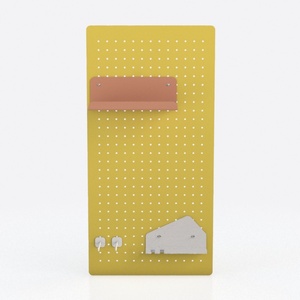

Modern Minimalist Yellow Pegboard Wall Organizer 3D Model

Minimalist White Solid Wood Open Bookshelf Storage 3D Model
Looking to transform your space? Homestyler is your go-to online design platform! Enjoy its user-friendly design tools, realistic 3D renderings, extensive design projects, and DIY video tutorials. Create your dream home effortlessly and inspire your creativity today!
立即免费设计
































