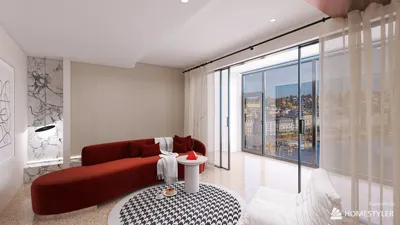


A client once requested me to transform a rugged stone feature wall with a bright coral hue. Initially, I found it amusing, but soon I learned to embrace the unique texture rather than resist it. My journey included minor setbacks, such as attempting to use oil-based paint on porous stone, which taught me valuable lessons about proper preparation and the necessity of breathable finishes. This experience inspired innovative approaches, especially for smaller spaces. A case study I conducted on a compact studio layout illustrated how a carefully treated stone wall could serve as the room's stunning centerpiece.
1. Limewash and mineral paints to maintain the stone's vitality
I frequently suggest using limewash or silicate mineral paints, as they enable the stone to breathe and age beautifully. The resulting finish is soft and matte, accentuating the texture while preventing moisture retention — this is especially beneficial for older masonry, despite being slightly pricier and requiring multiple coats for uniform coverage.
Advantages: historic appearance, breathable, understated sheen. Challenges: requires a clean, alkaline-friendly surface and regular touch-ups.
save pin
2. Partial whitewash for a refreshed, modern ambiance
A diluted whitewash or thinned paint can illuminate a dark stone wall, creating a sense of spaciousness in a small room. I implemented this technique in a cottage kitchen, successfully preserving its character while enhancing its perceived size.
This approach is cost-effective and reversible, but consistency is crucial — it's wise to test it in an inconspicuous area, as outcomes can differ based on the stone's porosity.
save pin
3. Vibrant mural washes that complement the stone's grain
Creating a mural directly on the stone can produce fascinating results if you align your design with the stone's texture. I sketched out plans that allowed mortar lines and natural crevices to emerge, contributing depth to the artwork. I even experimented with a stencil on a backsplash during a kitchen redesign, which remarkably highlighted the stone's relief and gave a captivating 3D effect.
Benefits include a striking personality and high visual appeal. However, preparation is labor-intensive (requiring a consolidant and primer), and outdoor murals will need protective weatherproofing.
save pin
4. Glazes and translucent washes to emphasize texture
Applying translucent glazes or tinted washes allows you to highlight the stone's natural highs and lows without obscuring its essence. I favor thin acrylic glazes over breathable bases to manipulate light and shadow — it’s a subtle yet impactful transformation.
Ideal for designer finishes; although it requires more effort and time to dry, it remains a preferred choice when clients seek elegance rather than a flat finish.
save pin
5. Stenciling and selective color blocking
Instead of coating the entire wall, consider stenciling shapes or selectively color-blocking specific stones to create visual rhythm. I showcase these concepts in a 3D layout model using Homestyler, enabling clients to visualize scale before we proceed, which saves both time and budget.
This method is playful and fairly budget-friendly, though achieving alignment on uneven stone can be challenging — expect some improvisation during the application process.
save pin
FAQ
Q: What is the most suitable paint for a stone wall?
A: For historic or porous stone, breathable mineral-based paints like limewash or silicate options are optimal as they allow moisture to escape. While acrylics can be effective on sealed interior stone, they aren't always suitable for older masonry.
Q: Is it necessary to seal stone before painting?
A: It depends — exterior stone often requires a consolidant to fortify flaky surfaces, whereas interior stone may just need cleaning and a primer. Avoid non-breathable sealers on historic masonry to prevent trapped moisture.
Q: Can I paint natural stone while preserving its texture?
A: Absolutely — techniques such as washes, glazes, or selective stenciling maintain the texture, whereas solid opaque finishes will diminish it. Testing samples beforehand is recommended to assess how the texture interacts with color.
Q: What’s the best way to prepare a dirty or effloresced stone wall?
A: Start with a mild detergent and scrub to remove dirt, salts, and efflorescence, allowing the wall to dry entirely. For persistent issues, it’s best to consult a masonry specialist to address moisture problems prior to repainting.
Q: Are breathable sealers available for use?
A: Yes, silicate-based and lime-friendly consolidants along with breathable masonry primers are available; they stabilize without creating an impermeable layer. These options are particularly advised for historic or moisture-sensitive walls.
Q: How long can I expect painted stone finishes to last?
A: Longevity can vary — exterior coatings are exposed to the elements and may require refreshing every 5–10 years, whereas well-prepped interior stone can remain vibrant for a decade or more. Durability is influenced by paint type, exposure, and preparation of the substrate.
Q: Will painting stone impact indoor air quality?
A: Utilizing low-VOC mineral paints or water-based acrylics minimizes indoor air impact; it's advisable to avoid high-VOC oil-based products indoors. Always ensure good ventilation during application to limit fumes.
Q: Where can I find information on conservation-friendly methods for painting stone?
A: For best practices on breathable finishes and masonry conservation, consult resources from the Getty Conservation Institute, which emphasizes matching materials and avoiding impermeable coatings on historic stone.
Discover the magic of home design with Homestyler! This user-friendly online platform offers an intuitive design tool, stunning 3D renderings, and a wealth of design projects and video tutorials. Whether you're a novice or a pro, Homestyler empowers you to create your dream space effortlessly!
Progetta ora GRATIS
































