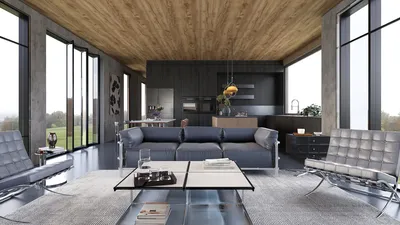


As our lives increasingly expand, the demand for smaller living spaces intensifies. According to NAHB trend data, homebuyers now prioritize adaptable spaces over basic square footage, signifying a shift towards multifunctional living. In this context, a 2-room house floor plan embodies a new way of life where every inch serves multiple purposes. Tools like the Homestyler interface already facilitate this transition, offering innovative spatial reasoning techniques.
Hybrid Suite + Public Core
Design Concept: The primary room transforms into a versatile area serving both as a sleeping and working space, while the second room functions as a communal hub ideal for dining, hosting guests, and remote working—future lifestyles demand flexible boundaries.
Flow: Entry → public core → compact kitchen → hybrid suite; this streamlined path minimizes unnecessary movement, simplifying daily activities.
Sightlines: Aligning the doors creates a spacious feel in the public area, ensuring the bedroom remains discreet from immediate view.
Storage: Featuring built-in closets along the perimeter and a hallway storage strip of 16–20 inches deep, this design efficiently organizes coats, tools, and linens.
Furniture Arrangement: A dining table measuring 60×30 inches fits parallel to the flow; the bed size at 60×80 inches allows for a 24-inch clearance, optimized just like tech specifications.
Conclusion: This setup maintains a high social capacity without intruding on personal space; it adapts effortlessly to varying work and sleep schedules.
save pin
Split Rooms + Central Service Spine
Design Concept: Two rooms separated by a central spine housing kitchen, bathroom, and utility areas; this layout is designed to mitigate noise and schedule conflicts.
Flow: Entry → central hub → choice of quiet or active room; this branching design functions akin to a stable binary tree, effectively preventing overlaps.
Sightlines: An axial view leads to a framed window, while the side corridors progressively unveil content, layering privacy throughout the layout.
Storage: Implementing ceiling-height pantry towers (24 inches deep), under-bed drawers, and cabinets along the spine supports organization and efficiency.
Furniture Arrangement: A sofa sized between 72–78 inches is placed in the active room, supplemented by desks of 48×24 inches located near the central access points; dimensions are carefully calibrated to reduce latency.
Conclusion: This split configuration offers independence under one roof; projected five years ahead, it effortlessly supports guest hosting, side projects, and quiet study sessions.
save pin
Convertible Room + Pocket Doors
Design Concept: One room acts as a convertible module, serving as a studio during the day and a bedroom at night; pocket doors facilitate seamless transitions between modes—similar to toggling views.
Flow: Entry → convertible room (day-mode) → micro-kitchen → private room; this reversible layout suits both energetic mornings and relaxing evenings.
Sightlines: Translucent door panels retain light while obscuring details, managing the information flow from public to private areas.
Storage: A wall bed includes 10–12-inch integrated shelving, complemented by a 30-inch deep utility closet, effectively decluttering visual space.
Furniture Arrangement: The wall bed folds to a slim 24-inch projection, and a 54-inch drop-leaf table can adapt for hosting or storing away—precise dimensions maintain a streamlined design.
Conclusion: With a simple motion, this setup serves multiple functions; I predict this flexible arrangement will dominate small home designs as remote work becomes the norm.
save pin
Final Thoughts
A two-room design transcends minimalism; it becomes an adaptive platform for connectivity, privacy, and flexibility. Whether referred to as a 2-room layout or a compact two-bedroom concept, the future requires that every square foot serves various functions. I envision the next generation of small homes functioning like well-designed operating systems—less about physical size and more about purposeful layouts, repeatedly redefining how people experience living, especially with the aid of tools like Homestyler.

Minimalist Oak Metal Dining Table Modern Simple 3D Model

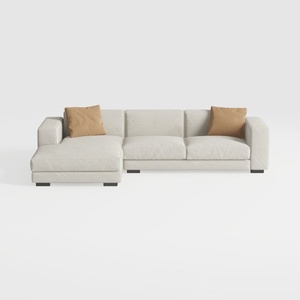
Minimalist Fabric L Shape Sectional Sofa with Throw Pillows 3D Model
Homestyler is the ultimate online platform for home design. Featuring an intuitive design tool and impressive 3D renderings, it empowers you to create stunning interiors with ease. Explore inspiring design projects and learn through engaging video tutorials, making your home transformation a breeze.
立即免费设计
































