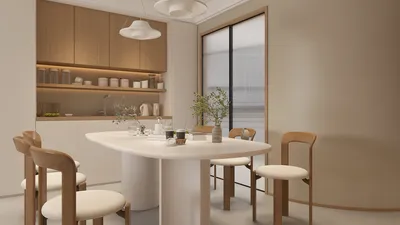


The convergence of future living and learning environments has created a unique space, yet many existing campuses still face challenges such as noise disruptions, inflexible corridors, and chaotic storage solutions. I frequently observe a disconnect between the conventional rhythms of today’s classrooms and the flexible scheduling needed for the future. This situation has prompted me to utilize a spatial reasoning toolkit to explore how a simple small school floor plan can evolve over time. Recent data from the AIA and NAHB indicates a growing trend toward multi-use community spaces, signaling that schools ought to function like adaptable homes—bright, efficient, and capable of being reprogrammed as needed. Incorporating tools like Homestyler can enhance this process.
Courtyard Spine with Two Learning Pods
Design Logic: A central outdoor space is bordered by two classrooms, allowing future schedules to seamlessly transition between indoor and outdoor environments without interference.
Flow: Entry leads to a shared preparation area, then to the left pod, through the courtyard, and into the right pod and micro-office; creating a streamlined command path that allows for effective supervision.
Sightlines: Large windows frame the courtyard as a user interface; teachers can observe the entire area with a single glance, maintaining awareness from foreground to background.
Storage: Integrated wall rails and under-bench storage offer quick access; labeled bins serve as immediate resources near the courtyard entrance.
Furniture Fit: Stackable tables (24–30" depth), swivel stools, and foldable panels set on 900mm centers ensure smooth transitions and keep the environment calm.
Verdict: This layout minimizes behavioral delays; five years down the line, it remains flexible enough to accommodate project-based learning and adapt to weather changes.
save pinOpen in Homestyler 3D Planner Processing...
Loop Corridor with Maker Hub
Design Logic: A compact loop encapsulates a maker hub, facilitating bursts of activity without obstructing main flows—a buffer zone for louder tasks.
Flow: The journey starts at the front door, transitions through the loop, to the maker hub, then two micro-classrooms, storage access, and exits; this ensures movement without collision.
Sightlines: Low partitions keep the maker hub visible; the hierarchy of space regulation runs from the door’s entrance through the hub glow to the tranquil classrooms, effectively managing signals and sound.
Storage: A vertically arranged peg grid, under-counter drawers, and rolling carts stationed in alcoves provide layers of accessible storage based on usage frequency.
Furniture Fit: Workbenches are at a height of 36" with 48" clearance; soft seating islands are designed as modular nodes, ready for reconfiguration.
Verdict: This loop is designed to be resilient to evolving schedules, maintaining clear movement paths and managing energy levels where it counts.
save pinOpen in Homestyler 3D Planner Processing...
Library Nook + Flexible Classroom
Design Logic: A reading nook is strategically placed next to a versatile classroom; both quiet and active modes can coexist without disruption.
Flow: Start at the entry, move past the cloak wall into the flexible classroom grid, slide the wall to enter the library nook, and finish at the teacher's preparation area; this configuration allows for adaptable routines.
Sightlines: Low shelving and clerestory windows create a multi-layered visual interface: task plane, exploration edge, and supervision horizon.
Storage: Book walls serve as a long-term archive, while portable totes act as short-term resources; clear labeling minimizes search time for younger students.
Furniture Fit: Flip-top desks arranged on a 600mm grid, a rug zone measuring 2.4m x 3m, and soft poufs designed as movable nodes for reading clusters.
Verdict: This combination effectively accommodates a spectrum of learning styles, from group discussions to quiet studies; even five years later, it remains efficient and inclusive without strain.
save pinOpen in Homestyler 3D Planner Processing...
Final Takeaway
An effective small school floor plan should function like an interface: streamlined, easily navigable, and adaptable to evolving teaching methodologies. In compact educational settings, I optimize the flow like programming code, the storage like cache management, and the furniture as operational constraints, ensuring classrooms remain agile. The most successful small school designs won't necessarily be larger; instead, they will be crafted with intention, where future learning can discreetly develop, especially when utilizing innovative tools such as Homestyler.

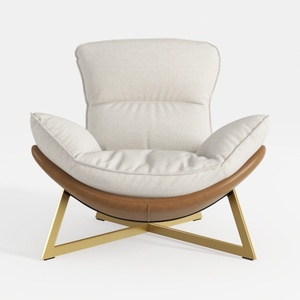
Modern Linen Leather Gold Metal Accent Armchair 3D Model

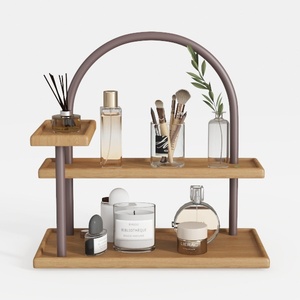
Minimalist Solid Oak Bookshelf Open Storage Display 3D Model
Discover your dream space with Homestyler! This intuitive online design platform offers powerful 3D rendering, a wealth of design projects, and engaging DIY video tutorials to inspire your creativity. Whether you're a novice or a seasoned designer, Homestyler makes home design enjoyable and accessible!
立即免费设计
































