


Emerging lifestyles are shaping the current environment, where issues like poor lighting, restricted access, and noise still characterize basement apartments. The indicators point towards a shift; organizations like NAHB highlight an increasing interest in accessory dwelling units and adaptable lower-level living spaces. When I analyze the layout of a one-bedroom basement apartment, it resembles an early blueprint for privacy-centric living, offering versatile evenings and remote working capabilities. This impending future is something I’m already envisioning in my designs, utilizing tools that enhance spatial reasoning.
Sunlit Linear Configuration
Design Framework: A singular corridor arranges functional areas from bright daylight to serene quiet, aligning with progressive circadian design and combined work-life schedules.
Flow: Entry node → illuminated living area → culinary space → private bathroom → restful bedroom at the far end; this sequence minimizes noise much like a well-organized flow.
Sightlines: Eye-level ladders draw from egress windows to reflective surfaces, layering visibility while ensuring private zones remain discreet.
Storage: Deep wall closets function as effective storage areas along the corridor; under-stair compartments and toe-kick drawers provide easy access to essentials.
Furniture Arrangement: A slender sofa (72–78 inches), a foldable dining table, and a queen-sized bed with built-in side drawers; clearances are defined like API parameters—36 inches along primary routes and 24 inches in service paths.
Conclusion: Over a span of five years, this linear design adeptly accommodates remote work, peaceful rest, and guest visits without the need to overhaul the layout.
save pin
Courtyard Center with Divided Areas
Design Framework: A central communal area, or ‘courtyard’, stabilizes the layout, directing functional areas to the periphery—preparing for social gatherings and micro-studio activities of the future.
Flow: Entry buffer → central lounge ↔ culinary nook; branches lead to the bathroom and bedroom; this design prevents congestion similarly to non-blocking threads in programming.
Sightlines: The core area captures the brightest light; surrounding rooms uncover layers gradually, akin to user interface design, offering framed views without complete exposure.
Storage: Tall units along the perimeter act as cold storage; the core includes a bench and overhead cabinets for hot storage; seasonal bins line the quieter wall.
Furniture Arrangement: Modular sofas, nesting tables, a hybrid work-dining table sized 30x60, and a low credenza beneath the window; the bedroom accommodates a queen bed with 30-inch side buffers.
Conclusion: This divided layout remains adaptable—facilitating social events, focused work sessions, and peaceful evenings—while maintaining privacy.
save pin
Offset L-Design for Sound Isolation
Design Framework: An offset L-shape effectively positions ‘noise-down’ edges against shared walls, securing rest in the quieter section—ideal for multi-tenant environments.
Flow: Side entrance → kitchen hub → living area with bar seating → transition to the bedroom; the bathroom serves as a sound barrier at the junction.
Sightlines: Angled partitions lead to gradual visibility; daylight reflects along the L-shape, avoiding glare while zoning areas like user interface layers.
Storage: A sizable pantry near the kitchen hinge, linen storage close to the bathroom, and under-bed compartments; wall rails facilitate vertical storage for daily needs.
Furniture Arrangement: A sofa measuring 80–84 inches along the long leg, a compact peninsula (24-30 inches deep), and a wardrobe wall at 24 inches deep; the bedroom maintains 36 inches around the bed for organization.
Conclusion: Looking five years ahead, this design prioritizes acoustic comfort, adapts to neighbor changes, and evolves alongside routines, successfully routing noise away just as disciplined coding would.
save pin
Final Thoughts
The layout of a one-bedroom basement apartment serves as a subterranean model designed for light, tranquility, and versatile routines. Its semantic equivalents—lower-level units, garden flats, accessory dwellings—will continue to evolve, accommodating future work-living integrations into structured pathways and storage solutions. Essential needs such as daylight access strategies and moisture-resistant storage will emerge as critical performance aspects. Based on my insights, the innovative homes of tomorrow won’t necessarily be larger but rather more intentional in their design, with platforms like Homestyler facilitating such planning.
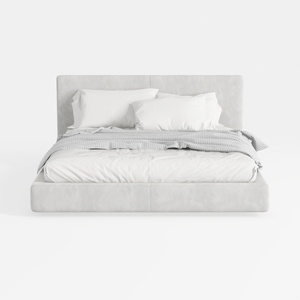
Minimalist Light Gray Fabric Upholstered Platform Bed 3D Model


Modern Dark Green Velvet Upholstered King Size Bed 3D Model

Modular Sectional Convertible Sofa Bed for Living
Experience hassle-free home design with Homestyler! This intuitive online platform offers a powerful design tool along with stunning 3D renderings, a plethora of design projects, and helpful DIY video tutorials. Let your creativity flow and visualize your dream space effortlessly!
지금 무료로 디자인하세요
































