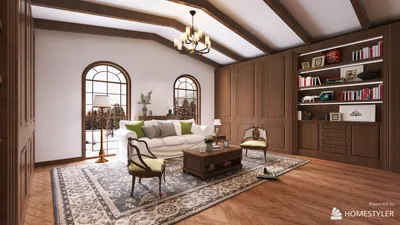


One morning, I almost transformed a client's breakfast nook into a disco by trying out iridescent glitter wall paint at the crack of dawn — the sunlight made it sparkle, and surprisingly, the client adored it! That experience enlightened me on how shimmer can appear either understated or flamboyant, depending on light and angle. Consequently, I always utilize a quick room visualization with tools like Homestyler to preview the effect before I commit to painting an entire wall. Thoughtful shining accents can truly elevate small spaces.
1. A Subtle Glow: Half-Wall Accent
In the past, I applied iridescent glitter paint to just the lower half of a studio wall, leaving the upper section matte. The result? A perception of spaciousness combined with an elegant touch. The charm lies in the soft glow that illuminates the room without being harsh on the eyes at night; however, the challenge remains in achieving a seamless finish between the sheens—using painter's tape correctly makes a notable difference.
save pin
2. Cabinet Faces and Closet Doors
If you're working on a budget, consider applying the glitter paint to cabinet fronts or closet doors. This approach adds an expensive aesthetic while directing attention where desired, but avoid intricate textures on handles to prevent rapid wear. Essentially, this method delivers a striking impact while maintaining manageable costs and upkeep.
save pin
3. Multi-Layered Finishes for Added Depth
I love using a two-layer method: I start with a warm neutral base coat, then add a thin layer of iridescent glitter paint. This combination creates depth without overwhelming sparkle, harmonizing beautifully with both artificial and natural lighting. When handling intricate layouts, I often rely on Homestyler's layout suggestions to analyze how the shimmer interacts with furniture positioning.
save pin
4. Accentuate Niches and Shelving
Glitter paint can work wonders when applied inside recessed niches or the backs of open shelving, creating stunning displays for decor—art becomes vibrant, and books appear curated. However, be cautious; glossy items can clash with the shimmer, so balancing matte and glossy accents is key to achieving a polished look.
save pin
5. Backsplash Highlights and Compact Kitchens
In smaller kitchens, I often suggest a narrow strip of iridescent paint as a backsplash accent instead of covering the entire surface. This brightens up the workspace while still looking stylish in photographs. When planning cabinet layouts and workflow, make sure to synchronize this strip concept with smart kitchen workflow design so that the shimmer is accentuated in the most impactful areas.
save pin
FAQ
Q1: Is iridescent glitter wall paint appropriate for smaller spaces?
A1: Definitely! When used judiciously, it can enhance depth and light. I recommend opting for accents or partial walls to ensure that the shimmer feels intentional rather than overwhelming.
Q2: How durable is iridescent glitter paint?
A2: Durability can differ by brand; generally, most top coats are quite resilient, but high-traffic areas benefit from a protective clear coat. Always conduct a test on a sample board first.
Q3: Is it easy to clean?
A3: Regular light dusting and gentle wipes suffice for most finishes, but steer clear of abrasive cleaners that can diminish the sparkle. Applying a compatible topcoat can enhance cleanability.
Q4: Will glitter paint make my room appear smaller?
A4: Not if used wisely. Strategically placing it can reflect light and visually enlarge a space, whereas extensive coverage may seem busy in compact rooms.
Q5: Is it safe for kitchens and children's rooms?
A5: Opt for low-VOC paints in bedrooms and kitchens; always read product labels and recommendations on ventilation. For precise health guidelines, refer to EPA indoor air quality resources (see EPA: https://www.epa.gov/indoor-air-quality-iaq).
Q6: How does the cost compare to standard paint?
A6: Iridescent finishes typically come at a higher price per liter and may require an additional primer or glaze layer, so budget slightly more for materials and labor than standard paint products.
Q7: Can I achieve this effect myself?
A7: Yes! Small accent areas are excellent DIY projects if you practice glazing and use sample boards. For larger walls or challenging lighting scenarios, hiring a professional can save time and reduce the need for touch-ups.
Q8: Any tips for selecting the right base color?
A8: Choose a base that harmonizes with your room’s lighting: opt for warmer tones for soft morning light and cooler neutrals for north-facing spaces. Make sure to test samples throughout the day to confirm your preference.
save pin
Discover the creativity of Homestyler, your go-to online home design platform. With its easy-to-use design tool, stunning 3D renderings, and a wealth of design projects and DIY tutorials, you can effortlessly transform your space into your dream home. Start designing today!
Design Now for FREE
































