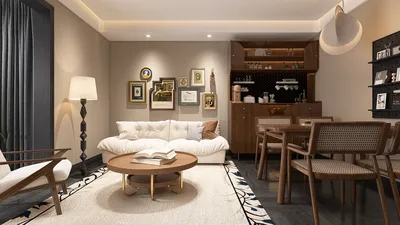


I often chuckle about the time I mixed two leftover grey paints, resulting in a muddy taupe on the living room wall—my client dubbed it "mysterious fog" and we both pretended it was an artistic choice. This little mishap taught me the importance of testing greys in natural light, and it reminded me how working within a small space can ignite massive creativity; sometimes limitations give rise to the best ideas. If you’re considering a grey wall refresh, think about revitalizing your kitchen to see how grey interacts with different surfaces: kitchen refresh.
1. Warm Grey with Natural Wood
Combining a warm mid-grey with oak or walnut is a favorite of mine—these wood tones create warmth, ensuring that grey doesn’t feel too cold. This approach is budget-friendly (just a few stained shelves can make a significant difference) and works exceptionally well in small apartments. However, it's crucial to carefully match the undertones to avoid a muddy appearance.
2. Crisp Grey with High-Contrast Trim
Using a clean, cool grey on the walls paired with bright white trim produces a sharp, modern aesthetic that visually opens up narrow spaces. This combination offers a timeless appeal and simplifies furniture coordination; the only challenge is ensuring that the trim is perfectly painted, so allocate some extra time or consider hiring a professional for the detailed work.
save pin
3. Monochrome Layering for Depth
Employing multiple shades of grey—from light to charcoal—adds layers and depth without creating visual clutter, making it perfect for small living rooms or studios. I once incorporated three shades into a tiny 300 sq ft studio, and the result felt thoughtfully curated rather than cramped. It's essential to exercise restraint, as too many accents can disrupt the tranquil vibe.
save pin
4. Textured Accent Wall
Instead of opting for a bold color, consider a textured grey accent—like limewash, Venetian plaster, or a subtle stencil—transforming the wall into a piece of artwork. While this may be slightly more expensive and requires careful application, a textured grey can conceal minor wall flaws and instantly elevate a small room.
save pin
5. Grey for Tiny Kitchens and Bathrooms
Using grey in compact kitchens and bathrooms can be surprisingly versatile: it gives chrome a luxurious appearance and makes grout lines less noticeable. For tight spaces, I frequently use virtual mockups and AI previews to test out various grey shades quickly; employing AI room styling can greatly reduce the headaches associated with repainting later: AI room styling.
When you are ready to commit, you can render the final design with intricate details; photo-realistic 3D renders recently aided my client in selecting the ideal mid-grey because they could see how it looked under evening lighting: photo-realistic 3D renders. Small adjustments—such as opting for a matte finish in high-traffic areas or satin in the kitchen—make grey both practical and stylish.
save pin
FAQ
1. What shade of grey works best in small spaces?
For small areas, I typically recommend a light warm grey with just a hint of beige undertones; it keeps the environment bright while adding a cozy depth. Always test samples on various walls and observe them at different times, especially under warm lighting.
2. How do I prevent grey from appearing cold?
Introduce warmth with natural woods, warm metallic accents, soft textiles, or cream trim. By layering textures—like rugs, woven baskets, and warm lighting—you can turn a cool grey into a welcoming backdrop.
3. What is the best finish for grey-painted walls?
Matte finishes conceal imperfections and are suitable for living areas and bedrooms, while satin or semi-gloss is ideal for kitchens and bathrooms due to easier cleaning. Choose finishes based on the functionality of the space: high-traffic areas require more durable sheens.
4. Can I mix grey with bold colors?
Definitely—grey is a neutral that can complement vivid accents like mustard, navy, or emerald without clashing. Use bold colors sparingly—such as in cushions, artwork, or a single chair—to maintain a balanced aesthetic.
5. How do undertones influence my grey selection?
Undertones (be it blue, green, brown, or purple) dictate whether a grey appears cool or warm; it's vital to align them with existing materials like flooring and countertops. If your floors are warm wood, select greys with warm undertones to create a cohesive color palette.
6. Are grey walls a viable option for rental properties?
Absolutely—neutral greys attract many renters and photograph beautifully in listings, giving spaces a modern feel. Stick with mid to light greys to ensure the areas remain bright and appealing to a wide audience.
7. How many paint samples should I test?
It's advisable to try a minimum of three samples on different walls and observe them over several days in various lighting; small shifts in undertone can be significant. Doing this minimizes the chances of needing to repaint, saving you time and money.
8. Any professional tips on selecting grey?
Expert color consultants and renowned paint brands can provide valuable assistance—Sherwin-Williams, for instance, offers extensive grey palettes and online guidance (https://www.sherwin-williams.com/) that I use for matching undertones for my clients.
Homestyler is your go-to online home design platform, perfect for anyone looking to transform their space. With an intuitive design tool, impressive 3D renderings, and a wealth of DIY video tutorials, you can easily explore and create stunning interior designs that reflect your style!
立即免费设计
































