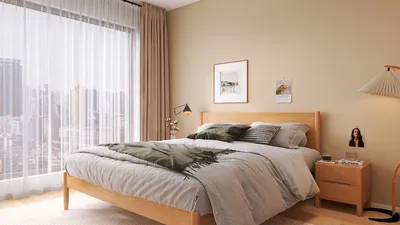


I often chuckle when I recall a client who insisted on having “moulding that doubles as a headboard.” In response, I creatively designed a shallow frame and concealed LED strips behind it. The result was stunning, giving a high-end aesthetic at a minimal cost. This little project demonstrated that moulding can serve both decorative and functional purposes, providing a visual representation of how trim can instantly transform a room. This is particularly beneficial in smaller bedrooms where unique trim choices can resemble luxurious finishes.
1. Picture-frame moulding for a custom-wall experience
When a client desires a custom look without hefty expenses, I frequently recommend picture-frame moulding, which consists of rectangular panels spaced across the wall. This design adds depth and rhythm to an otherwise plain wall, harmonizing beautifully with soft paint contrasts or satin finishes.
Benefits include affordable materials, an easy DIY approach for straight lines, and it conveniently conceals minor wall imperfections. However, achieving perfect miters can be tricky — using corner blocks simplifies installation. Budget tip: Primed MDF strips are cost-effective and take paint exceptionally well.
save pin
2. Slim crown to enhance ceiling height
Many equate large crown moulding with luxury, but in intimate spaces like small bedrooms, I often recommend sleek, tall crowns positioned slightly lower than usual. This subtle technique creates an illusion of a higher ceiling. I applied this method in a 9'x10' guest room, which transformed into a chic boutique hotel vibe following a fresh coat of white paint.
Advantages of this approach include understated elegance, simple painting, and compatibility with minimalist styles. However, be cautious — overly ornate designs can overpower the space. It’s important to consider scale and test your ideas with a cardboard mockup first.
save pin
3. Chair rail combined with contrasting wallpaper
Chair rails, once merely protective, now offer opportunities for visual contrast. I like to place a chair rail at a height of 36–42 inches and pair it with textured or patterned wallpaper below to add cozy definition. This technique imparts personality to a bedroom without altering its footprint.
The advantages include concealed scuffs and enhanced textured layers; the challenge lies in ensuring that the pattern scale matches the wall height. If you are hesitant about using wallpaper, consider peel-and-stick options for hassle-free changes.
save pin
4. Upgraded baseboard with integrated lighting features
Adding a modern twist, I sometimes incorporate a slim LED channel into a tall baseboard, providing gentle uplighting in the evening. This detail is often subconsciously appreciated by guests, creating a cozy atmosphere perfect for bedrooms and ensuring safety for children who are afraid of the dark.
Why do I suggest this? It serves as both mood lighting and a way to hide wires. Some potential drawbacks include the need for an electrician for low-voltage wiring and an increase in overall cost. If you're looking for templates to assist in planning, be sure to check out useful space-saving templates for layout designs.
save pin
5. Geometric panel moulding for a contemporary flair
Geometric panels — think hexagons, staggered rectangles, or asymmetric grids — can give a small bedroom an elegant and modern feel. I once used staggered vertical panels behind a bed, crafting a striking headboard effect without bulky furniture, and the client was thrilled with the bespoke appearance.
Pros include a significant visual impact with relatively minimal material. However, this design requires precise layout, or a professional installer is recommended for crisp results. Before making a decision, I prefer creating 3D render examples to visualize the scale, color, and shadow effects so clients can clearly see the outcome, making use of advanced tools like Homestyler.
save pin
FAQ
1. Which moulding style is best suited for a small bedroom?
I advocate for slimmer, proportionate profiles (such as slim crowns and picture-frame panels) that bring depth while maintaining a sense of spaciousness. It's advisable to limit yourself to one or two types of moulding to prevent any feeling of clutter.
2. What height should crown moulding be in a bedroom?
While there's no definitive answer, a modest crown of 3–5 inches generally works well in rooms with average ceilings. For lower ceilings, opt for a narrower profile and paint it the same color as the ceiling to create a seamless look.
3. Can moulding create an illusion of a larger bedroom?
Absolutely! Horizontal lines, like those in picture-frame moulding or continuous chair rails, can enhance the perceived width of a room, while vertical panels can visually elevate the height. The secret lies in using contrast and appropriate scale.
4. Is MDF suitable for bedroom moulding?
MDF serves as a budget-friendly option that applies paint smoothly and resists warping in stable indoor environments. However, it's wise to steer clear of MDF in high-humidity areas. For visible corners, consider using finger-jointed pine or poplar if staining is desired.
5. Should moulding be painted or stained?
A painted finish yields a clean, contemporary appearance and is quite forgiving. Staining emphasizes wood grain and imparts warmth. In smaller spaces, lighter painted trims reflect light, thereby helping the area feel more expansive.
6. How challenging is it to install moulding on my own?
Basic picture-frame moulding and chair rails are manageable for confident DIY enthusiasts equipped with a miter saw. More intricate crown work or LED routed baseboards are better left to professionals to avoid gaps and electrical errors.
7. What is a reasonable budget for refreshing moulding?
Prepare for a varied range: basic MDF picture-frame trim on a single wall might cost under $200 for materials, whereas custom profiles across an entire room combined with electrician fees for lighting might escalate into the low thousands. I usually provide clients with low, medium, and high estimates in my proposals.
8. Is there any reliable advice on moulding proportions?
Architectural Digest frequently advises that trim should maintain proportion with ceiling height and furniture dimensions. A good guideline is ensuring that the width of the trim feels balanced in relation to the baseboard and ceiling heights (as mentioned in Architectural Digest’s design guides).
save pin
Homestyler is your go-to online home design platform, perfect for transforming your ideas into reality. With an intuitive design tool, stunning 3D renderings, and a wealth of DIY video tutorials, you’ll find everything you need to create your dream space effortlessly.
تصميم الآن مجانا
































