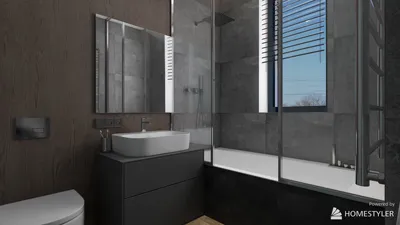


I once encouraged a client to experiment with a deep matte black on a small bathroom wall, and the transformation was amazing—their expression shifted from surprise to delight as the space exuded sophistication rather than feeling like a cave. This experience taught me valuable lessons about achieving balance: black can create a striking effect without being overwhelming, especially when layered thoughtfully. If you’re unsure, consider using 3D design tools like Homestyler first to visualize contrasts and reflections without any paint drips.
1. Incorporate Contrast: Use White Fixtures and Bright Accents
I enjoy combining black walls or tiles with sleek white sinks, toilets, and trim—this approach effectively avoids the feeling of being engulfed. The high-contrast aesthetic lends a modern and clean look, although water spots may be more visible, so choose finishes that are easy to maintain, such as satin or gloss.
save pin
2. Blend Textures: Matte, Gloss, Stone, and Metal
Solid black can appear dull if it lacks depth. In the projects I've overseen, combining matte tiles, a glossy shower niche, and warm brass fixtures adds dimension and character. However, this requires careful decision-making: mixing excessive textures or metals risks creating a cluttered appearance, so I typically restrict accents to one warm metal and one cool metal.
save pin
3. Strategically Utilize Lighting: Mirrors, Task Lighting, and Recessed Options
Black absorbs light, making lighting your essential ally. I often adjust recessed lights or incorporate halo mirrors after sketching the initial design to identify where shadows will cast—this phase is where I optimize the arrangement for lighting and fixtures. The benefit is a dramatic, luxurious atmosphere; the slight downside may be additional electrical work if you opt for multiple lighting layers.
save pin
4. Smart Tile Arrangement: Patterns for Vertical Elevation
Utilize vertical stack or tall-format tiles to create an illusion of higher ceilings, or lay bold patterned flooring to draw the eye down and out. I once improved a cramped bathroom by extending floor tile into the shower—this provided instant visual coherence. Be prepared for grout maintenance, however: smaller tiles entail more grout lines to keep clean.
save pin
5. Lighten the Space with Greenery and Reflective Surfaces
Incorporating plants, glass shower doors, and large mirrors keeps a black bathroom from feeling oppressive. A thriving fern or a cascading pothos thrives in humidity and brings life to the space, while a large mirror enhances light. To explore various mirror and plant placements beforehand, utilizing design visuals on platforms like Homestyler can save time and avoid surprises when ordering fixtures.
save pin
FAQ
Q1: Are black bathrooms too dark for small spaces?
With the right contrasts, lighting, and reflective features, a compact black bathroom can feel intimate and luxurious rather than cramped. Employ mirrors and layered lighting to counterbalance the absorption of light.
Q2: What flooring is ideal for black walls?
Light stone-look porcelain or patterned tiles provide striking contrast and conceal wear; heated flooring is a luxurious touch for cold tile surfaces. Opt for lighter grout to keep the ambiance vibrant.
Q3: Does black visibly show water spots and soap scum?
Yes, particularly on glossy black finishes. Selecting satin or textured coatings and consistently wiping down surfaces can minimize visibility of spots; consider using a darker grout to hide residue on tiles.
Q4: How can I prevent mold in a dark, humid bathroom?
Proper ventilation is essential—install an exhaust fan that suits the room size and use it during and after showers. As noted by the U.S. Centers for Disease Control and Prevention (CDC), managing moisture is crucial for mold prevention. Regular cleaning and facilitating good airflow keep black surfaces looking fresh.
Q5: Is mixing metals with black finishes acceptable?
Definitely—black pairs beautifully with brass, polished chrome, and matte black fixtures. I tend to limit myself to two metal tones to maintain harmony and avoid visual clutter.
Q6: Is paint or tile more suitable for a black bathroom?
Tile is generally more durable and water-resistant in wet areas, while paint works well on ceilings and areas that won’t be splashed; many porcelain tiles now come in appealing black finishes. Weigh cost and durability when making your selection.
Q7: What budget should I allocate to convert a white bathroom to black?
Budget estimates will vary based on the project’s scope: painting and accessories can be done economically, while new tiles, fixtures, and lighting can raise costs. I typically advise focusing on tiles and lighting for the most substantial visual impact.
Q8: Do you have any suggestions for styling accessories in a black bathroom?
Keep accessory choices minimalistic: wooden elements, textured towels, and a standout artwork piece complement the space beautifully. A few subtle pops of color, like a terracotta pot, can add warmth without overwhelming the decor.
save pin
Homestyler is your go-to online home design platform, perfect for transforming your space. With its user-friendly design tool, stunning 3D renderings, and a wealth of DIY video tutorials, you can easily create and visualize your dream home. Start designing today!
Design Now for FREE
































