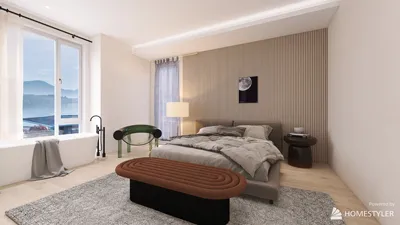


Peacock wallpaper can transform a living room with its vibrant iridescent blues and greens, bold feather designs, and eye-catching patterns that create visual interest while maintaining comfort. I select wallpapers as a designer would, ensuring that the scale, lighting, and seating ergonomics work together to make the space feel cohesive and uplifting, avoiding any sense of chaos. Incorporating Homestyler tools can further enhance this process by allowing users to visualize their space pre-design.
The psychology of color plays a significant role in design choices. According to Verywell Mind, blue is predominantly linked to tranquility and stability, while green represents renewal and balance—both crucial in creating a positive emotional impact with peacock-inspired palettes. Research by Steelcase indicates that environments which prioritize visual comfort and balanced stimuli contribute to improved wellbeing and concentration. These insights guide my decisions when pairing rich wallpapers with neutral fabrics and warm lighting, ensuring a living space that feels both vibrant and restorative. For more on color psychology, check Verywell Mind’s insights into how color influences mood.
Effective lighting and glare reduction are essential elements of design. The Illuminating Engineering Society suggests that living spaces should ideally have ambient lighting of approximately 100–300 lux, supplemented by task lighting as necessary. When dealing with wallpapers that feature metallic or glossy elements, I strategically position wall washers and dimmable lamps to minimize glare and hotspots. Keeping the color temperature between 2700 and 3000K enhances the peacock tones without dulling them, while managing brightness to ensure patterns are distinct from seating height.
Understanding How Peacock Motifs Influence Spatial Dynamics
The natural rhythm of peacock feathers, characterized by their repeating eyespots and arcs, serves to guide the viewer’s focus. By employing this rhythm effectively, a single feature wall behind the sofa creates a central point that organizes the furniture arrangements, while extending the motif to smaller accents—like cushions and artwork—helps to maintain a unified visual flow. In asymmetrical rooms, a vertical feather pattern can add an illusion of height, aiding in the balance of lower ceilings.
Choosing the Appropriate Scale and Repetition
Large peacock patterns work best in spacious rooms with unbroken walls and ample space between the seating and wall surface, creating a gallery-like atmosphere. In smaller living areas or those with multiple openings, a medium repetition helps retain the legibility of the pattern without blocking doorways and windows. I always order a sample roll first to assess scale and sheen under the actual lighting conditions of the room.
Color Strategy: Jewel Tones Versus Neutrals
Peacock color schemes typically feature shades like sapphire, teal, emerald, and subtle touches of gold. To ground these vibrant hues, I build a base of low-chroma neutrals—such as warm grey rugs or cream upholstery. This intentional chromatic contrast allows the wallpaper to stand out, while furniture balances and anchors the overall look. For a more adaptable aesthetic, I opt for wallpapers with a cream or charcoal background alongside understated feather accents, enabling seasonal flexibility within the space.
Lighting Environment and Managing Glare
Understanding the interaction between reflectance and print quality is crucial in design. I utilize indirect cove lighting, pair it with adjustable floor lamps, and direct fixtures away from the feature wall while using matte or eggshell finishes on adjacent surfaces to minimize distracting reflections. For walls featuring metallic peacock prints, I aim for illuminance levels between 200-250 lux on the feature wall, balancing ambient light throughout to ensure any shimmer is perceived as texture rather than distracting glare.
Acoustic Comfort and Material Selection
Strong visual elements can create a sense of overwhelm if the room has poor acoustics. I complement wallpapers with sound-absorbing materials—using dense rugs, lined curtains, and upholstered ottomans—to reduce sound echo and enhance intimacy. Feather patterns naturally provide a rhythmic quality that pairs beautifully with textures like bouclé or velvet, adding depth without overly complicated designs.
Human Factors: Seating Arrangements, Sightlines, and Flow
The principles of ergonomics are critical in creating a comfortable experience. Key seating positions should face the feature wall at a viewing distance of about 1.5 to 2.5 times the height of the wall for larger motifs, allowing for clear visibility without being overwhelming. I ensure pathways measure around 900-1000 mm to facilitate circulation, keeping the area in front of the feature wall clear of tall storage to prevent visual congestion.
Strategizing Your Layout with Assurance
When layouts are complex—such as L-shaped rooms or those with numerous entries—I leverage simulation tools before applying wallpaper. A layout tool enables me to experiment with feature wall placements, seating angles, and lighting arrangements in relation to the chosen design pattern, ensuring balance is achieved from all angles of the room.
Utilizing layout tools like Homestyler can help illustrate these arrangements effectively.
Trends for 2024–2025: Contemporary Peacock Styles
Current design trends lean towards simplified feather motifs, tonal gradients, and art-deco-inspired reinterpretations. Wallpapers featuring matte grounds with selective gloss maintain a premium feel, while sustainable materials—such as FSC-certified paper and low-VOC inks—connect aesthetic appeal with environmental consciousness. Additionally, I observe emerging micro-pattern designs that subtly reflect peacock geometry, which are perfect for renters or those favoring minimalism.
Installation and Finishing Touches
Attention to detail is paramount: align feather eyespots across seams precisely, apply a light-absorbing primer to glossy walls, and consider paste-the-wall options for easier future updates. In corners, I carefully wrap patterns rather than making harsh cuts, thus minimizing visual breaks. For fireplace walls, I maintain adequate clearance from heat sources and use heat-resistant finishes when necessary.
Art that incorporates negative space allows the wallpaper to make a statement. I prefer mixing brushed brass or antique bronze accessories with dark-stained woods to enhance the warmth of the peacock palette, while plain-weave curtains help avoid competing patterns. Pillows selected should pick up two tones from the wallpaper—one prominent and one accenting—to unify the room’s color scheme.
Opt for washable or scrubbable wallpaper ratings whenever feasible. Using a soft microfiber and pH-neutral cleaner is effective for preserving inks; it is wise to avoid abrasive pads on metallic finishes. Keeping windows shaded during peak sunlight hours helps prevent fading and maintaining humidity levels stable is essential to avoid seam issues.
Design Scenarios
In compact living areas, I suggest medium-repeat peacock motifs, matte inks, and mirroring the color scheme in two accent pieces (such as a rug border or throw pillow) to create cohesion. For open-plan areas, anchoring the seating arrangement with a singular feature wall alongside complementary neutrals on adjacent surfaces helps prevent visual drift. In historic homes, coupling art-deco peacock wallpapers with classic woodwork and picture lighting achieves a timeless yet contemporary atmosphere.
Frequently Asked Questions
Q1: Will using bold peacock wallpaper make my living area appear smaller?
A1: Not necessarily. Placing large-scale motifs on a singular feature wall can add depth and create a visual focus. Keeping adjacent walls lighter and employing matte finishes can prevent a feeling of confinement.
Q2: What lighting temperature suits peacock colors best?
A2: Warm-white lighting in the range of 2700–3000K complements blues and greens without washing them out. Ambient levels should be maintained between 100–300 lux per IES recommendations, supplemented with dimmable options for flexibility.
Q3: How can I control glare on metallic ink finishes?
A3: Utilize indirect lighting, angle fixtures away from the feature wall, and incorporate matte finishes into adjacent surfaces. Keeping the wall’s illuminance around 200–250 lux for metallic areas ensures subdued shimmer rather than overpowering glare.
Q4: Which furniture colors pair well with peacock designs?
A4: Colors such as cream, warm grey, walnut, and charcoal provide a grounding effect to jewel tones. Adding subtle metallic accents in brass or bronze can echo the wallpaper highlights without overwhelming the design.
Q5: Is it advisable to apply peacock wallpaper throughout an entire room?
A5: This approach can work in spacious, well-lit rooms, but I generally recommend a feature wall for balance. Full room wraps benefit from toned-down repeats and ample soft furnishings to manage visual intensity.
Q6: What pattern size works best for a small living space?
A6: Medium-scale patterns maintain readability across broken walls and doorways. Testing with a sample roll under your actual lighting conditions is advisable to ensure visibility.
Q7: How do acoustics influence the comfort created by bold design patterns?
A7: Sound echo can amplify visual stress. Layering rugs, upholstered furniture, and lined curtains helps absorb sound, enhancing the welcoming feel of bold wallpaper.
Q8: Are there eco-friendly options for peacock wallpapers?
A8: Absolutely. Seek out FSC-certified papers and low-VOC inks. These selections not only reduce indoor emissions but align with modern sustainability aspirations.
Q9: How to choose the ideal wall for a feature?
A9: Select the wall that is most visible from primary seating and entry points without interruptions from doors or large windows. Limit tall storage in front to avoid breaking the pattern.
Q10: Can renters incorporate peacock wallpaper into their space?
A10: Yes, peel-and-stick or paste-the-wall products are great for easy removal. Opting for simplified feather motifs allows for flexible styling across different living spaces.
Q11: How to manage art on the feature wall?
A11: Choose artwork with ample negative space or minimal frames. Ensure consistent spacing to let the wallpaper shine through as the backdrop rather than competing with it.
Q12: What maintenance practices should I follow for metallic inks?
A12: Dust with a soft microfiber cloth and use a pH-neutral cleaner for spot-treating. Avoid abrasive sponges to preserve the integrity of reflective particles.

Modern Patchwork Fabric L Shaped Sectional Sofa 3D Model

Modern Dark Velvet Fabric Sofa With Throw Pillows And Blanket 3D Model
Modern Minimalist Tufted Fabric Sectional Sofa with Side Table 3D Model
Homestyler is your go-to online home design platform! It features an easy-to-use design tool, impressive 3D rendering, and a wealth of inspiring design projects and DIY video tutorials. Transform your space effortlessly and unleash your creativity with Homestyler today!
Progetta ora GRATIS
































