Maximalist Living Room Design
The 'Maximalist Living Room' is a high-energy, personality-driven interior scene that celebrates abundance over austerity. Unlike minimalist spaces defined by restraint and negative space, maximalist living rooms thrive on layered textures, saturated color palettes, eclectic furniture pairings, bold patterns (from Moroccan tiles to floral wallpapers), and curated collections — be it vintage ceramics, global textiles, or sculptural lighting. This scene is not about clutter, but intentional richness: every object tells a story, every surface invites visual exploration, and spatial harmony emerges from rhythm, repetition, and tonal cohesion rather than uniformity. As demonstrated across the AIDA-affiliated 'Maximalist Space for App' contest, top entries transform the living room into a dynamic canvas for cultural expression, artistic confidence, and deeply personal interior space planning.
Design Challenges & Common Pitfalls
Achieving successful maximalism in the living room is deceptively complex. Common pitfalls include visual chaos from unbalanced color saturation (e.g., three dominant hues without a grounding neutral), scale dissonance (oversized art with undersized furniture), material fatigue (too many high-contrast finishes like brass, velvet, and lacquer competing for attention), and poor spatial flow due to overcrowded layouts. Another frequent issue is neglecting lighting hierarchy — relying solely on ambient light while omitting focused task or accent lighting needed to highlight collectibles or texture-rich surfaces. Without disciplined curation and strategic editing, maximalism risks becoming overwhelming rather than expressive — making thoughtful interior space planning essential at every stage.
🎨 Layer with Intentional Rhythm
Avoid random accumulation. Build layers using rhythmic repetition: repeat a motif (e.g., tassels, arches, or botanical prints) across upholstery, rugs, and wall art; echo a color family in varying intensities (e.g., burnt orange in sofa fabric, rust in ceramic vases, terracotta in floor tiles); or align material families (e.g., warm woods + matte black metal + creamy plaster) to create cohesion beneath visual density. Rhythm provides subconscious order — the invisible scaffolding of maximalist harmony.

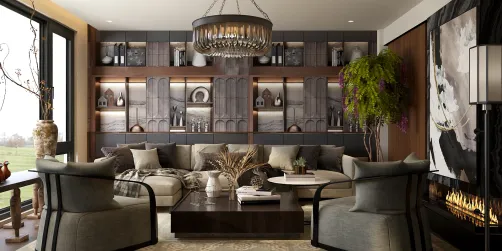
Anna Tallian’s 'Living Room' exemplifies intentional rhythm: she repeats curved silhouettes (arched mirror, round coffee table, scalloped rug edge) and harmonizes warm neutrals (beige sofa, honey-toned wood sideboard, oat-colored rug) while punctuating with coordinated pops — deep teal in throw pillows and wall art, echoed in potted monstera leaves. Using Homestyler AI design tools, she likely leveraged ‘Style Match’ to unify furniture selections and ‘Material Swap’ to test tactile contrasts (e.g., bouclé vs. velvet) before finalizing — proving how digital precision supports analog richness in maximalist living room design.
Start Designing Now✨ Anchor with Bold Focal Points
Every maximalist living room needs at least one commanding anchor — a statement piece that grounds the composition and draws the eye first. This could be a dramatic wallpapered accent wall, an oversized sculptural chandelier, a vintage Persian rug with intricate borders, or a custom-built media wall with mixed-material inlays. The anchor establishes hierarchy and prevents visual drift; all other layers should relate to or complement it — either through contrast (e.g., minimalist furniture against ornate wallpaper) or consonance (e.g., matching metallic finishes in lighting and hardware).

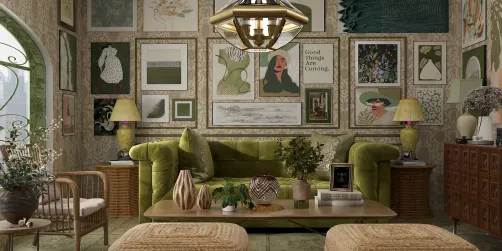
Lalisa Lisa’s 'Bold Elegance' uses a rich emerald-green velvet sofa as its primary anchor — its scale, texture, and saturated hue command attention and set the tonal foundation. Around it, she layers complementary boho elements (macramé wall hanging, kilim pillow, rattan side table) without competing visually. Homestyler AI design tools enabled precise scaling and real-time lighting simulation, allowing her to position pendant lights directly above the sofa to enhance its presence — a masterclass in using digital tools to amplify physical focal points during interior space planning.
Begin Your Bold Design🧩 Curate Collections, Not Clutter
Maximalism thrives on storytelling objects — but only when grouped with narrative logic. Curate by theme (travel souvenirs, ceramic studio pottery, mid-century glassware), by form (all circular objects, all vertical lines), or by chronology (three generations of family portraits). Use display strategies: stagger heights on shelves, vary depth on ledges, frame clusters on walls using consistent matting or frames. Leave deliberate breathing room between groupings — negative space remains vital, even in maximalism. This approach transforms accumulation into curation, elevating interior space planning from arrangement to authorship.

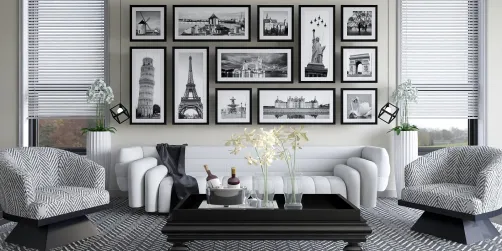
Cucini Martina’s 'Cozy Living Room', though labeled 'modern minimalist', reveals maximalist curation in its details: a tightly edited shelf displays three generations of ceramic vessels in graduated heights and unified glaze tones; a gallery wall pairs black-and-white travel photos with one vibrant textile fragment — creating thematic tension and resolution. Using Homestyler’s ‘Group Edit’ and ‘3D View Toggle’, she likely tested multiple arrangements virtually before locking in placements that balanced density and pause — demonstrating how Homestyler design techniques empower intentional storytelling, even within restrained palettes.
Create Your Cozy SpaceFAQ
Q: Can maximalist design work in small living rooms?
Yes — in fact, small spaces often benefit most from maximalist principles when executed with discipline. Use vertically oriented patterns (striped wallpaper, tall shelving), mirrors to amplify depth, and multi-functional furniture with rich textures (e.g., a storage ottoman upholstered in embroidered fabric). Prioritize layering on walls and ceilings over floor crowding.
Q: How do I avoid clashing colors in a maximalist palette?
Anchor your palette with one dominant hue (60%), one secondary (30%), and one accent (10%). Use the 60-30-10 rule across materials — e.g., navy in walls and sofa (60%), mustard in cushions and artwork (30%), and coral in a single vase or lamp base (10). Homestyler AI’s color picker tool helps preview these ratios instantly.
Q: Is maximalism compatible with smart home integration?
Absolutely. Conceal tech behind cabinetry with integrated touch panels, use recessed LED strips to highlight maximalist details (like textured walls or bookshelves), and choose smart lighting systems with tunable white and RGB color options — letting you shift ambiance from moody amber to vibrant fuchsia, enhancing your maximalist narrative dynamically.

Traditional Solid Wood Rectangular Storage Coffee Table 3D Model
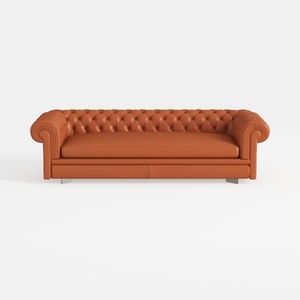
Chesterfield Tufted Brown Leather Sofa Modern Classic 3D Model

Modern Leather Tufted Chaise Lounge 3D Model
Homestyler offers an easy-to-use online design tool with stunning 3D renderings, a vast collection of interior projects, and helpful DIY video tutorials—perfect for anyone looking to create and visualize their dream home effortlessly.
Design Now for FREE