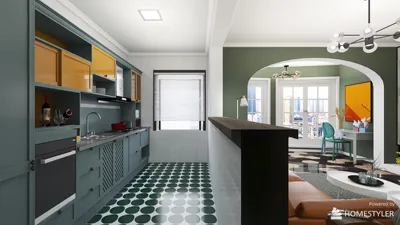


A past client once envisioned their living room as a blend of "the ocean and a forest," which nearly led me to paint the ceiling teal. However, this initial design challenge transformed into one of my favorite projects, showcasing how a blue and green color palette can convert a small living room into a serene, layered escape. Small spaces greatly benefit from bold yet intentional color selections. Below, I share five strategies I implement in my design projects, including the innovative tool Homestyler.
1. Start with a Deep Navy Sofa
I often use a muted navy sofa as the main focal point in the room. It provides a grounding element while allowing lighter greens and aquas to stand out. This choice offers the benefit of durability and helps conceal stains, but a navy piece can appear weighty. To counter this, I incorporate soft green throws, rattan side tables, and warm wood accents, all manageable through Homestyler's layout features.
save pin
2. Incorporate Various Shades of Green Through Fabrics and Plants
Layering different greens such as olive, sage, and chartreuse through cushions, rugs, and curtains creates visual depth without overwhelming the space. Real plants, like a fiddle leaf fig or monstera, introduce texture and keep the color scheme vibrant. Maintainability is key, so choose hardier plants if you frequently travel.
save pin
3. Utilize Accent Walls and Artwork to Create Zones
Introducing an accent wall in soft teal or green-blue wallpaper can effectively define spaces like a reading nook or entertainment area without the need for substantial renovations. In one instance, I used a hand-painted mural behind bookshelves for a striking effect; while it's an impactful choice, it requires considerable effort. A quicker alternative could be framed ocean-forest themed art.
save pin
4. Add Warmth with Brass and Natural Elements
Brass fixtures, cane furniture, and oak flooring can infuse warmth into blue-green palettes, preventing them from coming off as chilly. I prefer to position brass sconces over a sofa for a stylish contrast for added elegance, keeping in mind that brass will need occasional polishing. Introducing natural fibers such as jute or sisal rugs enriches the textural experience while remaining budget-friendly.
save pin
5. Maximize Lighting and Reflective Elements
Using layered lighting is essential to keep blues and greens lively: incorporate a warm-toned floor lamp, adjustable overhead lighting, and reflective mirrors that bounce light around. In one compact apartment, I strategically used a slim mirror and a glass coffee table to create an illusion of a larger space — while mirrors enhance color, they can show fingerprints, so place them wisely.
save pin
Tips for Visualization:
If you wish to visualize different layouts before making big purchases, utilizing a room planner like Homestyler allows you to map furniture to scale and experiment with color arrangements. This approach saves time and ensures you make confident decisions.
save pin
Frequently Asked Questions
Q: Which shades of blue and green complement each other best?
A: A combination of muted navy or indigo with softer greens, such as sage or seafoam, creates a balanced look. Meanwhile, brighter blues harmonize well with lime or chartreuse for a more vibrant atmosphere.
Q: Is it possible for small living rooms to support a bold blue wall?
A: Absolutely — a single bold wall can lend depth if the remaining walls maintain a lighter hue. Utilize mirrors and light textiles to ensure the space feels airy.
Q: How can I keep my color palette from feeling cold?
A: Counterbalance cooler shades by incorporating warm metals (like brass or bronze), wooden furnishings, and soft lighting that adds warmth to the overall ambiance.
Q: What are some budget-friendly swaps for testing this aesthetic?
A: Consider changing out cushions, a rug, or a single accent piece like a lamp or artwork to experiment with the color scheme without extensive expenses.
Q: Which plants work best in blue-green living areas?
A: Plants such as fiddle leaf figs, rubber plants, and snake plants fit perfectly into this color palette, ranging from bold statements to easy-care options.
Q: How can I mix patterns effectively?
A: Limit your patterns to three types — one large-scale, one medium-scale, and one small-scale — and ensure you repeat colors across them to achieve a cohesive appearance.
Q: Is it feasible to incorporate green and blue into open-plan design?
A: Yes, highlighting consistent accent colors can help create a sense of flow and subtle separation, making it easier to define various living spaces within an open layout.
Q: Where can I find helpful design tools for planning my layout?
A: For proven planning tools and inspirational examples, explore professional layout demonstrations like the 3D floor planner available with Homestyler. For authoritative color advice, refer to the Pantone Color Institute for industry standards and trends (pantone.com).
save pin
Homestyler is your go-to online home design platform! With its easy-to-use design tool, stunning 3D renderings, and a wealth of DIY video tutorials, you can effortlessly create and visualize your dream spaces. Transform your home design journey today!
Progetta ora GRATIS
































