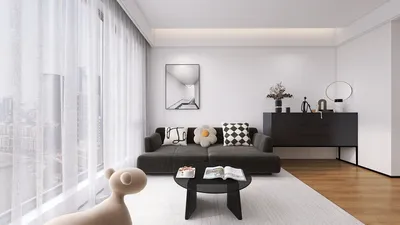


I once installed a wall sconce upside down on a client's bare plaster wall and didn't realize it until the electrician sent me a photo — this experience taught me that lighting seems straightforward until it clashes with gravity and wiring. This little mishap illustrated how a single modern wall light fixture can transform the ambiance of a room, altering its scale and even affecting how furniture seems in a compact area. Thoughtful lighting choices particularly benefit small spaces, emphasizing every decision made.
1. Slim LED Wall Bars
I often choose slim LED wall bars for tight hallways and above bathroom mirrors, as they produce clean, consistent illumination while maintaining a spacious appearance. Their benefits include energy efficiency, minimal glare, and a sleek, linear design that feels more architectural than decorative. A minor challenge lies in selecting the right color temperature — I typically evaluate 3000K for warmth versus 4000K for task clarity before making a final decision.
save pin
2. Adjustable Swing Arm Sconces
Swing arm sconces are my preferred choice for bedside reading in smaller bedrooms; they clear up nightstand clutter and deliver focused light precisely where it’s needed. Their advantages include flexibility and timeless charm, though some lower-end models may wobble, so I suggest investing in quality fixtures and professional installation. For layout planning, I often utilize tools like the 3D floor planner from Homestyler to visualize reach and sightlines.
save pin
3. Minimalist Cylinder Wall Lights
Cylindrical fixtures offer a sculptural effect without being overly bold — ideal for living rooms or staircases where a rhythmical ambiance is desired instead of drama. They provide sharp up-and-down lighting, highlighting textures on walls. Be mindful that they can create strong shadows on certain surfaces, making mock-ups or on-site samples essential to prevent unexpected outcomes.
save pin
4. Flush-Mount Panel Sconces
In spaces with low ceilings, flush-mount panel sconces are ideal as they conserve headroom while providing even ambient lighting. I favor them for modern studios and compact kitchens due to their sleek integration. However, they have limitations in beam shaping; pairing them with accent lamps or dimmers can help create a balanced atmosphere without excessive brightness.
save pin
5. Artistic Accent Wall Lights
For clients who seek distinctive character, a single artistic wall light can serve both as a sculptural piece and a source of illumination. These fixtures shine above console tables or in entryways, doubling as conversation starters. The trade-off can be the cost and permanence; a daring fixture should match your long-term design scheme, thus I recommend selecting neutral finishes with intriguing silhouettes.
save pin
Tips 1:
Budget consideration: While LEDs prove to be cost-saving over time, ensure to invest in quality drivers and replaceable modules to avoid needing to replace the entire fixture. As a best practice, always mock up the fixture height at eye level to prevent glare. For smaller projects, pairing a primary wall fixture with a secondary source of light can prevent flat lighting and add depth. For quick space visualizations, consider using the free floor plan creator in Homestyler to experiment with fixture placements efficiently.
save pin
FAQ
Q: What height should wall lights be installed?
A: Ideally, mounting them 60–66 inches from the floor to the center of the fixture works for ambient sconces; task lights like bedside swing arms should be lower to ensure the bulb clears sightlines when seated.
Q: Are LED wall fixtures worth the additional expense?
A: Absolutely — lower energy consumption and longer life expectancy usually counterbalance higher initial costs, and modern LEDs provide excellent color consistency and dimming features.
Q: How do I determine the appropriate color temperature?
A: For living spaces, 2700–3000K creates a warm and inviting atmosphere; 3500–4000K is effective for tasks such as grooming or reading. I usually test in the actual environment before final selection.
Q: Can wall lights substitute for ceiling lights in small areas?
A: They can complement or potentially replace central fixtures if layered correctly, but combining wall lights with at least one overhead or floor lamp fosters balanced illumination.
Q: What should I consider regarding wiring when adding sconces?
A: Check for wall cavity space, switch placements, and circuit capacity. For complicated installations, it's wise to hire a professional electrician — skimping here can jeopardize safety and fixture efficiency.
Q: Are dimmers essential for wall fixtures?
A: Dimmers greatly enhance versatility; ensure the fixture's driver is compatible with dimmers and opt for those rated for LED loads.
Q: Where can I find professional tools for visualizing lighting layouts?
A: I frequently use a 3D rendering home tool like Homestyler to preview how light is distributed and assess fixture scale before making purchases; this helps avoid costly mistakes by visualizing shadows and fixtures in context.
Q: Are there established guidelines for residential lighting?
A: Yes — the Illuminating Engineering Society (IES) provides recommendations on appropriate illuminance and distribution; their technical documents are trusted resources for residential lighting design.
save pin
Homestyler is your go-to online home design platform that brings your ideas to life! With its user-friendly design tool, stunning 3D renderings, and a wealth of DIY video tutorials, you can effortlessly create and visualize your dream space. Start designing today!
Design Now for FREE
































