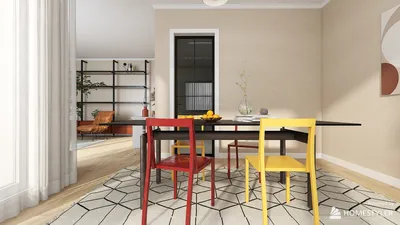


I once tackled the challenge of painting a north-facing studio in just a week, believing that a bright white would be the perfect solution. However, I quickly discovered that by evening, the space took on a sterile, hospital-like feel. This experience led me to explore various options, and now I incorporate AI color recommendations to evaluate undertones before making any significant paint purchases with Homestyler.
1. Cozy Whites with Creamy Undertones
Creamy whites, as opposed to stark white, reflect light beautifully without creating a clinical ambience. They soften artificial yellow lighting, are ideal for ceilings, and offer a neutral backdrop that enhances your furniture. The key is to be cautious; an unsuitable undertone can make white look overly beige, so testing on a 2x2 foot area is crucial.
save pin
2. Subtle Greige and Light Taupe
When pure white seems too flat, greige becomes my preferred choice because it adds both warmth and depth while maintaining an airy feel in the room. However, be wary of darker greiges that may seem too heavy in small spaces; opt for higher Light Reflectance Values (LRV) and pair them with white trim to ensure contrast.
save pin
3. Gentle Pastels: Soft Blue, Blush, Sage
Muted pastels provide subtle color while preserving light flow. A gentle sky blue reflects cool daylight beautifully, blush tones can warm up those cooler north-facing rooms, and sage introduces a calming element. These shades may change with different lighting, so consider testing them using an interactive layout tool like Homestyler for a clearer perspective before making a commitment.
save pin
4. Light-Reflective Cool Neutrals
Very light mauves or soft grays can impart a modern flair while still reflecting light effectively when finished with a satin sheen. These colors blend well with metallic features and mirrors to enhance brightness. However, balance is essential, as some cool neutrals can feel frosty unless softened with warmer fabrics and accents.
save pin
5. Carefully Placed Dark Accents
It may go against instinct, but a single deep accent wall (such as teal, charcoal, or navy) can offer the illusion of depth and make the remaining areas of a room appear brighter by contrast. The secret lies in moderation: keep ceilings and trim lighter, and utilize reflective surfaces and realistic 3D visualizations before painting, possibly through a platform like Homestyler, to assess mood effectively.
save pin
Practical Advice With Budget Considerations
Choosing eggshell or satin finishes for your walls maximizes light reflection without overly shiny results. Paint the ceiling in a hue that is one to two shades lighter than your walls to enhance spatial perception. Trying out multiple testers and applying larger swatches in varying lighting conditions can save you from expensive repaints later on.
save pin
Frequently Asked Questions
Q1: What paint finishes are best suited for dimly lit areas?
A1: Eggshell or satin finishes can effectively reflect a good amount of light without drawing attention to surface flaws. While high-gloss may be too reflective for typical walls, it works well for trims and doors.
Q2: Should cool colors be avoided in north-facing rooms?
A2: Not necessarily. Cool hues such as light blue can actually enhance brightness in north-facing spaces by making natural light feel fresher. Combine them with warm accents to avoid a cold ambiance.
Q3: How does Light Reflectance Value factor into lighting conditions?
A3: LRV (Light Reflectance Value) gauges the degree of light a color reflects. For darker rooms, aim for paints with higher LRV (generally above 55) to maintain an illuminated feel.
Q4: Are there specific brands recognized for precise LRV data?
A4: Absolutely — Sherwin-Williams provides detailed LRV statistics for their paint colors along with helpful insights on brightness and undertones, which can be beneficial when selecting paints for spaces with limited light (see Sherwin-Williams technical data for specifics).
Q5: Is it advisable to paint ceilings a darker shade?
A5: While it's allowable to opt for a slightly darker ceiling for added warmth, particularly in low-light scenarios, it's generally safer to keep ceilings lighter compared to walls to create an open rather than cramped feel.
Q6: What impact do lighting fixtures have on paint selection?
A6: Significant! The type of lighting—be it warm LEDs or daylight bulbs—alters how a color appears. Always ensure paint samples are tested with the actual fixtures both on and off.
Q7: Is white trim universally the best option?
A7: While white trim offers a striking contrast and reflects light efficiently, off-white or soft cream trims can blend better with warmer wall colors; ultimately, this boils down to personal style rather than being a strict rule.
Q8: Any quick tips to enhance brightness in a room?
A8: Incorporating mirrors, reflective fixtures, light-colored rugs, and sheer curtains can significantly amplify light without necessitating a repaint. These budget-friendly changes make even simple paint choices appear more vibrant.
save pin
Homestyler is your go-to online home design platform, perfect for both novices and seasoned designers. With its user-friendly design tool, stunning 3D renderings, and a wealth of design projects and video tutorials, transforming your space has never been easier or more inspiring!
Design Now for FREE
































