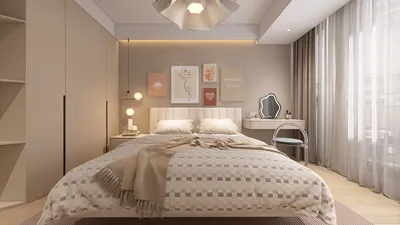


A client once insisted that their small home office be painted a bright neon coral because “it sparks joy” — while this color indeed brought joy to many, it was a different story for our online meeting guests. This experience quickly taught me that colors must serve a purpose: affecting mood, influencing light, and fulfilling function. For those looking to visualize their office space before committing to a design, I often recommend using a 3D preview tool like Homestyler to create realistic mock-ups.
1. Calm Blue-Gray for Focus
When clients express a need for enhanced concentration, I frequently suggest a muted blue-gray. This soothing tone remains cool without appearing too cold, successfully conceals minor imperfections, and complements wooden desks beautifully. However, a potential drawback is that blues can seem distant, especially in cramped, dimly lit spaces, which is why I like to incorporate warmer accents, such as brass hardware or cozy rugs.
save pin
2. Warm Greige for a Professional, Cozy Feel
The neutrally appealing greige color (a perfect blend of gray and beige) has rescued countless small offices; it looks wonderful on camera and gains warmth under soft LED lighting. It offers flexibility for later accent color changes. However, if the entire room is too beige, it may give off a bland feel, thus I recommend introducing texture through items like woven baskets or eye-catching art pieces.
save pin
3. Soft Yellow Accent to Energize Without Overwhelming
Consider adding a soft buttery yellow to one accent wall; this not only brightens the space but also infuses energy, particularly in north-facing rooms. I have often applied it behind bookshelves or around doorframes to enhance the atmosphere; it elevates the mood during meetings and makes notes stand out. To avoid overstimulation, I suggest using it sparingly as an accent paired with cooler neutrals.
save pin
4. Sage Green for Calm and Creativity
Sage green is my go-to shade for those seeking the tranquility of nature without cluttering their spaces with real plants. This color helps alleviate eye strain and pairs well with both white and black accents. A minor concern: in small rooms with low ceilings, darker shades of sage might feel confining, so opting for a lighter tone or selecting it as a one-wall feature works best.
save pin
5. Crisp White with Contrasting Trim for a Clean, Flexible Base
White can be far from boring if the right undertones are chosen; a warm white with subtle cream hues can illuminate a room, while cooler whites add a contemporary feel. I appreciate white’s versatility as a backdrop for art and furnishings but be aware of screen glare; using matte finishes and darker trims can help mitigate this. If you want to explore how various whites appear under different lighting conditions, tools like Homestyler can assist with visual previews.
When I design a small office space, I always consider factors like scale, natural light, and how paint interacts with furniture finishes. For those spatial experiments and visual tests, many clients and I take advantage of online planners to arrange color perspectives in realistic room settings, such as various office layout scenarios.
Budget tip: Sample pots are inexpensive and can save you a fortune. I once suggested three test patches for a client who changed her mind twice—definitely cheaper than repainting. For rentals, you can explore peelable paint or removable wallpapers that allow bold choices with minimal commitment.
Looking for colors that adapt to changing needs? I've begun utilizing AI suggestions in the early design stages to generate color palettes. While these suggestions aren't perfect, they significantly accelerate the mood-board creation process and inspire ideas I might not have otherwise contemplated—especially valuable for modern workspaces powered by AI designs like Homestyler.
save pin
FAQ
Q1: What is the best paint color for concentration in an office?
I find that muted blue-grays and gentle greens are most effective for concentration, as they are calming yet not sleepy. Always test samples in both midday and evening light to see their true effect.
Q2: Should I use matte or satin finish for an office?
Matte finishes conceal wall imperfections and reduce glare, making them perfect for areas behind screens; satin finishes are easier to clean, suitable for high-traffic spots. I generally apply matte to larger wall areas and satin on trim or doors.
Q3: How do I select a white paint that isn’t too cold?
Consider the undertones: warm whites exhibit a hint of yellow/cream, while cool whites often lean towards blue/gray. Paint larger samples on different walls—the lighting of your room usually reveals the undertones.
Q4: Can paint color influence employee productivity?
Absolutely! Research in environmental psychology indicates that color affects mood and task effectiveness; for instance, a 2014 study showcased how workplace color can influence arousal and creativity. Choose colors that align with the task: calming tones for focused work, warmer shades for collaborative areas.
Q5: Are bold accent walls still a good idea?
Definitely! A single bold wall can energize a room without feeling overwhelming. I recommend positioning bold colors behind focal points, such as shelving or camera-friendly walls for video calls.
Q6: How can I test paint colors before painting?
Use sample pots to create 2x2 ft patches on various walls; check them in morning and evening light. Alternatively, if you prefer a digital approach, realistic room previews can help you quickly narrow down your choices, particularly in applications like Homestyler.
Q7: What colors are best suited for small home offices?
Light neutrals or pale shades of your selected color keep compact spaces open; adding a darker trim or an accent can provide depth. Balance is essential: excessive darkness can constrict a room, but a single darker accent can create an illusion of expanded space.
Q8: How long should paint maintain its quality in an office before needing a refresh?
Under normal conditions, quality office paint can last approximately 5 to 7 years, though high-traffic areas may require touch-ups sooner. Regular cleaning and washable finishes can significantly extend the lifespan.
save pin
What began as an Autodesk innovation has evolved into a design platform used by more than 18 million people around the globe. Homestyler combines powerful rendering, an intuitive editor, and a vast furniture library to help you turn inspiration into photorealistic designs — whether you're redesigning a single room or planning an entire home.
Homestyler is your go-to online home design platform! With an easy-to-use design tool, stunning 3D renderings, a plethora of design projects, and helpful DIY video tutorials, transforming your space has never been easier or more enjoyable. Start creating your dream home today!
Design jetzt kostenlos
































